The humility inherent in Indonesian culture can be a barrier when introduced to a global workplace. Overly concealing abilities and achievements can potentially cost workers opportunities. Indonesian workers are perceived as reluctant to express ideas and ask questions when faced with something they don’t understand.
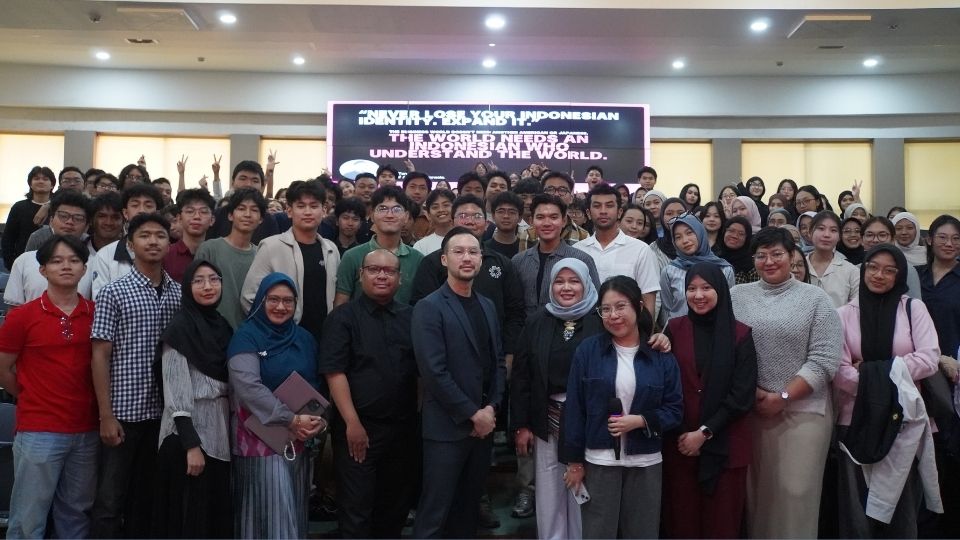
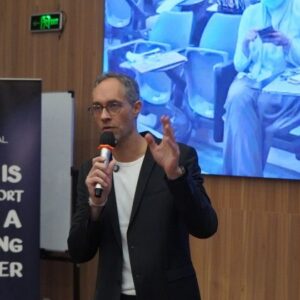
Justin Tan, Head of the Adecco Group Indonesia Branch, revealed this based on his observations of his colleagues in Indonesia. He spoke to Bachelor of Management students from the School of Business and Management, Institut Teknologi Bandung (SBM ITB) during a guest lecture on Global Business Communication (July 30).
According to Justin, who has worked for the Adecco Group, a multinational provider of workforce solutions, for 11 years, many Indonesians are raised with the values of humility and not flaunting their achievements. However, in a global business environment, hidden abilities can cost someone opportunities.
Therefore, he advises Indonesian workers to expand their capabilities and make them more visible. He believes that highlighting abilities doesn’t have to be done with arrogance.
The next challenge is speaking up. Justin believes that many Indonesians have good ideas but lack the courage to express them. As a result, opportunities to contribute to innovation are missed.
He also encouraged the courage to ask questions when faced with something unknown or misunderstood. In global companies, he said, such curiosity is not seen as a weakness, but rather as a sign of professionalism.
The issue of communication becomes even more crucial when businesses or projects involve people from different cultural backgrounds. This is because many projects or businesses fail due to communication.
According to a study by the Institute of Project Management, presented by Justin, 56 percent of project failures are caused by poor communication. Meanwhile, unclear objectives and a lack of management support contribute 39 percent and 33 percent, respectively.
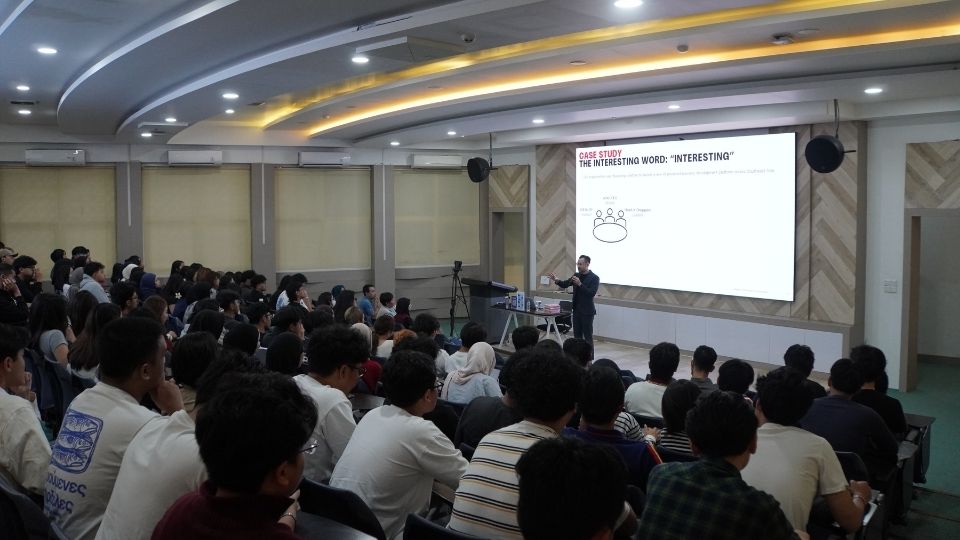
Cultural differences can lead to the same word being interpreted differently. Justin uses the example of the word “interesting,” which can have different meanings when used by people from different cultural backgrounds.
Without clarification, these differences in meaning can lead to assumptions and, in turn, to actions that are not in line with the original intention. The impact can spread to the financial and operational aspects of a project or business.
To understand these differences, Justin introduced the G.I.F.T. model. This model includes Government—egalitarian versus hierarchical; Information—implicit versus explicit context; Flow—direct versus indirect; and Trust—relationship versus task.
Each country and region has different tendencies across these dimensions, depending on its culture and background. Therefore, understanding who you are dealing with is crucial before beginning any interaction.
At the end of the session, Justin urged students not to abandon their cultural identities when entering a global environment. “Never lose your Indonesian identity, but rather expand it.”
His message wasn’t for Indonesians to become business partners with other countries. What was needed was to understand differences, make others feel understood, and simultaneously develop their own cultural qualities to collaborate more effectively.
Written by Student Reporter (Davina Tjondro, Entrepreneurship 2027)