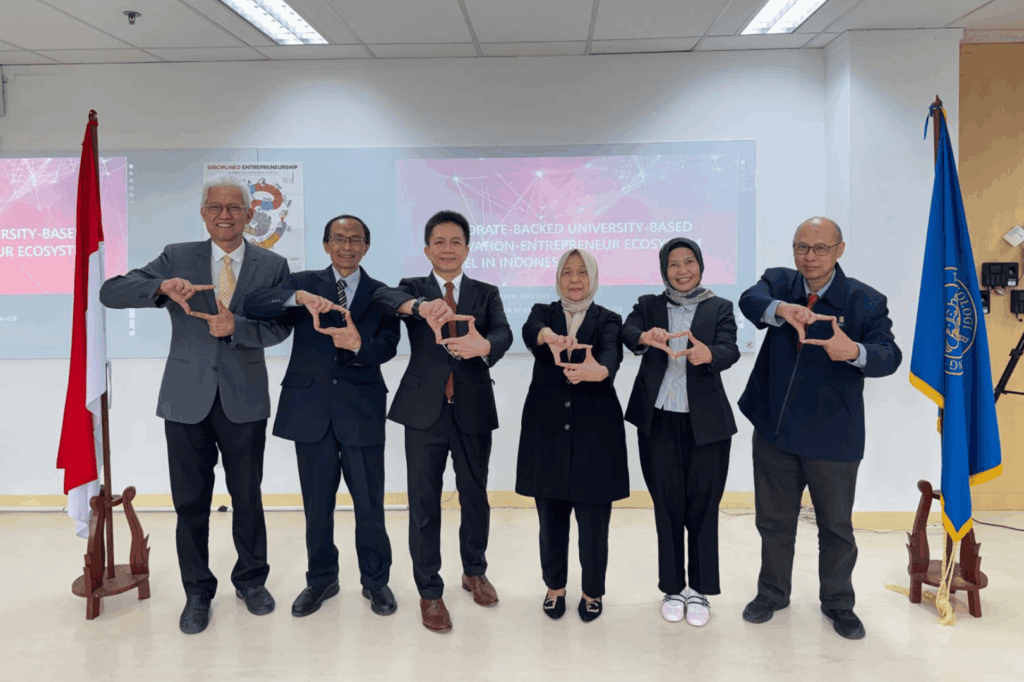
For Dr. A.R.Y. Toronata Tambun, a doctoral program is not just an academic achievement, but a space to answer questions he has long held throughout his professional journey. Graduating summa cum laude from the SBM ITB Doctoral Program, he is not a conventional student, but rather a practitioner with extensive experience.
The need for a degree did not drive the decision to pursue a doctoral program; rather, it was a strong intellectual drive. He observed that many organizational and business decisions were inconsistent with classical economic models, particularly regarding their tendency to avoid risk.
“After years of seeing organizations and entrepreneurs make loss-averse decisions in ways that classical theory cannot explain, I wanted to build a framework that could truly explain what I saw,” said Toronata (May 8).
Before pursuing his doctoral studies, Toronata had a 24-year career spanning 52 countries in the energy sector, entrepreneurship, and institutional leadership. He spent 13 years at Schlumberger, one of the world’s leading oil and gas service companies and long considered one of the most coveted destinations for the best engineering graduates globally.
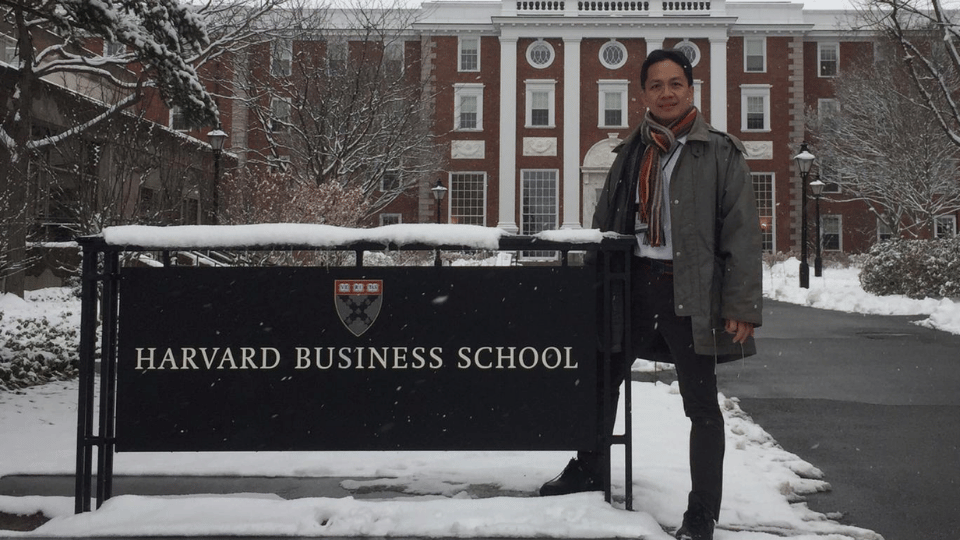
He later founded Aren Energy Singapore and served as Executive Director of the Mens et Manus Foundation. He completed the Advanced Certificate for Executives program at MIT Sloan School of Management, through which he holds affiliated alumni status, and separately completed the General Management Program at Harvard Business School, through which he was awarded full alumni status. These two distinct programs at two distinct institutions laid the foundation for his strategic and managerial thinking.
His dissertation was entitled “Corporate-Backed University-Based Innovation-Entrepreneur Ecosystem Model in Indonesia.” His research stemmed from a paradox: amid increasing access to capital, rising investor interest, and the proliferation of entrepreneurship programs in universities and corporations, fewer than 1% of business founders remain full-time, innovation-based entrepreneurs.
To understand this phenomenon, Toronata used a longitudinal, sequential, mixed-methods approach that combined 16 autoethnographic reports collected from 2018 to 2024 with system dynamics modeling. These reports were not personal anecdotes. They functioned as structured empirical data, systematically analyzed to identify recurring behavioral and institutional patterns before being translated into causal variables within the system dynamics model. This approach allows mapping of cause-and-effect relationships within the entrepreneurial ecosystem through seven Causal Loop Diagrams. Notably, system dynamics as a discipline was born at MIT, and it was there, through his time at MIT Sloan, that Toronata learned it directly from the source.
His key findings indicate that the biggest barriers lie not in programs, funding, or policies, but rather in cultural factors. Preference for stability, family expectations, and social legitimacy regarding career choices are the dominant factors shaping entrepreneurial sustainability.
“The problem isn’t a lack of programs or funding. The main barrier is culture, how society shapes perceptions of risk, stability, and the choice to become an entrepreneur,” he emphasized.
The scientific contribution of this research is formulated in the Dynamic Feedback Theory of Entrepreneurial Formation in Loss-Averse, Short-Horizon Cultures. Through this theory, Toronata reconceptualizes entrepreneurship not as a linear process but as the result of a complex interaction among various feedback loops, accumulation processes, and cultural influences, which are the dominant factors determining sustainability.
Within this framework, culture acts as an active regulatory mechanism that shapes identity, risk perception, and career orientation. Without strengthening social legitimacy, capability building will not result in lasting behavioral change.
The implication is clear: strengthening the entrepreneurial ecosystem is not sufficient through programs or funding alone, but requires reconstructing the social legitimacy of entrepreneurship as a career choice. This intervention is fundamentally different from existing approaches and, to date, has not been fully accommodated within existing policy frameworks.
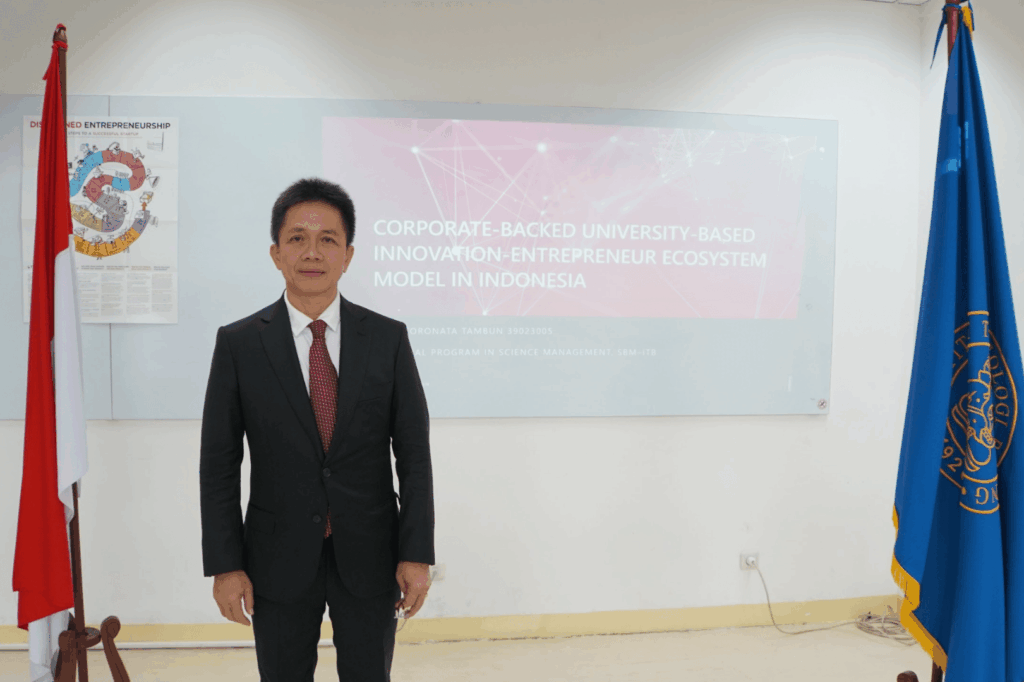
Completing his doctoral program with a perfect GPA in five semesters, Toronata emphasized that this achievement was the result of a long process that began long before his formal studies. Data collection lasted six years, even before he was officially registered as a doctoral student. Amidst various professional responsibilities, running an organization, providing advisory services, and writing seventy-eight columns for the Jakarta Post, none of which were outsourced, he maintained consistency through simple yet rigorous intellectual discipline. During his doctoral studies, he also remained active as a practicing lecturer at the School of Electrical Engineering and Informatics, Bandung Institute of Technology (ITB), bringing nearly 24 years of hands-on industry experience into the classroom.
“The formula isn’t complex: read, reflect, write and repeat. I don’t manage time, I manage focus,” he said.
His academic journey was also supported by the guidance of his promotors at SBM ITB, which provided strong methodological guidance and a situational leadership approach. The regular consultation sessions consistently provided a forum for high-level discussions, with him describing “every meeting felt like a defense.” This support directly contributed to the quality of his research output, leading to several publications in reputable international journals.
This doctoral experience complemented the intellectual development he had been building for nearly a decade. While his education at MIT Sloan School of Management and Harvard Business School provided him with strategic and managerial language, the doctoral program provided him with research architecture, the ability to formulate arguments precisely, test them with evidence, and defend them within a rigorous academic framework.
This combination provided a foundation that strengthened his career direction.
His contributions were recognized with the Ganesa Widya Jasa Utama Award in 2025, given for his role in the development of science and technology at the institutional, national, and international levels. This reach was also reflected in his doctoral examination, which was attended by approximately twelve professors from various universities, with external examiners drawn from Harvard Business School and the MIT Martin Trust Entrepreneurship Center.
For Toronata, the awards he received during his doctoral studies, including recognition as Best Doctoral Student and the Scholarly Achievement Award, were not merely individual achievements but indicators that the standards maintained throughout the process remained consistent over time. However, he emphasized that the ultimate measure of research lies not in awards, but in the extent to which the ideas generated are applicable and impactful.
Concluding his reflection, Toronata offered a message for prospective doctoral students. He highlighted that many individuals enter doctoral programs without a clear, fundamental purpose, without truly understanding why they are there. Many view their degrees as a goal or a symbol for others, making the research process more like a performance than a genuine pursuit of knowledge.
“A doctorate is not an award. It’s a responsibility.” He believes this responsibility is often not recognized from the outset. Many have not truly reflected on what knowledge is used for, and who that knowledge should serve. He emphasized that before embarking on a doctoral journey, one must have a truly important question, not just a topic, but an issue with real consequences. Toronata believes that knowledge is not just a credential, but a tool that should serve something greater. Without it, the doctoral process risks becoming a formality, rather than a meaningful contribution.