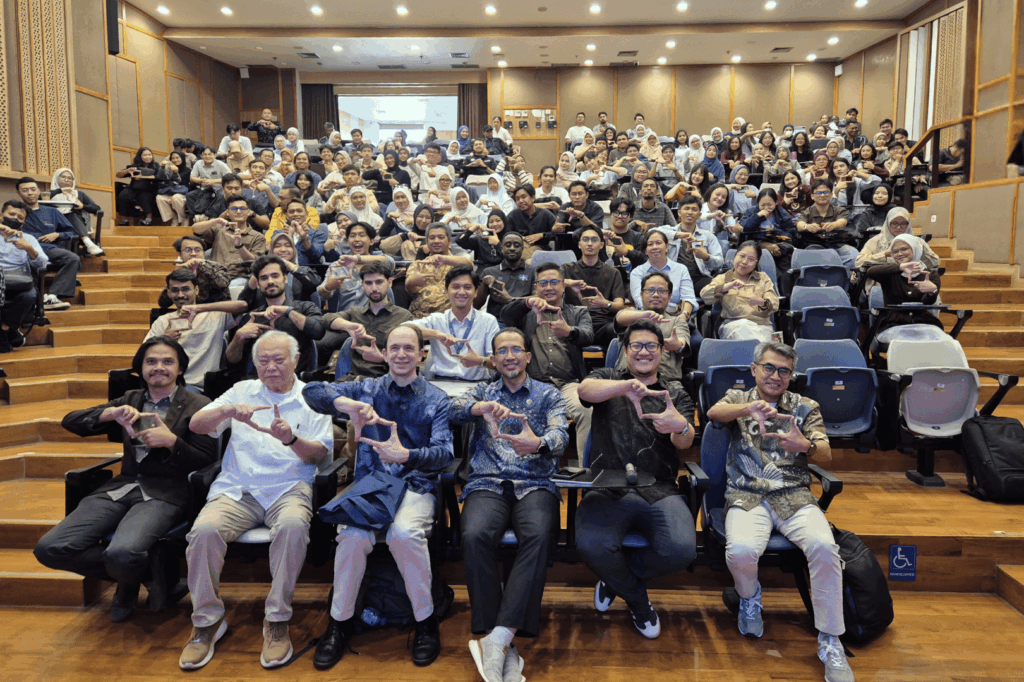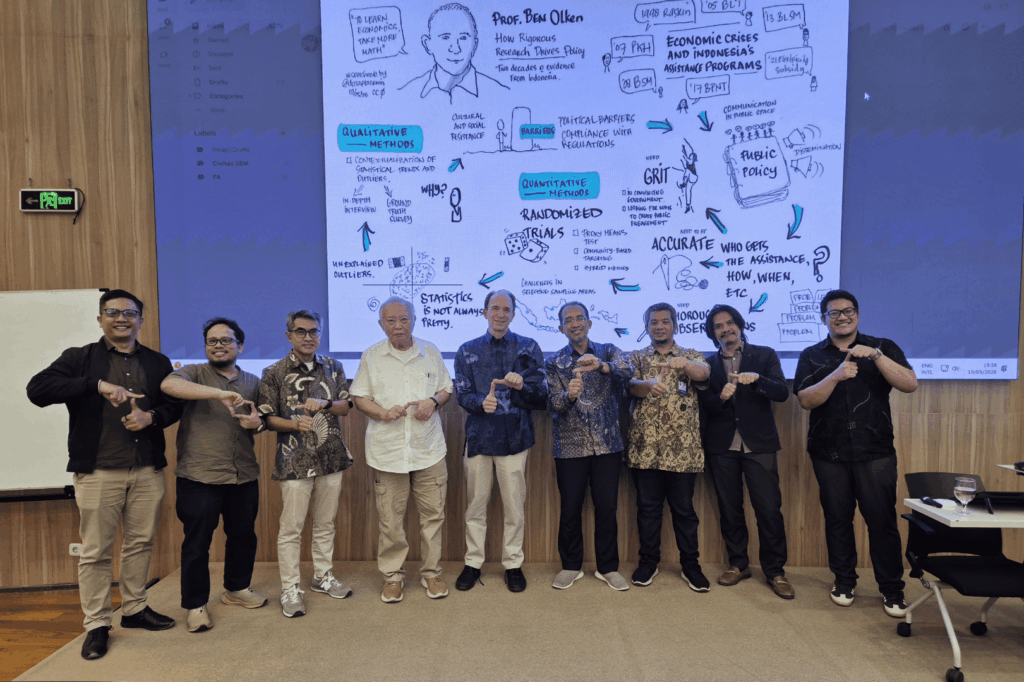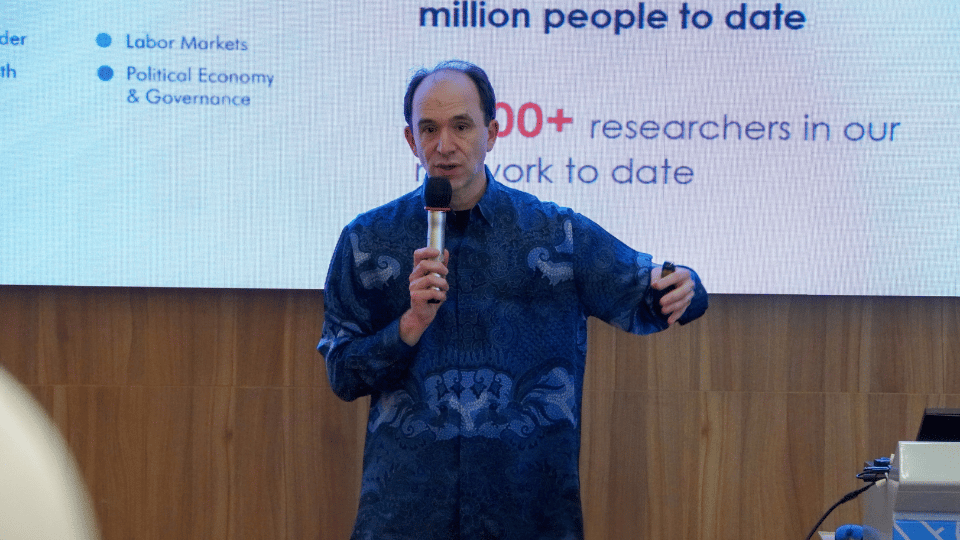
Benjamin A. Olken, TEPCO Professor of Economics at the Massachusetts Institute of Technology, United States, and Director of J-PAL Southeast Asia, urged students to view economics as a field with real impact on society. Ben explained how rigorous research and randomized evaluations can help answer various public policy questions.
He clarified that an evidence-based approach is essential for evaluating policies in areas such as education, public transportation, and poverty alleviation to identify which are effective, which should be expanded, and which require improvement.
“If you’re good at math and interested in public policy, then economics is a great choice and place for you,” Ben said during a public lecture titled “How Rigorous Research Drives Better Policy” at the School of Business and Management, Institut Teknologi Bandung (SBM ITB) on Tuesday (May 19).
Olken’s research focuses on development economics, particularly on improving public-sector performance in developing countries, including social protection programs, taxation, and governance quality. Olken then discussed the challenges of targeting social assistance in Indonesia. He explained that Indonesia has transitioned from providing general subsidies for items such as fuel, electricity, and food to implementing more targeted assistance programs. These programs include subsidized rice, scholarships, health insurance, as well as both conditional and unconditional cash transfers.
According to Olken, the primary challenge of this policy is identifying who qualifies for assistance, particularly in developing countries where comprehensive income data for most low-income households is not available. Additionally, the government struggles with effectively creating and maintaining an up-to-date database of recipients.
In his research, Olken compared three social assistance targeting methods: the Proxy Means Test method (PMT), the community-based targeting method, and the hybrid method. He emphasized that each method has its own advantages and disadvantages, so no single approach is completely right or wrong.
“The question is, which method works better? There’s no right or wrong answer; it depends on how and what you implement the policy,” he explained.
Olken’s research shows that the community-based approach is better at identifying poor households based on community perceptions and produces higher levels of satisfaction than other methods. These findings then served as input for the development of social assistance programs in Indonesia, including the Family Hope Program (PKH) and the Village Fund Direct Cash Assistance (Bantuan Langsung Tunai Dana Desa).
In addition to discussing public policy research, Olken also introduced the MITx MicroMasters Program in Data, Economics, and Design of Policy, which offers courses on economics, data analysis, policy evaluation, and the challenges of global poverty.
SBM ITB Vice Dean for Academic Affairs, Dr. rer. pol. Eko Agus Prasetio, S.T., M.B.A., stated that activities like this are expected to strengthen the research culture within SBM ITB and ITB as a whole.
“We hope that activities like this can be held more frequently. SBM ITB, as part of ITB, has a strong commitment to improving research quality in line with the rectorate’s ambition to bring ITB into the QS Top 150 world rankings by 2030,” he said.
Through this public lecture, SBM ITB hopes that students will gain a deeper understanding of the importance of evidence-based research in generating effective policies while encouraging academic contributions that have a real impact on society.