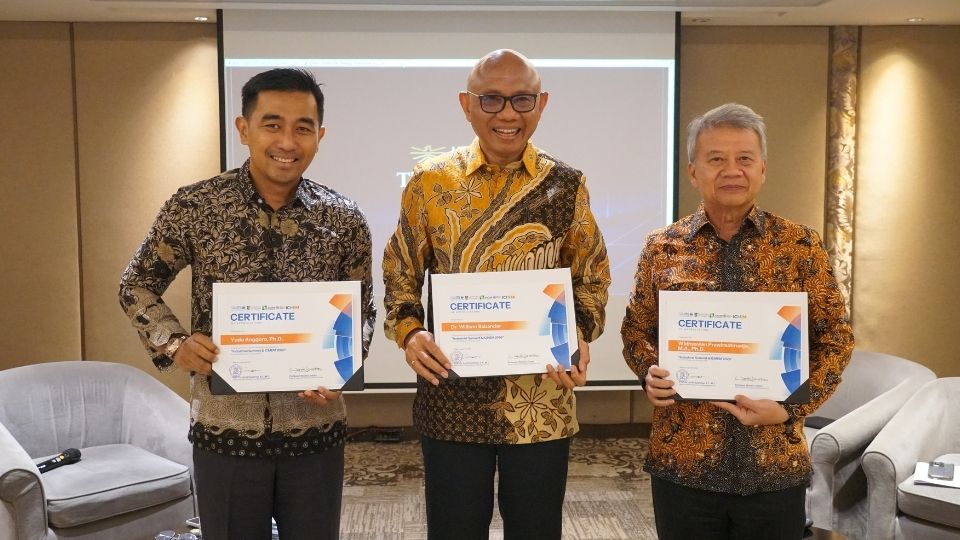
The energy transition should not be viewed solely as a power plant construction project. According to him, the energy transition is a process of building a new industrial ecosystem that encompasses the value chain from raw materials and component manufacturing to technology, financing, project development, and operations.
“Never view this energy transition as a project,” said William Sabandar, COO of the Indonesia Business Council, in a parallel discussion titled Renewable Energy at the SBM ITB Industrial Summit 2026 in Jakarta (August 19).
According to Sabandar, scale is a crucial factor in creating a competitive industry.
“Without scale, there will be no industrialization, there will be no transition.”
Therefore, renewable energy development targets need to be linked to the creation of local value-added, technological mastery, expert development, research, and export capabilities.
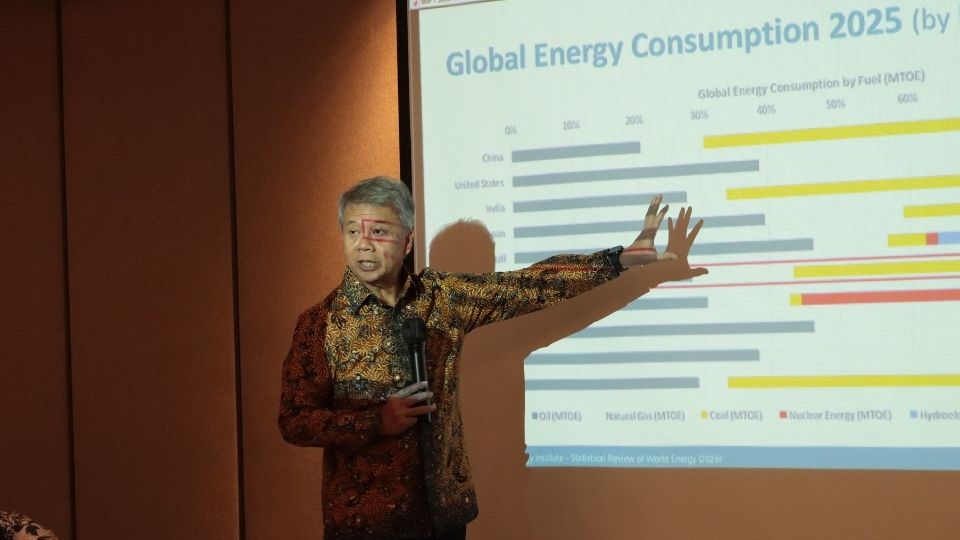
Sabandar highlighted Indonesia’s lagging solar energy development compared to several ASEAN countries. In his presentation, solar energy capacity in Vietnam will reach around 25 GW by 2025, 11.4 GW in Thailand, and 5.8 GW in Malaysia, while Indonesia has only around 1.6 GW.
According to him, this situation demonstrates the importance of policy certainty in attracting long-term investment.
“Investors will come when there is certainty.”
Policy consistency is crucial so investors have confidence that investments in the renewable energy sector can grow in the long term.
Indonesia also has an ambitious target of achieving 100 GW of solar energy. William believes this target should not be viewed solely as a generating-capacity target but as an opportunity to build a national solar PV industry.
“The only key process… is if we can move from solar deployment to solar industrialization.”
Success, according to William, should be measured by the extent to which components are produced domestically, mastery of technology and intellectual property, R&D, and Indonesia’s ability to export renewable energy products and technology.
Meanwhile, SBM ITB academic Dr. Widhyawan Prawiraatmadja sees Singapore’s clean energy needs as a strategic opportunity. Indonesia has renewable energy potential, while Singapore has a high demand and willingness to pay for clean energy. Renewable energy-based electricity trade cooperation could be an initial step towards creating a market and industrial scale.
However, Widhyawan also cautioned that the cost of capital and investment risks remain challenges. Therefore, strengthening legal certainty and the investment ecosystem is necessary for renewable energy projects to develop competitively.
Don’t Let Indonesia Become Just a Market The main message from the Renewable Energy session was that Indonesia has the opportunity to make the energy transition a new engine of industrialization.
If the development of 100 GW of solar energy only results in increased imports of panels, inverters, charging systems, technology, and expertise from abroad, then the energy transition is indeed occurring. Still, the benefits of industrialization do not reside entirely in Indonesia.
Instead, this target can provide momentum for building a more complete value chain: energy transition → industrialization → technology mastery → human capital → productivity → export. With this approach, the energy transition will not only address electricity needs and decarbonization targets but also create new, competitive industries.
Ultimately, Indonesia possesses almost all the necessary initial capital, a large market, renewable energy potential, and regional market opportunities. The challenge now is to ensure this capital translates into policy certainty, an industrial ecosystem, technological mastery, and human resources capable of transforming Indonesia from a mere technology user into a producer and exporter of renewable energy solutions.
Organized by the School of Business and Management, Institut Teknologi Bandung (SBM ITB), and the University of Glasgow, this summit serves as an international forum that brings together regulators, industry leaders, academics, policymakers, professionals, and young people to discuss the future direction of Indonesia’s economy and industry. The Industrial Summit 2026 serves as a dialogue space to explore how policy, innovation, business strategy, technology, and cross-sector collaboration can shape future industrial competitiveness.