Technological developments will not eliminate the need for conventional modes of transportation. What will change is how people access and use them.
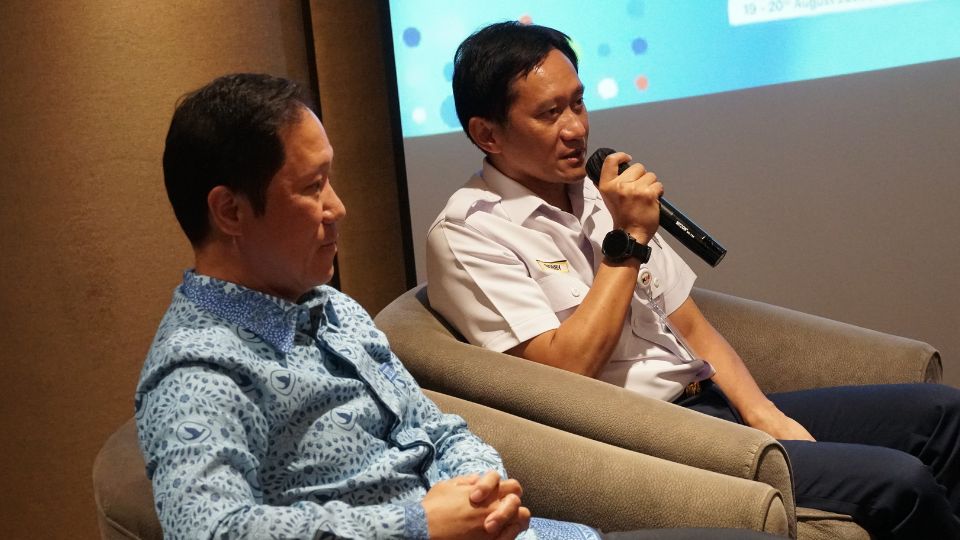
Bluebird Vice President and Director Sigit Djokosoetono said the future of transportation will be determined by the ability of various modes to connect. Bluebird has utilized IoT, big data analytics, and AI to support operations and is moving towards an integrated mobility solution through a multi-product, multi-payment, and multi-channel strategy.
Sigit made this statement during a discussion on transportation at the SBM ITB Industrial Summit 2026 in Jakarta, August 19, 2026.
According to him, a single company cannot build a mobility ecosystem on its own. Stations, transport hubs, pickup points, charging infrastructure, and digital platforms need to be connected for seamless travel.
KAI President Director Bobby Rasyidin sees integration also opening up business opportunities. With more than 600 stations, approximately 8,000 kilometers of track, and 503 million passengers by 2025, KAI has a large asset and customer base.
However, only about 6 percent of KAI’s revenue comes from non-farebox businesses. For comparison, Japan Railway’s benchmark, as presented, is around 40 percent.
KAI therefore wants to develop growth sources through land assets, station ecosystems, technology, and data. The company manages approximately 3.5 billion data points per day, which can be processed into insights and business decisions.
Integration is necessary to lower Indonesia’s logistics costs, which, as noted in Bobby’s presentation, amount to 15.42 percent of GDP. Train efficiency will not be optimal without connections with trucks, ports, industrial areas, and other modes to address first- and last-mile issues.
SBM ITB academic Prawira Fajar Belgiawan said transportation choices are heavily influenced by travel time and cost. Even the most advanced technology is not necessarily chosen if it doesn’t offer appropriate costs and comfort.
In his research on Mobility as a Service (MaaS), 37 percent of respondents were willing to switch to services that combine various modes in one package, especially if they offer cost efficiency.
“Cost dominates every phase,” Fajar said.
Cost factors also determine the adoption of electric vehicles, Urban Air Mobility, and autonomous vehicles. Furthermore, these technologies require infrastructure readiness, regulations, and public trust.
Therefore, the future of Indonesian transportation is not simply about introducing new modes. Taxis, trains, buses, ride-hailing, electric vehicles, and digital platforms need to be connected within a single ecosystem that makes travel easier, more affordable, and more efficient.
The discussion was part of the SBM ITB Industrial Summit 2026, organized by the School of Business and Management, Bandung Institute of Technology, and the University of Glasgow, on August 19-20, 2026.