Technological advancements alone are insufficient to enhance Indonesia’s productivity and competitiveness. Organizations also need leaders who can develop people, use artificial intelligence responsibly, and prepare successors.
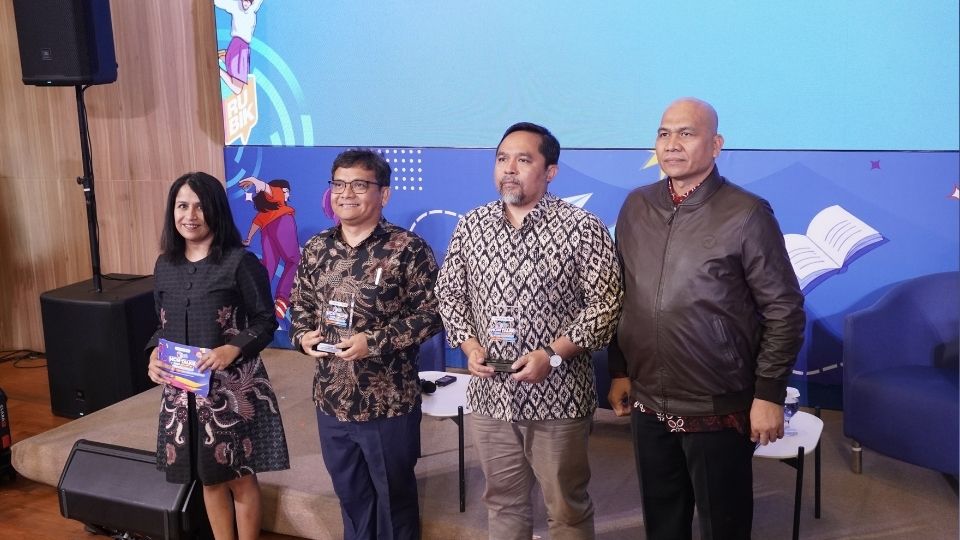
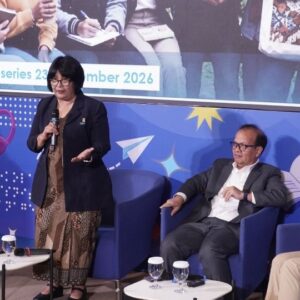
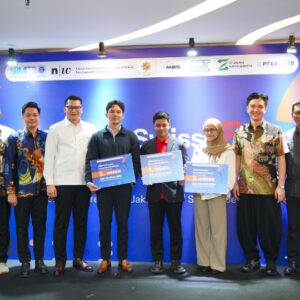
This idea emerged in the session “Developing Future Leaders: Talent, Learning, and Succession for Indonesia 2045” at the 7th HCM Talks Series 2026 at the Freeport Building of SBM ITB on Wednesday (September 23, 2026). The event, themed “Leadership Development Across Fields and Levels Toward Indonesia Emas 2045,” was a collaboration between the School of Business and Management, Institut Teknologi Bandung (SBM ITB), the ITB Alumni Association, and PRIMA Indonesia through PT Rintis Sejahtera.
Head of the People and Knowledge Management Expertise Group and Chair of the SBM ITB Senate, Prof. Henndy Ginting, said productivity arises from the interaction between technology, human capabilities, and organizations. According to him, leadership has an economic impact when it produces real changes in human behavior within an organization.
“Leadership becomes economically relevant when leadership changes behavior,” he said.
Leaders are not only decision-makers, but also drivers who shape behavior, develop capabilities, build trust, and direct people to achieve common goals. These behavioral changes then boost organizational productivity and national competitiveness.
Prof. Henndy emphasized that Indonesia’s wealth lies not only in natural resources, but also in knowledge, skills, health, innovation, and leadership. Therefore, human development is crucial to transforming the nation’s potential into productivity.
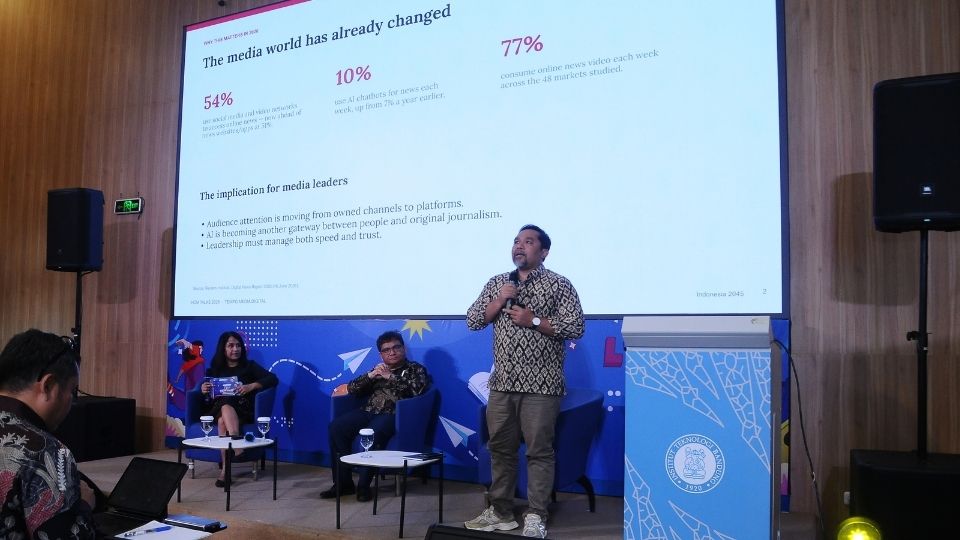
Tempo Media Digital CEO Wahyu Dhyatmika then highlighted changes in the world of work driven by artificial intelligence (AI). According to him, the challenge for organizations is no longer simply using AI, but also determining what changes are needed and what principles must be maintained.
“AI is changing the tools. Leadership decides what changes and what must remain,” he said.
In Tempo’s context, technological developments and changing audience habits require adjustments to platforms, products, business models, and work methods. However, these changes must not sacrifice credibility, independence, integrity, and public trust.
Wahyu mentioned four skills future leaders need: AI literacy, judgment, learning agility, and human leadership. Leaders need more than just understanding technology. They must also set priorities, build trust, provide clarity, and create accountability.
“The advantage isn’t ‘human vs machine.’ It’s the ability to lead both,” he said.
Leader development, according to Wahyu, must begin before someone assumes an executive position. Talent needs the opportunity to face real-world problems, undergo cross-functional rotation, make decisions, reflect on experiences, and develop others.
Thus, succession is not just a list of potential leaders, but a system that continuously produces individuals with leadership capabilities.
The discussion was further strengthened by the response of Property and Market Director Perumda Pasar Jaya Raja Malem Ukur Tarigan, S.T., who shared his perspective on applying talent development, organizational learning, and succession in organizations facing service demands and changes in business and society.
Prof. Hazel Grünewald, BA (Hons), MA, PhD, Professor of Organizational Behaviour, NXT Sustainability and Technology, Reutlingen University, moderated the session.
The panel emphasized that talent development for Indonesia 2045 is not simply about preparing someone for a position. Organizations need to build an ecosystem capable of continuous learning, adaptation, and producing new leaders.
“Your legacy is not what you control, it’s what the organization can do after you,” Wahyu said.