Nine out of ten viral brands die within two years. The figure is more than a warning. It reflects how often local brands are celebrated too early.
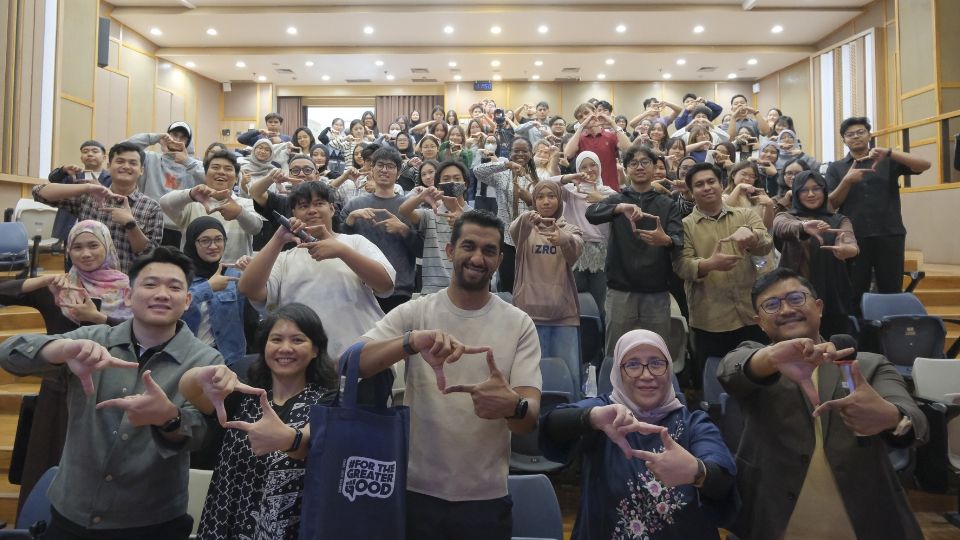
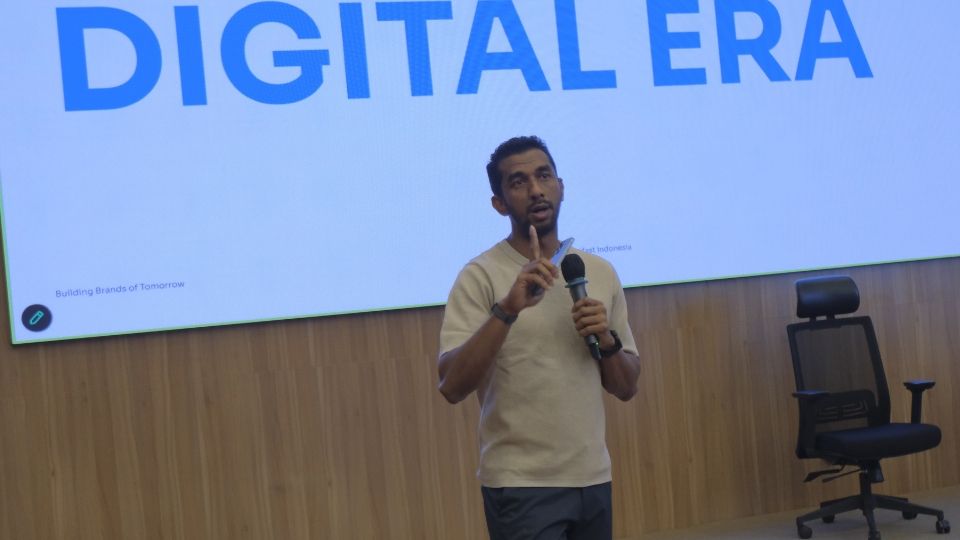
In Bandung, on October 10, 2026—specifically at the Freeport Building Auditorium, the SBM ITB Guest Lecture Series #3 featured Mad Alkatiri, Founder and CEO of Hypefast, as a guest speaker. Mad Alkatiri led a session titled “’Local Pride’ or Virality Won’t Save Your Business: The Brutal Reality of Building Local Brands.” He opened the session by posing a question to the students:
“How many of you right now have a local brand product?”
Mad then stated that the session would be as honest as possible, so that students could understand the reality of entrepreneurship. In his view, too many stories out there exaggerate business success, as if it were achieved in just a matter of months.
The short discussion was followed by an introduction of the speaker. Mad comes from Ambon, Maluku, and has a background in e-commerce, from Shopee to Lazada, and now acquires promising brands to help them grow and push them further.
From his experience, there is a fundamental difference between entrepreneurship in Indonesia and in the United States. In the US, founders usually arrive with extensive professional backgrounds and deep experience, which gives their scalability a clearer direction, while in Indonesia, even a fresh graduates can start a brand, often out of a sense of community.
Still, managing a small business and managing a big one are clearly different. Once a brand grows to IDR 500 million and is ready to scale, its owner needs a different set of skills. This is where Hypefast comes in, Mad went on to explain Hypefast’s role in helping brands grow, from warehousing to the scaling process.
On the 90% figure, he explained that it is closely tied to the illusion that often surrounds local brands, such as the spirit of “proudly made in Indonesia.” That pride does not automatically make consumers buy, consumers do love Indonesia, but they love their wallets more, and they love a good product even more.
“For local products, if the local label becomes your entire personality, that is a mistake. It may work in the early phase, but it won’t last. You need defensibility, not just nationalism. Nationalism is not a strategy. Make sure your product solves a real problem,” he said.
The discussion then turned to virality with a question: does a viral brand actually come with buying power? According to Mad, going viral is not a bad thing. The mistake is making it your strategy where virality does not automatically translate into purchases.
“If you want to break the ceiling and grow bigger, you need new customers, and what you offer has to match what they actually want. Market penetration is a much better way to grow a brand,” he said.
In the final session, Mad presented a case study of Whiteflow, a premium personal care brand that chose the wrong strategy because it was misled by the illusion of social media virality. He asked the audience what the best move would be.
SBM ITB students were divided into three teams, each choosing one strategy. The blue team chose an omnichannel push, the green team chose a portfolio push, and the red team chose a white flag move. Each team then debated to defend its choice.
At the close, Mad did not declare any answer right or wrong. Everyone has their own perspective, and what matters most is a strong argument behind each choice. The session concluded with a Q&A, which unfolded in an exciting and lively atmosphere.
Contributions to SDGs :
Enhances quality education by providing students with practical entrepreneurial knowledge, industry insights, and hands-on business strategy discussions. Supports decent work and economic growth by strengthening students’ understanding of entrepreneurship, business management, and strategies for scaling local enterprises. Promotes industry, innovation, and infrastructure by encouraging product differentiation, innovation, and the development of competitive and resilient local brands. Encourages responsible consumption and production by emphasizing the importance of creating products that address genuine consumer needs and deliver real value rather than relying solely on marketing trends or social media virality.
#SDG4 #SDG8 #SDG9 #SDG12