Garut, 2026 – The School of Business and Management (SBM) ITB, in collaboration with the School of Architecture, Planning, and Policy Development (SAPPK) ITB, is developing a business innovation model based on circular economy principles in Garut Regency. This initiative aims to optimize the potential of local resources by transforming agricultural waste into economically valuable products, while creating business opportunities and improving community welfare.
Through the Impact-Oriented Excellent Innovation Program Scheme initiated by ITB’s Directorate of Research and Innovation, the research team consists of Dr. Dina Dellyana (Principal Investigator) and Lisandy Arinta Suryana, M.S.M. from SBM ITB, along with Prof. Ridwan Sutardi from SAPPK ITB. The initiative focuses not only on developing alternative animal feed products derived from corn waste but also on designing a business ecosystem that connects farmers, processing groups, Village-Owned Enterprises (BUMDes) or cooperatives, distributors, and livestock farmers. Through this approach, agricultural waste that was previously underutilized can be transformed into a new economic resource, generating added value for various stakeholders.
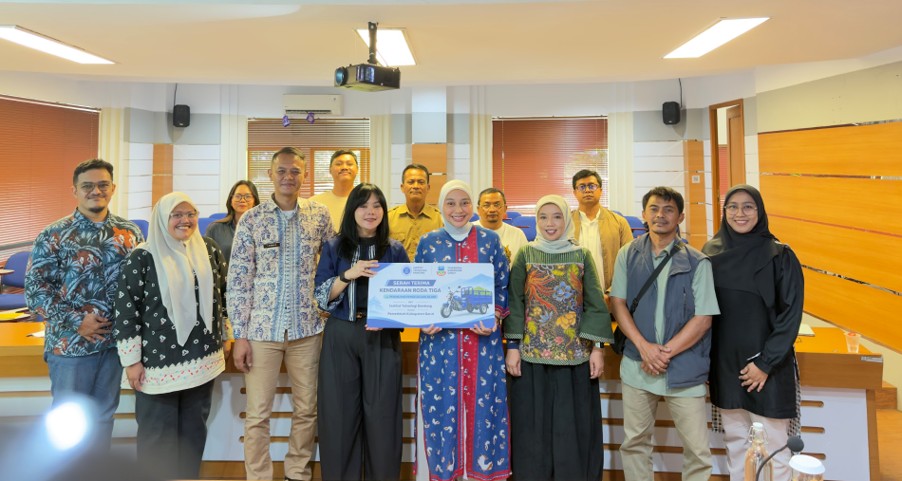
The results of the development process and the potential business model were presented at the Office of the Deputy Regent of Garut on Friday, November 6, 2026. The event was attended by the Deputy Regent of Garut, Putri Karlina; the Head of the Garut Regency Fisheries and Livestock Agency, drh. Dyah Savitri, M.A.; and the Head of the Animal Feed Division of KUD Mandiri Bayongbong, Iyan Rudiansyah, S.Pt. The dissemination event served as an opportunity to introduce business development opportunities based on local resources and foster synergies among universities, local government, cooperatives, and community-based business actors.
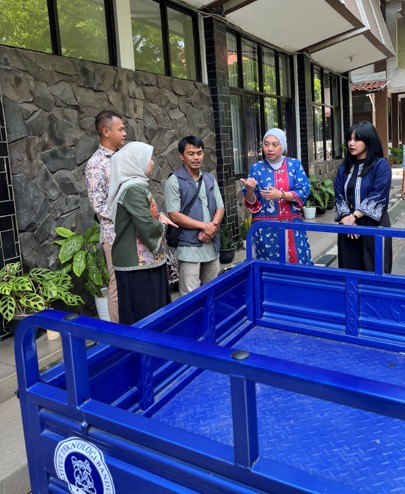
As a form of support for the implementation of this innovation, ITB’s Directorate of Research and Innovation provided a grant in the form of a three-wheeled motor vehicle to support the collection of raw materials and the distribution of silage to livestock farmers. This logistical support is expected to streamline transportation processes, expand distribution coverage, and help ensure the sustainability of silage production and marketing activities at the community level.
Through a circular economy approach, this initiative promotes the development of a value chain that generates economic benefits for the community, ranging from farmers as raw material suppliers, local business units as product processors and managers, to livestock farmers as end users. Thus, the innovation goes beyond product development and is directed toward creating business opportunities, strengthening community-based economic institutions, and establishing sustainable business models.
Moving forward, the initiative will focus on strengthening the capacity of local business actors, validating the business model, developing market opportunities, and enhancing partnerships among stakeholders. Through collaboration between SBM ITB, SAPPK ITB, local government, and the community, this initiative is expected to serve as a model for local resource-based economic empowerment that integrates business innovation, environmental sustainability, and economic value creation for the people of Garut Regency.
Contributions to the SDGs :
This initiative contributes to several Sustainable Development Goals (SDGs), particularly SDG 8 (Decent Work and Economic Growth) by creating local business opportunities and strengthening community-based economic activities; SDG 9 (Industry, Innovation and Infrastructure) by promoting innovative business models and sustainable production systems; SDG 12 (Responsible Consumption and Production) through the utilization of agricultural waste as an alternative resource; and SDG 17 (Partnerships for the Goals) by fostering collaboration among universities, local government, cooperatives, and community stakeholders to support sustainable economic development.
#SDG8 #SDG9 #SDG12 #SDG17