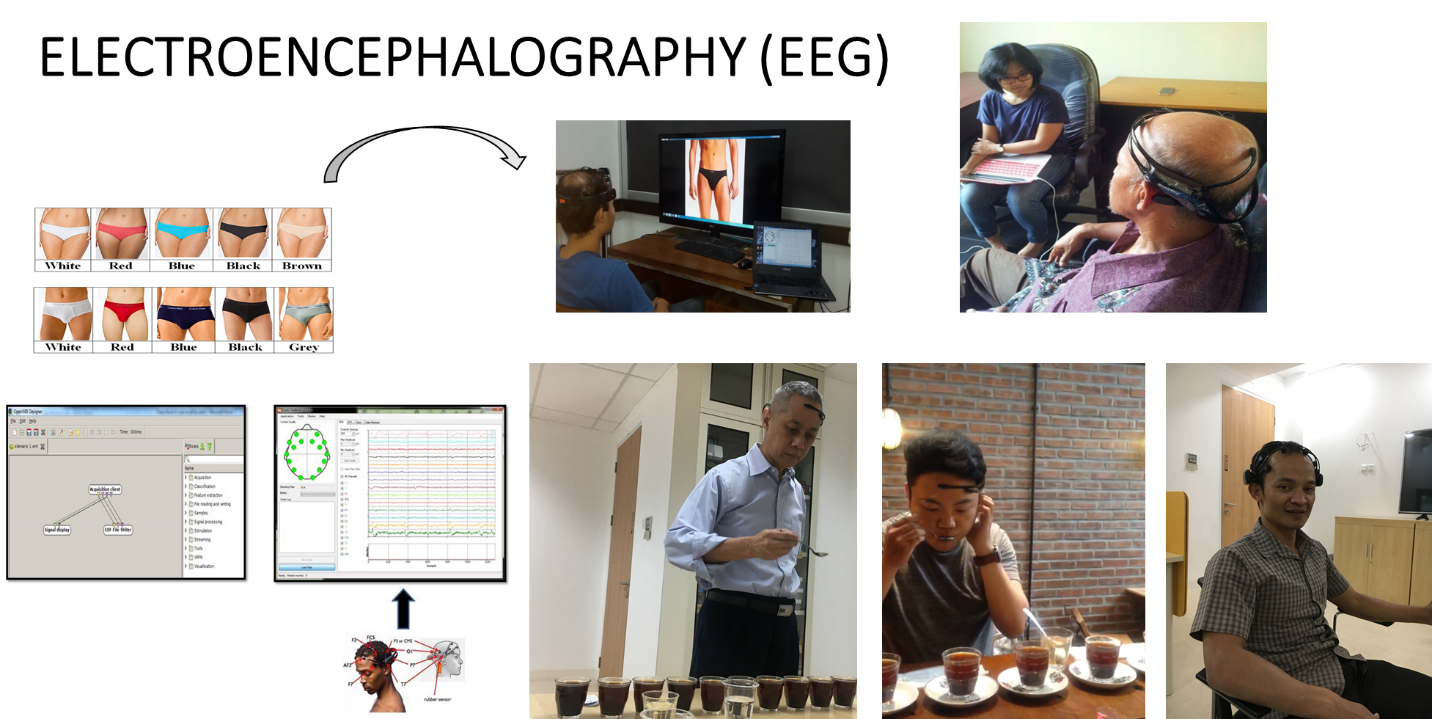
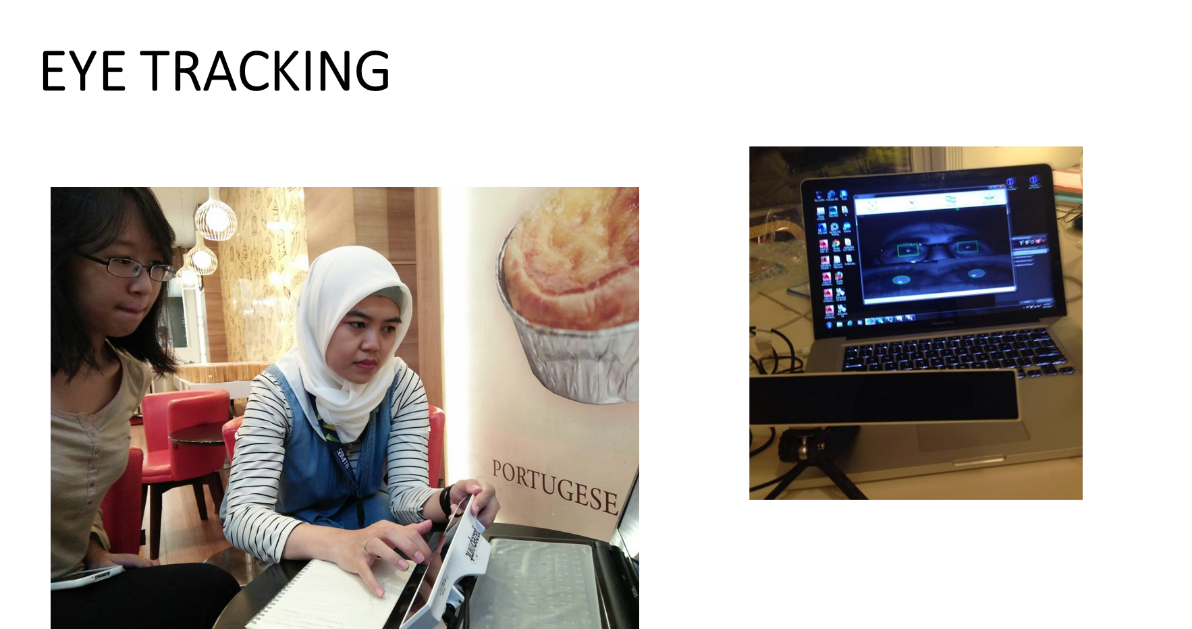
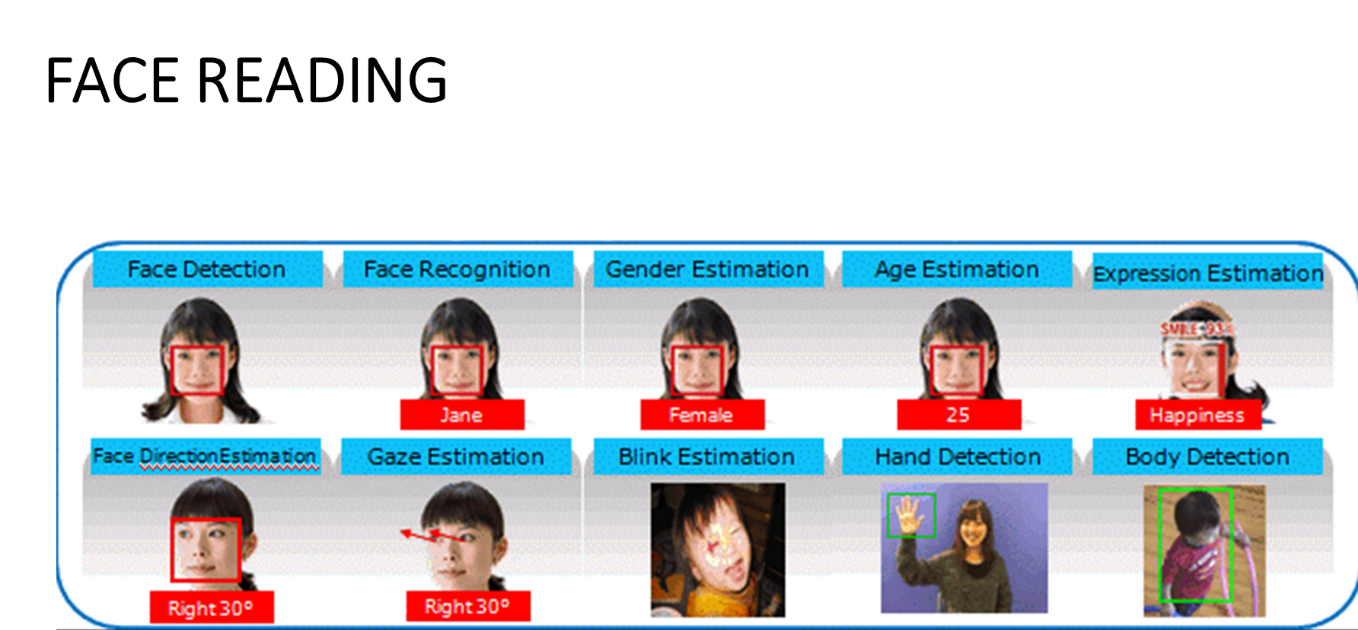
About: The Neurobusiness Lab is a research lab at SBM ITB (School of Business and Management, Institut Teknologi Bandung) applying neuroscience methods to questions in business, leadership, and entrepreneurship. We combine EEG, pupillometry, game-based behavioral assessments, and validated self-report instruments to study how people actually make decisions — not just how they say they do.
Self-report surveys tell us how people think they behave. Physiological and behavioral measures show what’s actually happening in the moment of a decision. Our work sits at that gap: we pair established psychometric instruments with neural and behavioral data to build a more complete, individually reliable picture of leadership and entrepreneurial capacity.
This isn’t about replacing self-report — it’s about triangulating it. Where a questionnaire can be gamed, primed, or misremembered, EEG markers, pupil dilation, and incentivized behavioral tasks provide converging (or diverging) evidence at the individual level.
The lab’s current core focus is risk propensity and approach motivation — foundational constructs in both leadership and entrepreneurial behavior — developed end-to-end from instrument selection through neural correlates.
The Neurobusiness Lab has a longer history within SBM ITB, having grown out of earlier work in neuromarketing before expanding into neuroscience for workplace behavior, leadership, and entrepreneurship — reflecting a broader shift in how business schools are applying neuroscience across marketing, HR, coaching, training, and strategic decision-making.
The Neurobusiness Lab isn’t only a research facility — it’s an active part of how we teach. Students engage directly with the lab’s methods and findings through coursework, hands-on exposure to EEG, pupillometry, and game-based assessment tools, and opportunities to work as research assistants on live studies. This gives students a rare, applied window into how neuroscience methods translate into real business and leadership insight, rather than encountering them only as theory.
Programs
Neuromarketing
Consumers in the global economy are faced with millions to countless marketing messages that persuade them to reach into their pockets to buy products or services. Billions of money is poured out by a brand to succeed in the market, both for products, packaging, communication messages, brands, customer experience, and retail environments.
Neuromarketing is a mixture of marketing and neuroscience; the key to opening the subconscious mind, the feelings, the desires that drive the purchase decision. FGD and Marketing Research will soon not be suitable for predicting what consumers think because basically our decision-making is based on irrationality, flooded with cultural influences in which we are raised and other subconscious factors. Truly, 85 percent of brain work is autopilot.
Neuromarketing will be the future of marketing and consumer engagement will thrive through the application of neuroscience. As practitioners and academics, we increasingly understand that there is a difference between what consumers do and say. However, we need a deeper understanding of what consumers think and feel about their relationships with products and services, their association with our brands and so our advertising.
By using our brain-imaging technology, equipped with the technology to do the product pull test day, advertising, etc., neuromarketing opens a curtain to know what attracts consumers, what emotions involve, what they think and how they remember.
Neuroscience of Workplace
Research related to the better workplace is needed to make employees
- work with pleasure and able to optimize their personal ability for the success of the company
- avoid stress
- think more broadly
- better in solving problems, and
- think more creatively
Neuroscience of Leadership
The brain has the ability to change and adapt to various problems encountered in the environment. Research in the field of brain science has shown that the brain continues to create new synapses as well as new memories, in line with the increased experience and updated information. Cognitive exercise produces physical changes in the brain.
It is useful for business leaders to explore deeper neuroscience. Neuroscience teaches us how people learn and how behaviours can be changed. As human brain mapping continues, we can expect to learn more about how to function and how leaders can use this knowledge to lead employees and develop their organizations more effectively. Research on Neuroscience of Leadership does not provide all the answers but offers insight into how effective learning and development programs can be tailored to develop effective organizations.
Partner
Medical Instrumentation Laboratory
(Physical Engineering Department – ITB)
Team
Head of Laboratory:
Dr. Mustika Sufiati Purwanegara, M.Sc (mustika@sbm-itb.ac.id)
Members:
Dr. Achmad Fajar Hendarman (achmad.fajar@sbm-itb.ac.id)
Fitri Aprilianty, MSM (fitri.aprilianty@sbm-itb.ac.id)
Contact Us
SBM ITB Neurobusiness Lab
Labtek XIV, 4th floor
Jl. Ganesha No.10, Bandung, 40132, Indonesia
Phone: (+622) 2531923
Instrument