The scenario method is now increasingly recognized as a tool for anticipating and a basis for developing strategic plans for organizations and companies amidst uncertainty. Rather than predicting a single, definitive future, scenario work encourages decision-makers to consider various possible futures, understand the uncertainties surrounding them, and develop robust strategies for each.
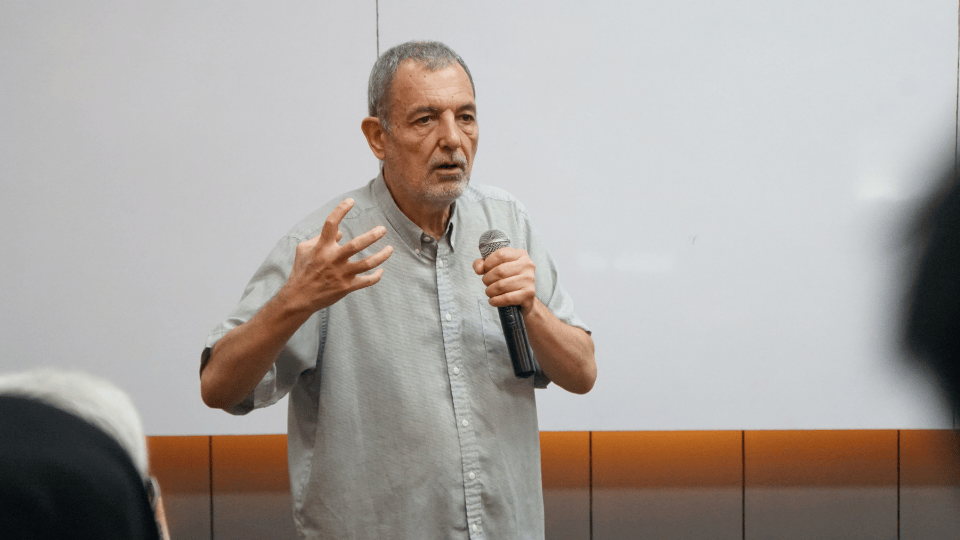
Prof. Karim Medjad, International Law Chair at the Conservatoire National des Arts et Métiers (CNAM), Paris, introduced the scenario method during a guest lecture on Strategic Decision Making and Negotiation presented by the MBA Program at SBM ITB in Bandung (December 1). In this session, Prof. Medjad encouraged students to understand in depth how the scenario method is used as an anticipatory tool across various strategic contexts.
Medjad compared the scenario method with other foresight approaches, such as visioning and forecasting. Prof. Medjad emphasized that scenarios are not a tool for predicting the future, but rather a way to prepare for various possibilities. While forecasting focuses on certainty and tends to “push the present into the future,” the scenario method starts from uncertainty and draws various alternative futures into the present for consideration in strategic decision-making.
Scenarios can be used as tools for sense-making, norming, and wind-tunnelling. Prof. Medjad, for example, cited Pierre Wack’s 1972 Shell Scenarios as a classic example of sense-making, and Adam Kahane’s Mont Fleur Scenarios (1990–1994) as an example of norming, which maps four possible futures for post-apartheid South Africa. He also demonstrated how wind-tunnelling helps test strategies across different future conditions.
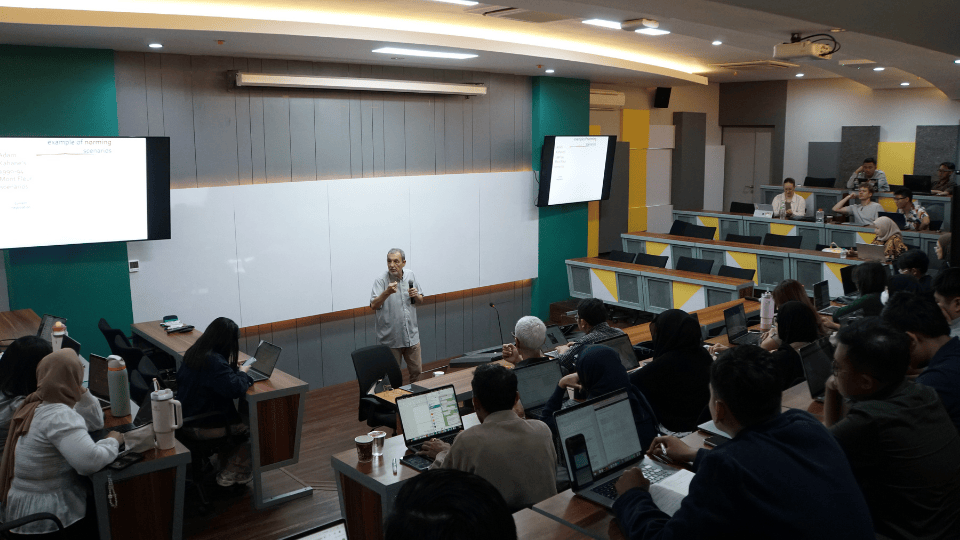
Prof. Medjad then outlined the scenario development process, from formulating questions and identifying “clients,” researching the contextual and transactional environment, sorting certainties from uncertainties, selecting two key uncertainties, and constructing a scenario matrix and its strategic implications. Through the case study “The Future of French Immigration in 2050,” students saw how uncertainties in demographics and public governance led to four very different scenarios, each with unique socio-economic dynamics.
Medjad also discussed “memories of the future,” namely, early indicators and weak signals that help organizations recognize which scenarios are beginning to materialize. The example presented was the “Lebanon 2030” scenario analysis, which demonstrated how weak signals can guide long-term decision-making.
In closing, Prof. Medjad emphasized that in scenario work, the communication method is as important as its formulation. Scenarios ultimately have a specific purpose, message, and audience, and the way they are presented determines how they are used for strategic decision-making and negotiations.
This guest lecture provided MBA students at SBM ITB with comprehensive insight into the importance of thinking across possibilities, understanding uncertainty, and using the scenario method as an anticipatory tool and as a foundation for developing robust strategies to face a constantly changing future.