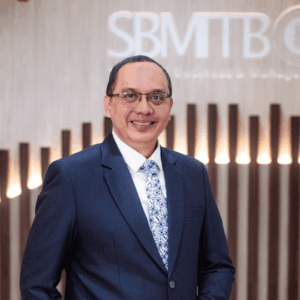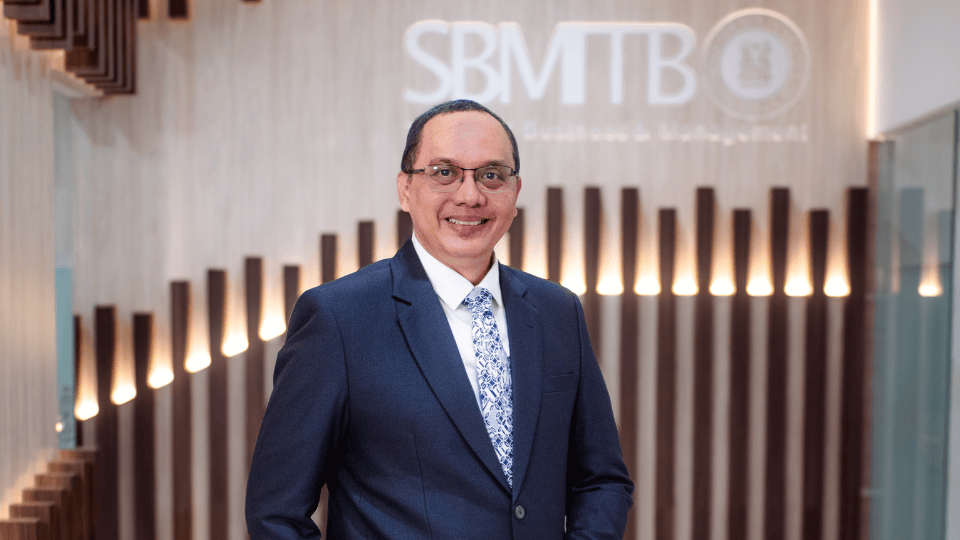
The Dean of SBM ITB, Aurik Gustomo, has been unanimously elected as Chair of the National Executive Board (Dewan Pengurus Nasional/DPN) of the Indonesian Association of Faculties of Economics and Business (AFEBI) during the 13th AFEBI Congress, held from 26–28 November 2025 in Lombok. AFEBI is a national organization representing Faculties of Economics and Business (FEB) across Indonesia. It plays a strategic role in improving educational quality, strengthening research collaboration, and serving as a key partner to the government in national economic development. The unanimous appointment marks a significant milestone for SBM ITB, reflecting the strong trust of AFEBI members in Aurik’s leadership capacity and track record over more than a decade.
Aurik explained that his involvement with AFEBI began when the association was established in 2013. Over the past 12 years, he has served as National Treasurer of AFEBI, contributing extensively to the organization’s programs and initiatives. His long-standing experience and close engagement with deans of FEBs across Indonesia led to this year’s leadership selection being conducted without a formal vote, as the majority of members expressed their agreement through acclamation. Beyond individual considerations, the appointment also recognizes SBM ITB’s contributions and reputation in advancing business education at the national level.
In his capacity as Chair of the National Executive Board of AFEBI, Aurik emphasized that the association’s primary mission is to enhance the quality of education in Faculties of Economics and Business throughout Indonesia. He stressed that quality improvement must be pursued comprehensively, encompassing curriculum development, learning methods, research, and community engagement. “AFEBI is committed to ensuring that the quality of FEB education continues to improve and remains relevant to both national and global demands,” Aurik stated. He further highlighted that one of the most significant challenges faced by many FEBs is the weak research culture. “Internationally reputable publications remain a major challenge for most FEBs in Indonesia,” he emphasized.
Aurik also underscored the need for a paradigm shift in business education toward an interdisciplinary model. According to him, to address national challenges effectively, FEBs can no longer operate as monodisciplinary entities. Business education must be developed within an interdisciplinary framework to support strategic national programs in areas such as healthcare, biotechnology, aviation industries, real estate, and sustainability.
One of the key initiatives Aurik brings to AFEBI is the strengthening of societal impact as a new foundation for higher education. He noted that this concept differs significantly from conventional “community development” programs commonly implemented by universities. Societal impact, he explained, must be designed as a long-term, integrated program embedded within the curriculum, research, and community service. Such programs should involve all students and faculty members continuously and be guided by measurable success indicators aligned with the Sustainable Development Goals (SDGs).
In addition to enhancing research capacity and interdisciplinary approaches, Aurik aims to support each FEB in Indonesia in identifying its own mission-driven uniqueness. He believes that this uniqueness will differentiate each institution and serve as the foundation for developing relevant curricula, research agendas, and community engagement initiatives.
Aurik’s election as Chair of the National Executive Board of AFEBI marks a new chapter in collaboration for business education in Indonesia. Through his leadership, AFEBI is expected to strengthen educational quality across FEBs, enhance research capacity, expand societal impact programs, and drive the transformation of economics and business education to better align with national needs. AFEBI plays a crucial role in advancing national business education. SBM ITB is fully committed to contributing and ensuring that every program implemented delivers tangible impact for society and Indonesia’s economy,” Aurik concluded.