Indonesia enters 2026 with stable macroeconomic conditions that support business planning, although they are still overshadowed by global uncertainty. Moderate economic growth, controlled inflation, and policy continuity provide a constructive foundation for businesses. Geopolitical tensions, exchange rate volatility, and sensitivity to global capital flows continue to pose challenges that require careful management.
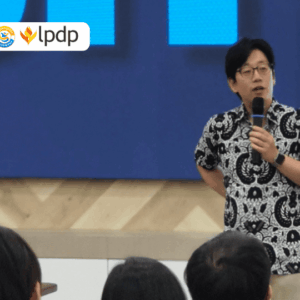
This view regarding Indonesia’s macroeconomic conditions was shared by Dr. Raden Aswin Rahadi, a lecturer at SBM ITB and a member of the Business Risk and Finance Research Group. According to Aswin, the combination of internal macroeconomic stability and global uncertainty signals to business actors that they should change their perspective on economic conditions. He believes that Indonesia has passed the post-pandemic recovery phase, but the next stage of growth requires greater efforts and more disciplined execution.
“Stability should not be interpreted as an excuse for passivity,” Aswin explained in Bandung (January 12). “Opportunities in 2026 are still open, but they require a clearer strategic direction and stronger execution.”
He added that global geopolitical uncertainty, particularly in developed countries, continues to impact financial markets, trade dynamics, and capital flows. Therefore, businesses that choose to wait for the uncertainty to subside risk missing out on opportunities that are actually available amidst Indonesia’s domestic economic stability.
With Indonesia’s projected economic growth hovering around 5%, macroeconomic stability alone is not enough to guarantee strong business performance. Companies that rely solely on favorable external conditions without improving productivity and efficiency will likely struggle to create sustainable value.
“2026 is a relatively stable period for action, but it is very demanding in terms of execution,” he emphasized.
From a policy perspective, Aswin highlighted that the government’s development priorities in 2026, particularly those related to food and energy security, increased productivity, and inclusive economic growth, will shape the business landscape across sectors. Aligning business strategies with these policy directions is increasingly important, as misalignment can lead to inefficient resource use and limited long-term impact.
Productivity has also emerged as a key factor in maintaining competitiveness. Aswin emphasized the importance of skills development, digital transformation, and the use of technology, including artificial intelligence, as key drivers of productivity improvement. Companies that fail to strengthen these capabilities will find it increasingly difficult to compete, even in relatively stable macroeconomic conditions.
In the face of uncertainty, he encouraged businesses to maintain strategic coherence and avoid fragmented or purely opportunistic actions. Agility and adaptability, particularly in responding to regulatory changes and market dynamics, are becoming increasingly important sources of resilience.
As a closing reflection, Aswin emphasized that trust will be one of the most valuable assets for businesses in 2026. Investors and consumers are expected to become more selective, with a greater emphasis on consistency, discipline, and long-term commitment. In an environment characterized by uncertainty and heightened scrutiny, businesses are required to demonstrate credibility beyond short-term performance.
“Opportunities will always exist,” he concluded, “but discipline, consistency, and long-term commitment will determine who can truly capitalize on them.”