Recently, Initial Public Offerings (IPOs) have become a sensation among investors. Many say buying IPO shares can be an instant way to get rich, as they can generate massive profits. However, is the reality really that rosy?
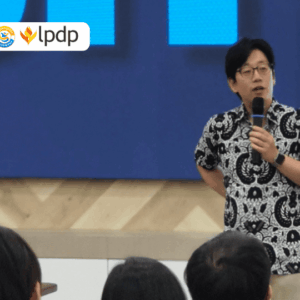
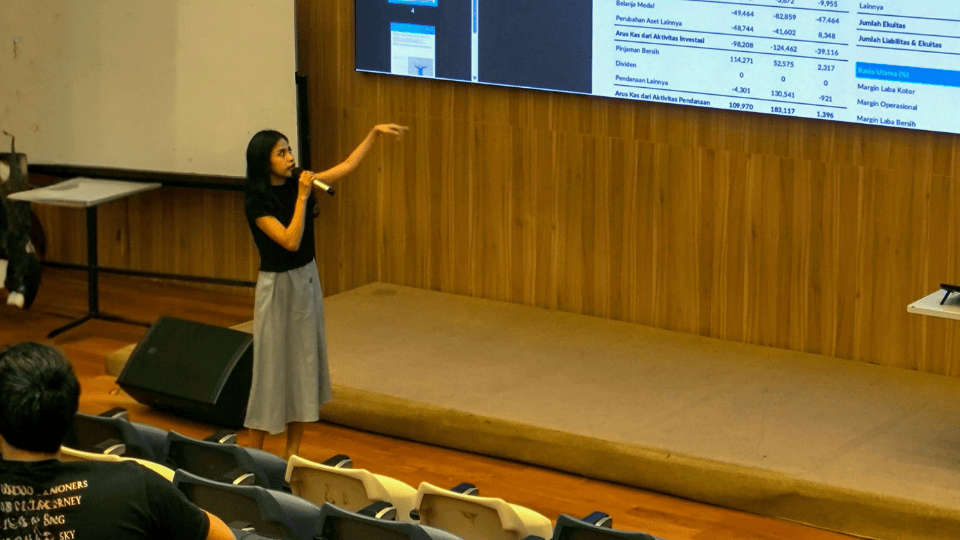
Ratih Mustikoningsih, a financial expert from Ajaib Sekuritas Asia, thoroughly analyzed this phenomenon at the Artha Sandbox seminar on “Level Up Your Finance: From Smart Investing to Entrepreneurial Thinking” in Bandung on Tuesday (February 10th).
The event was organized by the Entrepreneurship Student Association (IMK) “ARTHA” ITB.
According to Ratih, an IPO, or Initial Public Offering, is the process by which a company lists its shares on the Indonesia Stock Exchange (IDX) for the first time to sell them to the general public. Ratih stated that the funding obtained from a company’s IPO tends to be substantial. One example is Bukalapak’s 2021 IPO, which raised IDR 21 trillion.
Ratih said that to increase the opportunity for profit in the market, investors need to pay attention to several characteristics of companies planning an IPO.
“We have to be able to estimate or understand what the company or management is thinking,” Ratih said.
Some things that need to be analyzed are the company’s background. What field they operate in, what their rating is, and what share price they are offering. Smart investors not only follow current trends but also examine a company’s financial statements, including its financial position, income statement, and cash flow.
“Five-star quality, street vendor prices” is a key phrase in seeking profit through investment. One valuation indicator is the Price-to-Earnings (P/E) ratio. Technically, the lower the ratio, the more affordable and attractive the valuation tends to be.
Investors also need to ensure the company has positive profits and a low debt ratio through its financial position statement. Furthermore, dividend policies and the public offering of shares in the market should also be considered when determining whether an IPO stock is worth long-term holding.
Ratih emphasized that an IPO is not simply a share giveaway, but rather an exit strategy for business owners after going through various fundraising stages, especially those growing from the technology startup phase. From an entrepreneur’s perspective, an IPO is conducted to showcase a business’s prospects to the public and raise capital for expansion. Through corporate actions such as management reorganization or subsidiary spin-offs, we can gauge a company’s readiness for an IPO.
However, Ratih stated that transparency regarding the use of IPO funds remains a concern for investors. This transparency is crucial to ensure that public funds are used for expansion, such as infrastructure development, rather than for management’s personal gain.
Being a smart investor means being aware of the underwriter’s track record and diversifying your portfolio into other investment instruments, such as mutual funds or deposits, as a safety net against market volatility beyond your control.