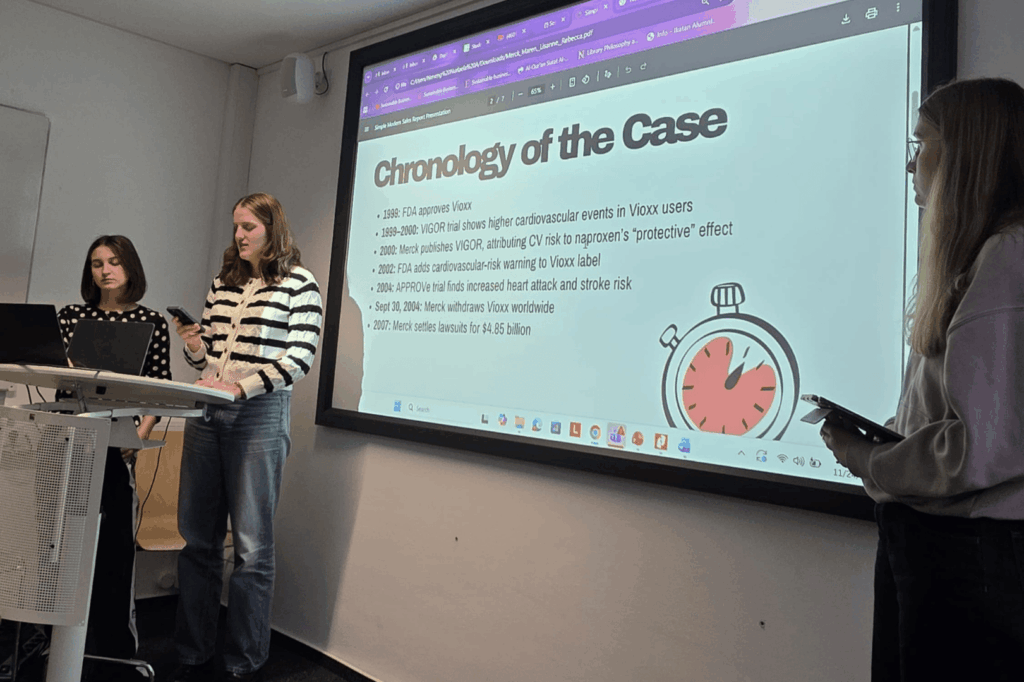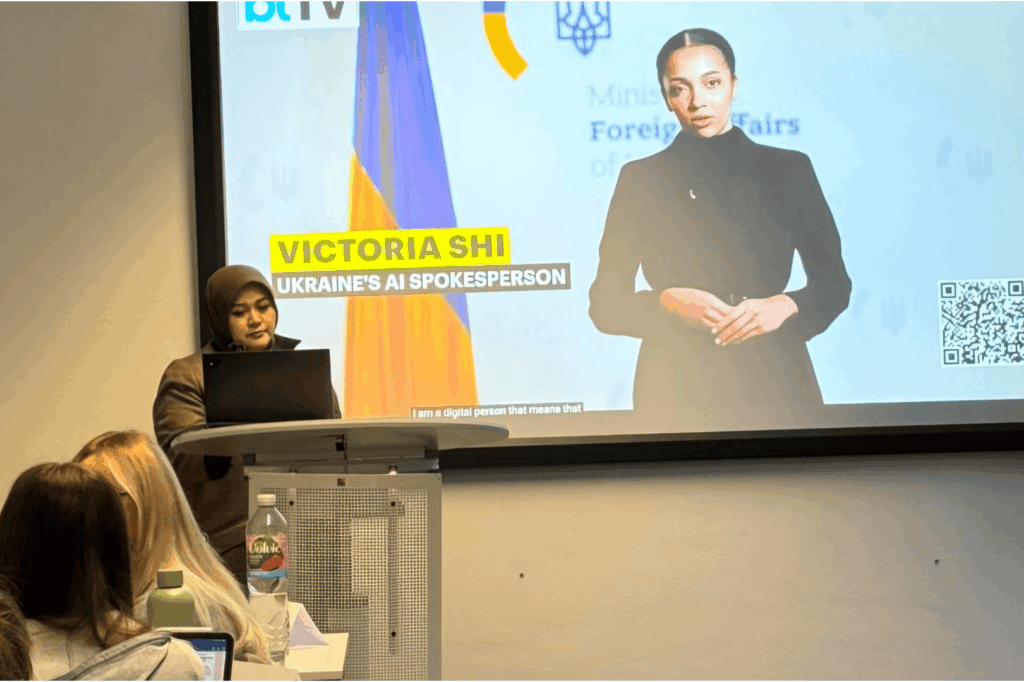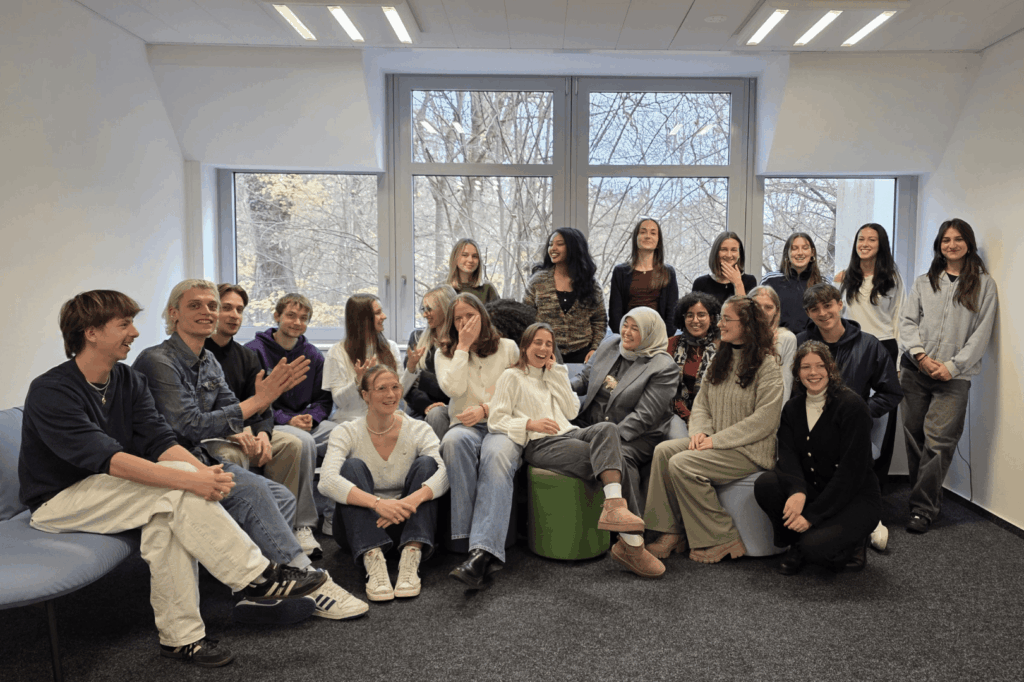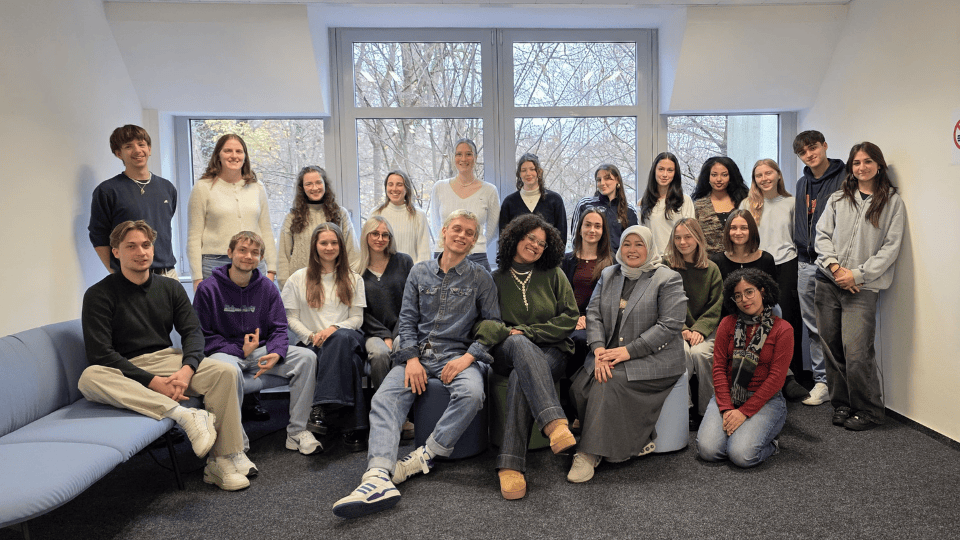
Nurlaela Arief, a lecturer at SBM ITB, visited RheinMain University of Applied Sciences in Wiesbaden, Germany, during the Winter Semester. During this visit, she taught the International Media Management course for a total of 60 hours over two weeks.
Lala described her teaching experience in Germany as memorable, not only due to the winter temperatures dropping to -11°C and classes that ran from 8:00 a.m. to 7:00 p.m., but also because of the dynamics in an international classroom that required a different pedagogical approach. She summarized her experience in three words: participatory, managing expectations, and interactive. According to her, the learning model at RheinMain University of Applied Sciences emphasizes a student-centered approach that focuses on practice and real-life case studies within a global context.
“If I talk continuously, students will get tired. Classes must be truly participatory. Everyone must be involved,” she said when met in Bandung (February 22nd).
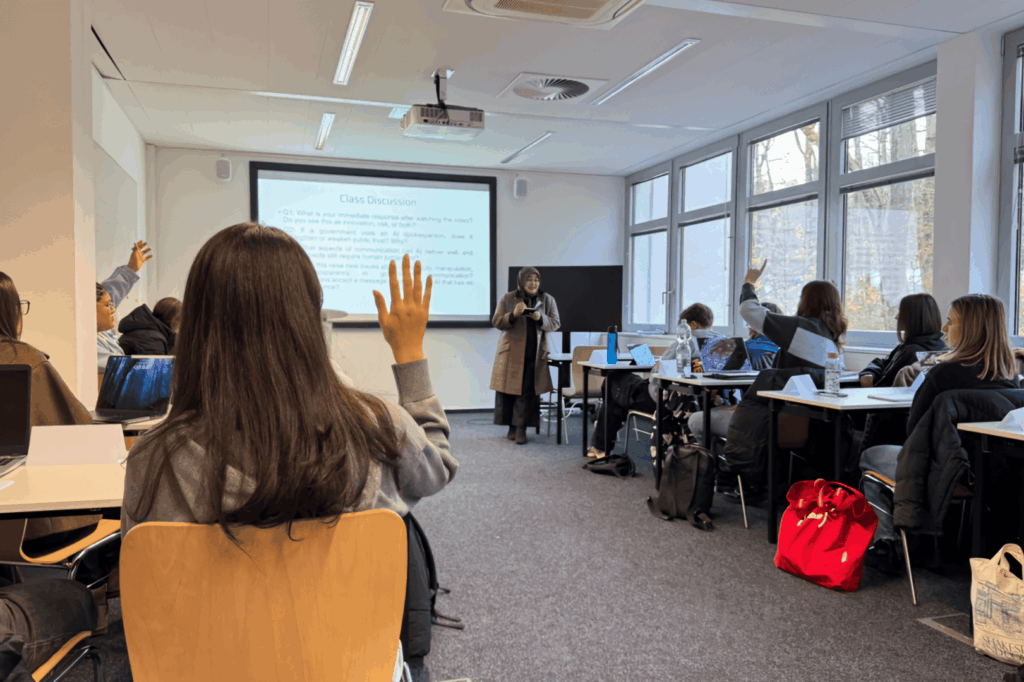
Lala began her lecture by asking students about their expectations regarding the material and learning process. She believes that managing expectations is not simply about delivering the syllabus, but about aligning the expectations of the institution, lecturers, and students from the start.
Adapting Academic Systems and Culture
The main challenge Lala faced was not the material, but rather the academic system. RheinMain University uses an integrated internal learning platform that manages materials, assignments, communication, and assessments in one system. Unlike some Learning Management Systems (LMS) commonly used in Indonesia, students at RheinMain can view each other’s assignments, thus promoting academic transparency.
The academic communication culture also differs. Students who cannot attend class must submit an official notification through the platform. Furthermore, there is a Chair of the Examination Board, a formal body that handles grade objections in a structured manner.
“As a guest lecturer with limited time, I had to quickly adapt to the existing system. It was quite challenging, but managing expectations and effective communication from the start is crucial,” said Lala.
Discussing the Indonesian Media Landscape
In the lecture, Lala explained the Indonesian media landscape, including issues of media conglomeration, media convergence, the structure of the media industry, and media economics. She also discussed the concept of news as a commodity, namely how content is strategically packaged to make it broadcast-worthy and commercially valuable.
Students expressed particular interest when they learned that media consumption in Indonesia can reach around eight hours per day, higher than the average in Germany. Furthermore, Lala explained how media convergence shapes public perception through intense repetition of narratives, allowing audiences to form perceptions that are perceived as “their own version of the truth.”
The discussion then evolved into a comparative analysis of Indonesian and European media systems, including the influence of media ownership structures on democracy and public opinion. According to Lala, despite cultural differences, critical thinking skills and clarity of argument remain key factors in media communication.
Podcast as a Final Project
As a final project, students were asked to produce a podcast that simulated working in a professional media company. Students divided their roles, from host to scriptwriter to producer, and invited speakers.
One group addressed the topic “Influence Investigation: Memes as Political Weapons.” In a short time, the students were able to produce content relevant to their generation while maintaining a strong academic foundation.
“The results exceeded my expectations. This shows that this learning method truly improves their competency,” she said.
Bringing an Indonesian Perspective to the Global Level
Before teaching at RheinMain University of Applied Sciences, Lala was a visiting lecturer at Singapore Management University in 2023 and 2024, and at Universiti Malaya in 2024. Her experience in Germany was her first teaching experience in Europe. She views the experience as both an academic contribution and an opportunity to bring an Indonesian perspective to an international forum.
“As educators, we must create an impact based on our expertise. Teaching knows no borders. Even from Bandung, we can gain insights from diverse perspectives,” she stated.
Lala hopes that more ITB lecturers and students will dare to bring Indonesian perspectives to the global level through cross-border intellectual contributions.