Companies aiming to thrive in an environment of business uncertainty must streamline their operations while maintaining their capacity for innovation. This process entails more than just reducing structures; it also requires the development of a more adaptive and efficient organization.
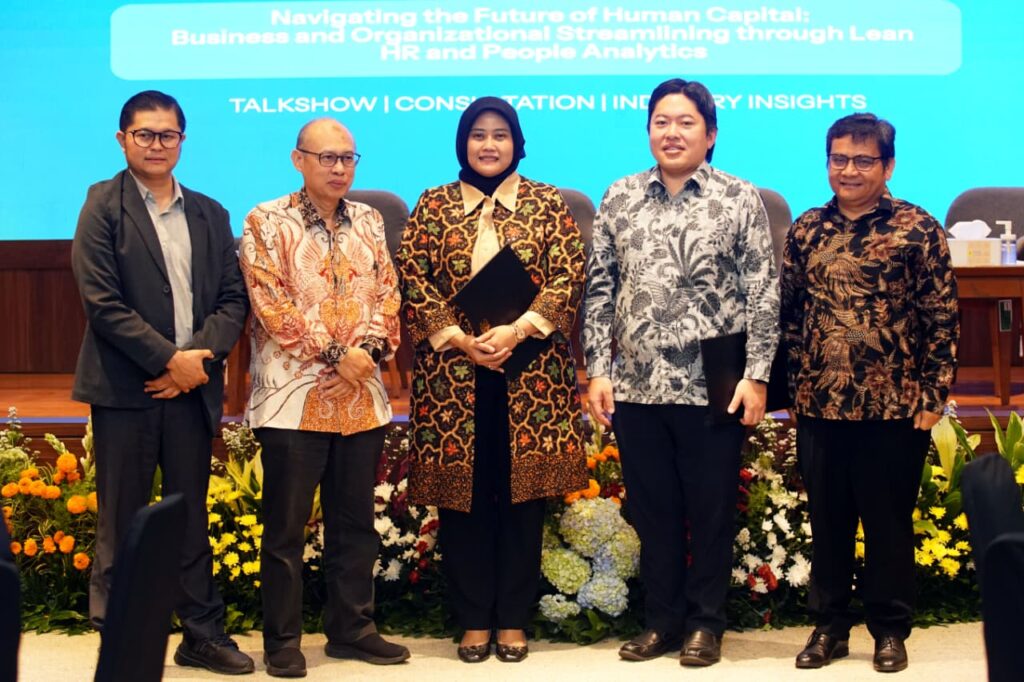
This topic was discussed at the 5th HCM Talks, hosted by SBM ITB, which took place in Jakarta on February 27th. The forum’s theme was “Navigating the Future of Human Capital: Business and Organizational Streamlining through Lean HR and People Analytics.”
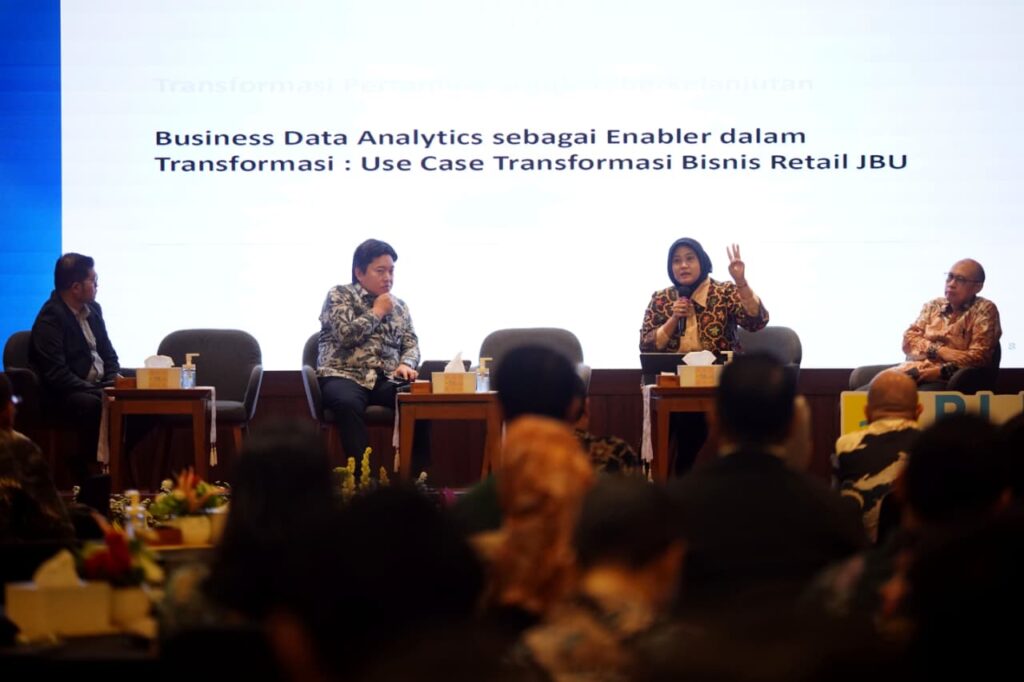
The discussion, which brought together practitioners and academics, addressed two main topics: organizational streamlining strategies and their application in large organizations, including state-owned enterprises (SOEs). The event featured Martin Santoso, Associate Partner at McKinsey & Company; Priyanto Rudito, Chairman of the Nation Brand Team at the Ministry of Tourism and a lecturer; and Mia Khrishna Anggraini, SVP of Business Transformation and Optimization at Pertamina (Persero). The discussion also included Prof. Utomo Sarjono Putro, Head of the Strategic Decision Making and Negotiation Expertise Group at SBM ITB, moderated by Achmad Fajar Hendarman, a member of the People and Knowledge Management Expertise Group at SBM ITB.
Streamlining Is Not Just Restructuring
In his presentation, Martin Santoso emphasized that organizational streamlining is often misunderstood as merely organizational restructuring. According to him, organizational streamlining should be a tool to strengthen the business and improve overall organizational performance.
“Organizational streamlining should be an enabler that drives organizational optimization for business sustainability, not just structural changes,” he said.
This approach requires companies to review their operational models, business processes, and the role of human resources within the organization.
This perspective was further expanded by Priyanto Rudito, who presented the idea of organizational transformation in three stages: Getting Better, Broader, and Bolder. He stated that transformation should start with reinforcing the business foundations.
The first stage, getting better, focuses on fundamental organizational improvements. After that, the company can expand its business scope (broader) and then strategically scale up (bolder).
“In the context of state-owned enterprises (SOEs), transformation includes managing organic and inorganic growth, which must be supported by operational excellence and strong human capital management,” said Priyanto.
Mia Khrishna Anggaraini from Pertamina discussed her practical experience in organizational transformation. She outlined the company’s structural changes from before 2018 to the establishment of holding and sub-holdings. According to Mia, the streamlining process necessitates a strong organizational foundation before the company can effectively expand and scale its operations.
“Streamlining emphasizes a strategic approach. The organizational foundation must be improved first to strengthen it, then grow larger and broader,” she said.
She added that organizational transformation is not just a corporate action, but also an effort to unite all stakeholders to ensure the company remains stable and adaptive.
Responding to the discussion, Prof. Utomo Sarjono Putro assessed that data- and structure-based organizational transformation is not a simple process, especially amidst high levels of business uncertainty. He emphasized the importance of collaboration between academics and industry practitioners to produce more relevant solutions.
“Academics have the research capacity and methodology, while SOE practitioners have the experience and real-world context. Collaborating between the two can produce impactful innovations,” he said.
Meanwhile, Achmad Fajar Hendarman highlighted the human aspect of the organizational transformation process. According to him, the biggest challenge is not only designing a new structure but also managing a change in mindset within the organization.
“The challenge isn’t just about streamlining the structure, but also about how to improve business processes. Transformation also involves changing the mindset of all stakeholders,” Fajar said.
The discussion concluded that organizational streamlining is a strategic transition process focused on optimizing business processes and developing new operational models. With this approach, companies are expected to increase efficiency while creating sustainable long-term value.