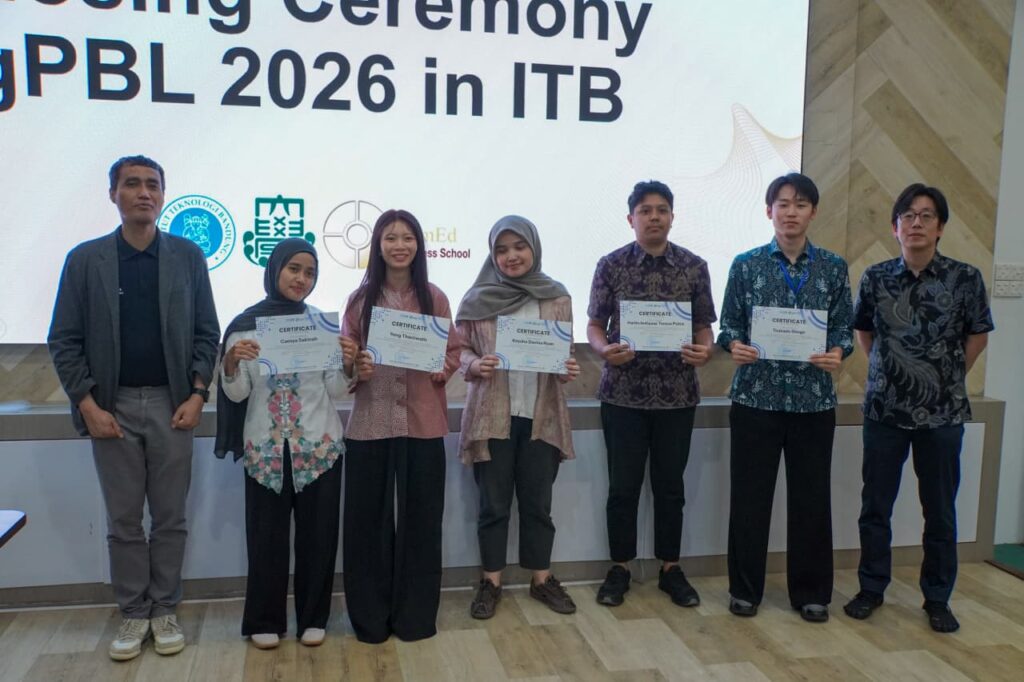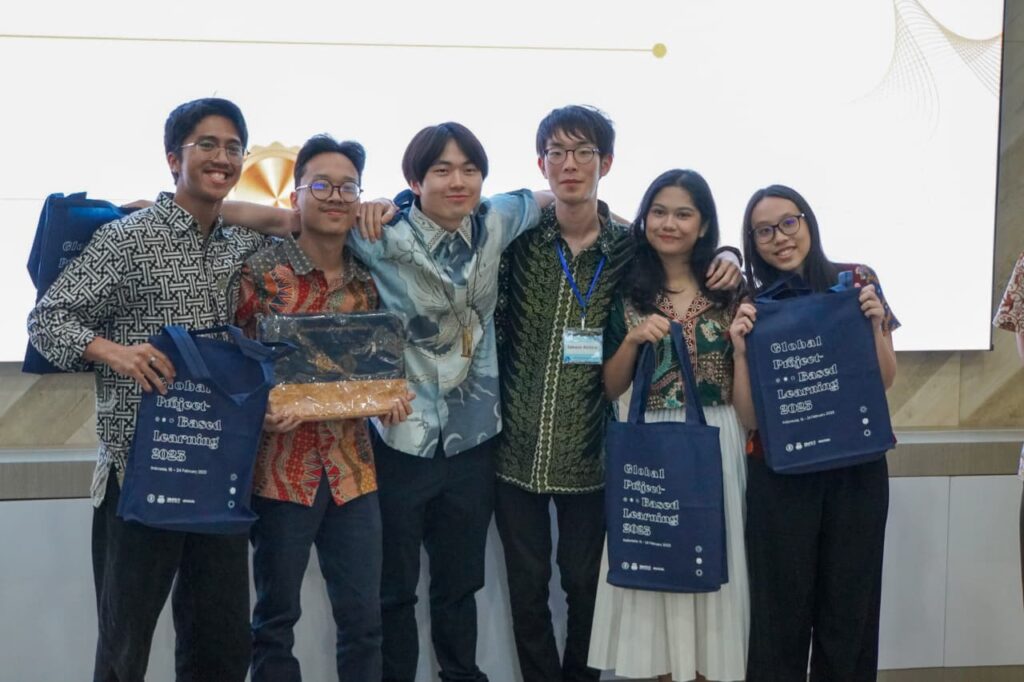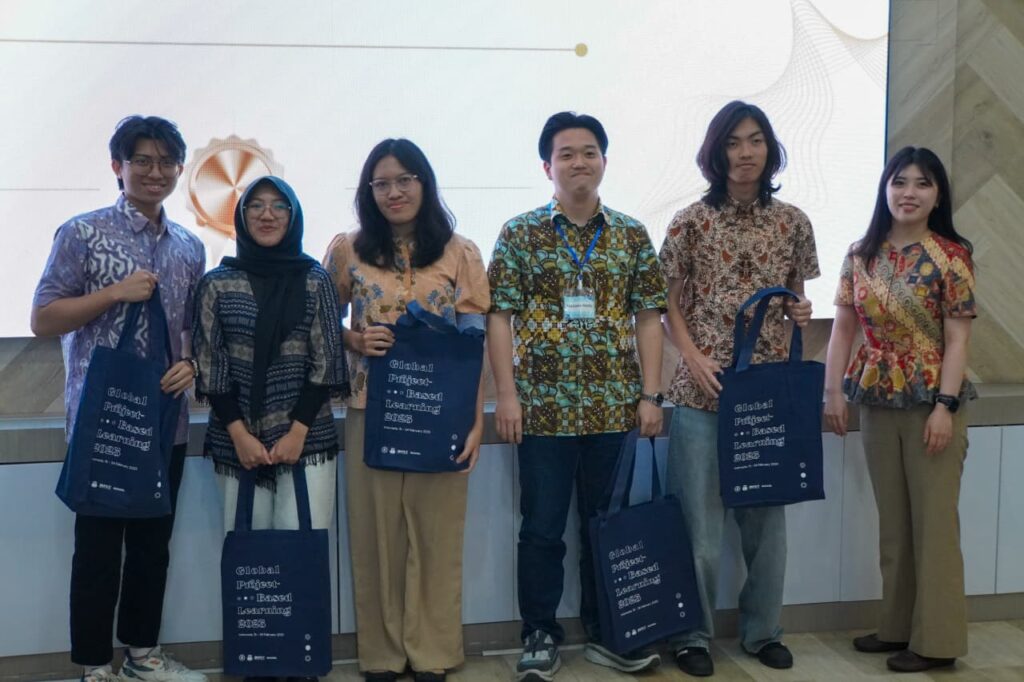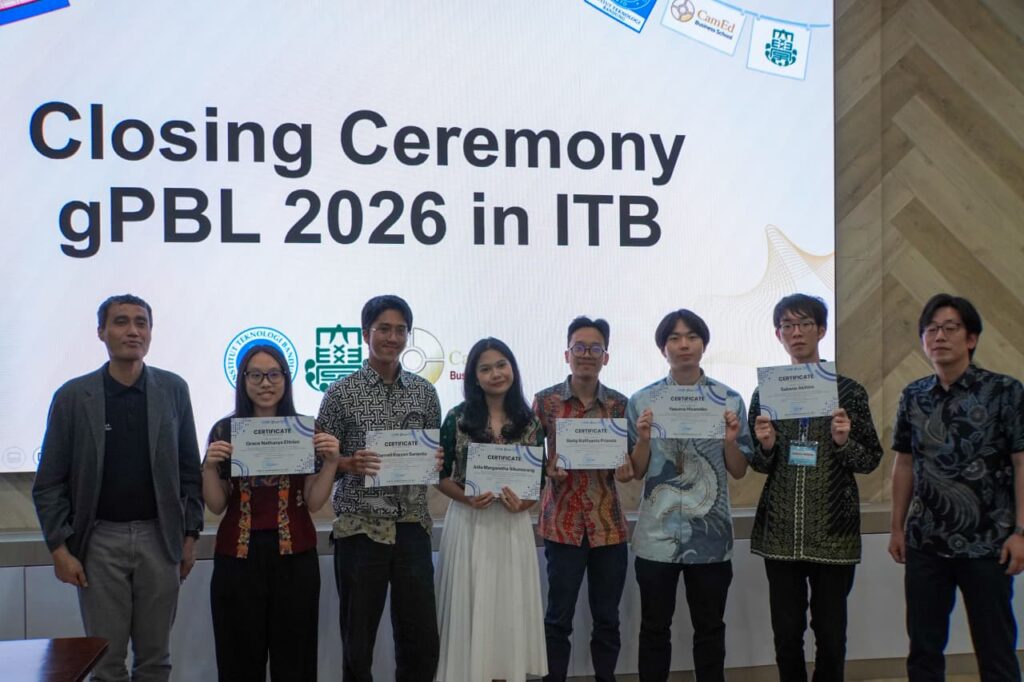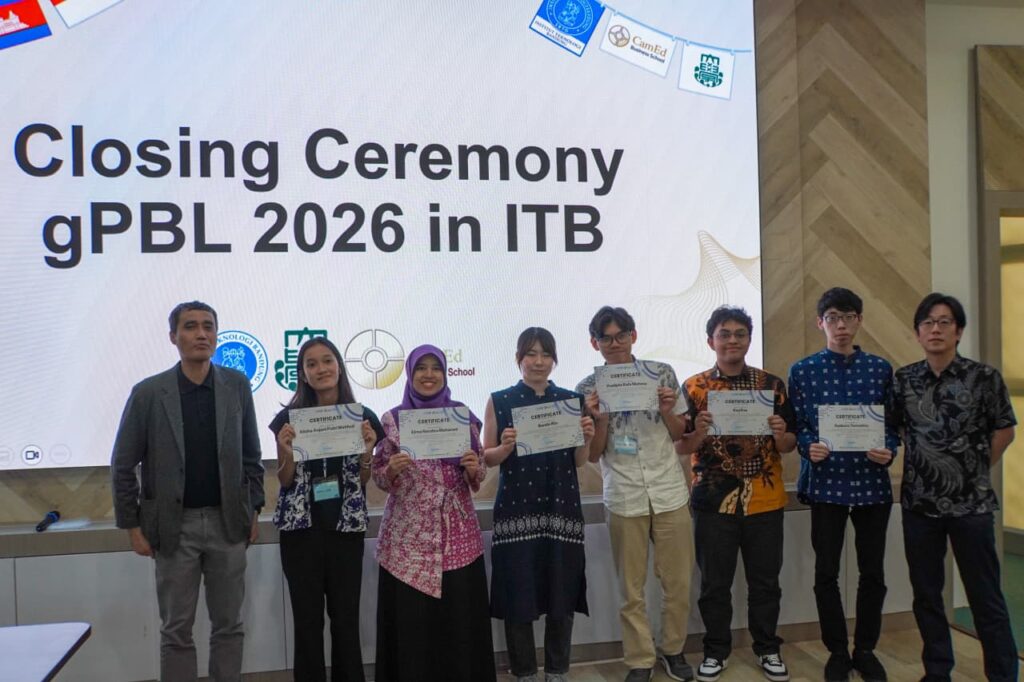
Dozens of students from Indonesia, Japan, and Cambodia looked nervous. They gathered in one room with open laptops, still perfecting scripts, and repeatedly practicing their pitches. That morning, Thursday (February 26th), was the culmination of their intense journey over the previous few days: gPBL (Global Project-Based Learning) 2026, a collaboration between the School of Business and Management, Bandung Institute of Technology (SBM ITB), Shibaura Institute of Technology (SIT, Japan), and CamEd Business School (Cambodia).
gPBL 2026 is an international collaboration event where 10 cross-campus teams from the three countries were challenged to address real-life problems in the city of Bandung. They analyzed the problems using systems engineering and design thinking approaches, and translated them into feasible, scalable business ideas.
For the first two days, participants were asked to explore the problems directly through fieldwork. Each team traveled to a different location based on the theme of their respective problem. Each team consisted of students from SBM ITB, SIT, and CamEd Business School.
The team, dedicated to supporting students and youth, traveled to various locations around campus, including Saraga and the Salman Mosque at ITB, to conduct interviews with students. Another team, focused on urban mobility, visited busy areas such as Jalan Braga to observe and study the dynamics of city mobility firsthand.
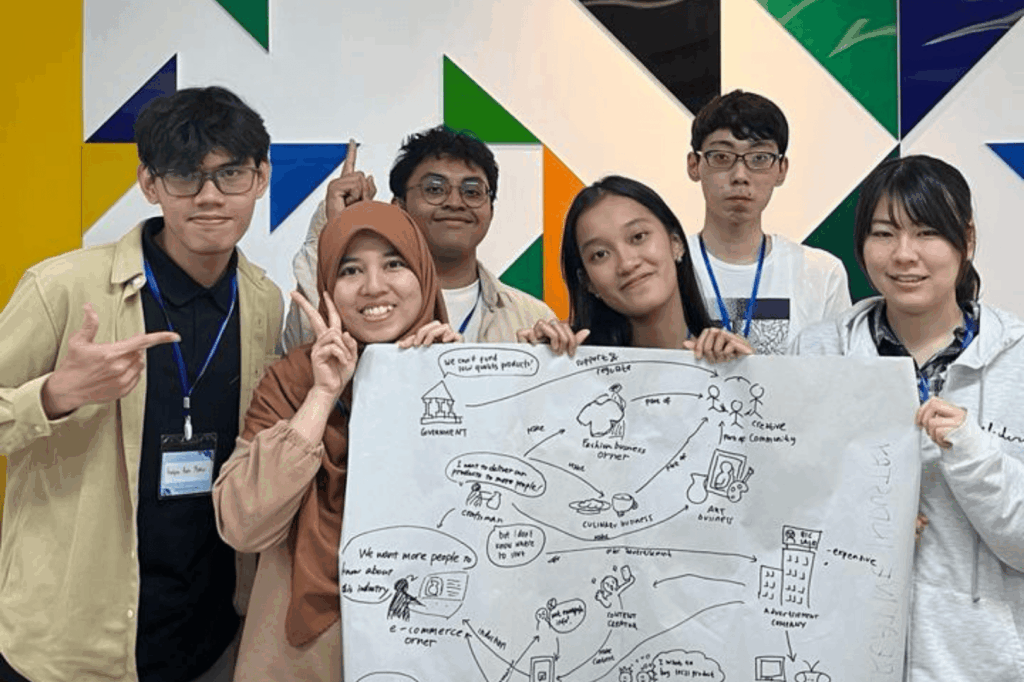
The results of the fieldwork observations and interviews were then analyzed using a series of frameworks, including the Why Tree, How Tree, KJ Method, and Needs Analysis. In this process, participants were challenged not only in the depth and appropriateness of their analysis, but also in their communication.
Coming from three countries, differences in language and ways of thinking often presented challenges in discussions. However, this is precisely where the learning process occurred.
“This is my third time participating in gPBL, and my friends say my English has improved significantly,” said Tsukada Shogo, an SIT student who also participated in gPBL 2025.
From this analysis, the ten teams developed business ideas to address the problems they had identified. Through frameworks like QCD and QFD, participants not only design business concepts but also systematically map features, services, and value propositions. For some participants, this approach was a new experience.
“QCD, QFC, and others were things I had never known before. For Porter’s 5 Forces, we had studied the framework before, but we had never really used it for our finance and accounting assignments at CamEd. So, this program really opened my eyes to new areas,” explained Yong Tavineath.
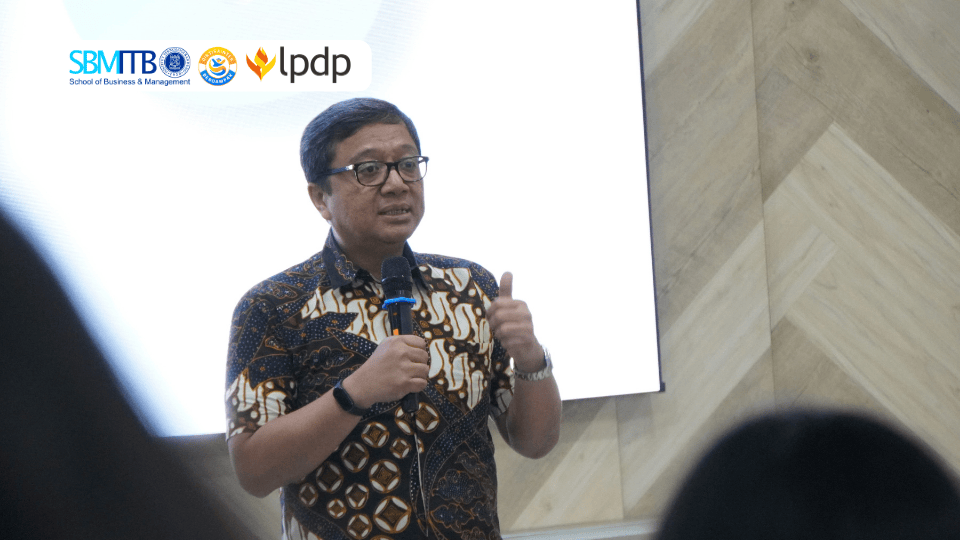
At the end of the series of activities, participants were challenged to present their business ideas to venture capitalists Sandhy Widyasthana from MDI Ventures and Zulfikar Alimuddin from the Hasnur Centre Foundation. Sandhy emphasized the importance of data validation, understanding customer pain points, and identifying revenue streams, which are key aspects that investors typically seek in a startup.
Pitching may be common for entrepreneurship and management students at SBM ITB, but it’s not the case for some SIT and CamEd students.
“It was amazing and interesting to see and hear so many ideas from various themes and perspectives. I had no idea people could be this creative!” said Vineath and Shogo after the pitch session concluded.
Team C2 won the Student Award and the 3rd Place Venture Capital Award. Their solution, Pakeun, integrates traditional elements with modern trends relevant to Generation Z.
“We believe our solution stands out because it integrates traditional aspects with current trends. Blind boxes are popular worldwide, and Pakeun has the potential to attract tourists and increase sales of Bandung’s creative products,” said Alisha, a representative of Team C2.
gPBL 2026 in Japan is scheduled for September 2026. Participants will face a new challenge: a change in project format, from the usual business case or business plan to a research paper. Prof. Manabu Ichikawa and Dr. Manahan Siallagan, the initiators and leads of gPBL, stated that the change in project format is one of their strategies to ensure gPBL continues to grow each year.
List of gPBL 2026 Award Recipients
Venture Capital Award (judged by a jury of venture capitalists)
1st Place – Team Urban Mobility 1
2nd Place – Team Creative Industry 1
3rd Place – Team Creative Industry 2
Student Award (judged by gPBL 2026 participants)
Team Creative Industry 2
Professor Award (judged by professors/sensei)
Student & Youth Support 1