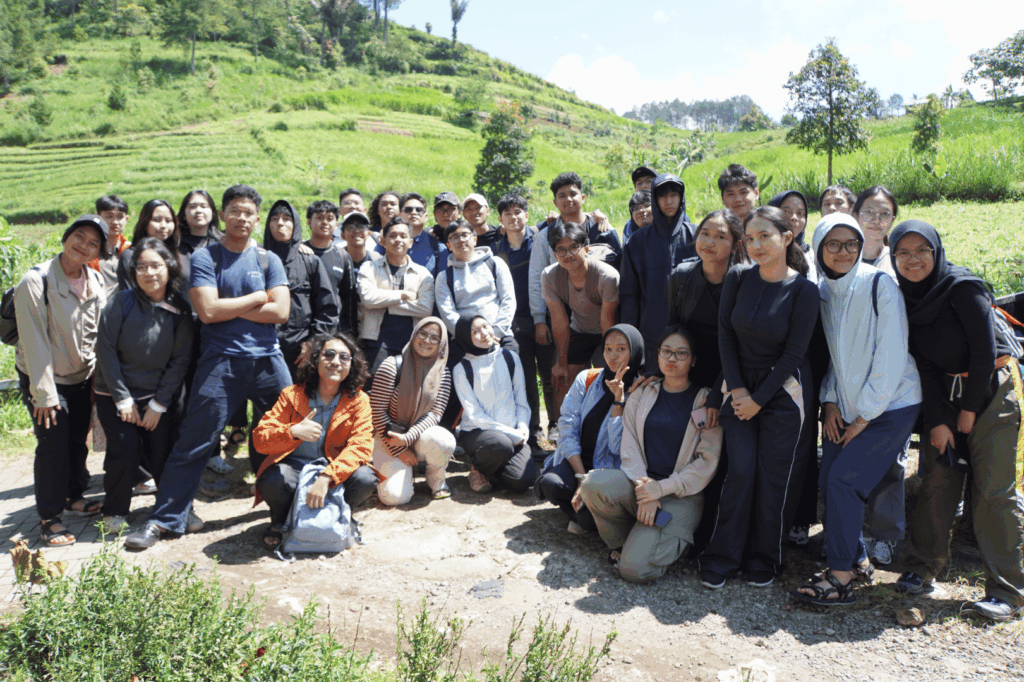
First-year students from the School of Business and Management, Institut Teknologi Bandung (SBM ITB), visited Sukamurni Village to explore the village’s ecotourism potential within its social forestry area on Sunday (April 26). They were encouraged to gather information on the village’s economic activities, potential, and challenges in order to develop possible solutions.
A total of 109 students participated in the event. They were divided into 26 groups and assigned across 13 community units (RW). In addition to conducting observations, the students were also expected to create a meaningful impact aligned with SBM’s core values.
The Head of Sukamurni Village, Ajat Sudrajat, expressed his appreciation and hoped that the collaboration would become a turning point for the village’s development.
“Hopefully, this initial meeting will bring benefits, especially for the residents of Sukamurni Village. In the future, the village’s existing potential, both in agriculture and tourism, can be optimized through the scientific support of lecturers and students,” said Mr. Ajat.
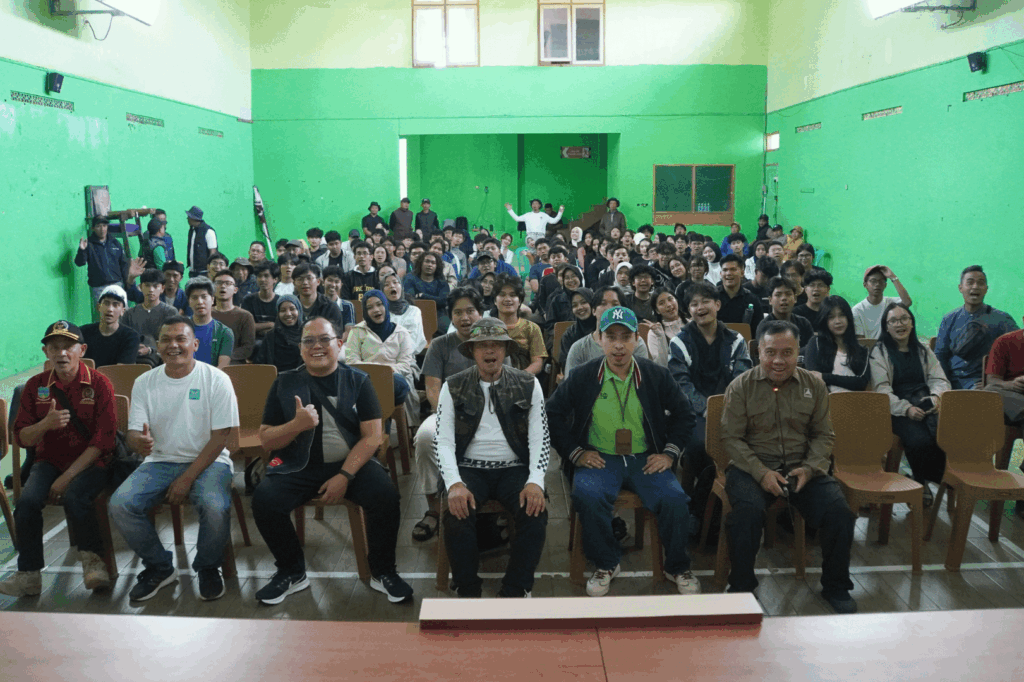
Meanwhile, Juliansyah, Head of the Sukamurni Village Social Forestry Center, emphasized that students should be able to act as consultants for the local community.
“You are expected to genuinely assist and provide advice, both from a consumer perspective and as a strong sales force, so that village MSMEs can continue to grow,” he said during the briefing session.
One of the areas that attracted the students’ attention was Cihanyawar Waterfall. The waterfall received particular attention because it remains highly pristine and largely untouched by tourists. The site has recently been identified as a tourist attraction and is currently being prepared as a leading ecotourism destination for the village.
Erlan, Assistant to the Social Forestry Center, expressed high hopes for the students’ creativity in showcasing the village’s attractions, including Cihanyawar Waterfall, through digital content.
“This waterfall is what we call ‘untouched,’ because it is still very new. If you would like to create vlogs to promote tourism here, that would be excellent in increasing awareness of the village’s potential,” said Erlan.
During their fieldwork, the students discovered a striking contrast in the village’s economic conditions, despite its considerable development potential. In RW 12, residents independently manage home-based businesses producing wajit (traditional rice cakes), mini rengginang (rice crackers), angleng (rice balls), and dried flower crafts. The area is also a major supplier of fresh milk, producing up to 7,000 litres per day for distribution to companies such as Cimory and Frisian Flag.
“After speaking with the residents, it became clear that they have abundant resources and are utilizing them effectively, avoiding the kind of exploitation often found in cities,” said Allisya, one of the students assigned to RW 12.
According to Allisya, production activities in RW 12 are already well established, with demand coming from major factories. However, its ecotourism sector remains underdeveloped.
In contrast, RW 9 continues to face more fundamental economic challenges. The area currently has no MSME units, and residents remain heavily dependent on the agricultural sector, which is under pressure from rising prices of agricultural inputs such as fertilizers and plastic mulch, as well as dependence on middlemen.
“Around 40% of the residents choose to migrate to Jakarta or Bekasi because earning a living in the village is difficult. We have abundant natural resources, but we are constrained by limited capital and human resources to manage them,” said Aep, a local guide in RW 9.
Despite its scenic natural landscape and strong ecotourism potential, the lack of capital has hindered RW 9 from fully developing its resources.
“This experience was very memorable, especially my first trek to the waterfall and the opportunity to build relationships with local residents,” said Nara, one of the students assigned to RW 9.
Nara described the visit as a valuable experience that helped her recognize the immense cultural and ecotourism potential of Sukamurni Village. She suggested organizing regular workshops and mentoring programs focused on social media promotion to help increase the village’s digital visibility and support the local economy.
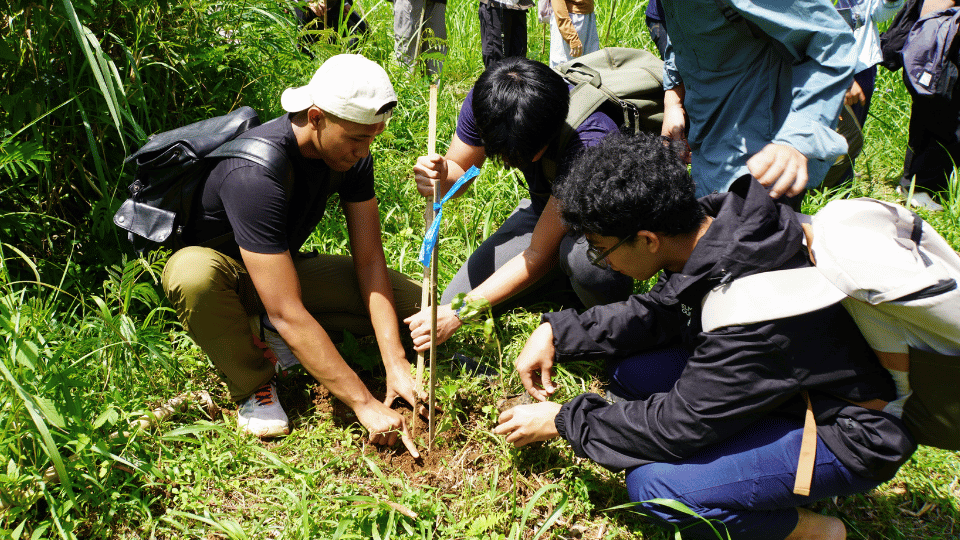
In addition, the students also participated in environmental conservation activities within the social forestry area. In collaboration with students from University of Garut (UNIGA), SBM ITB students joined a tree-planting program. Each student brought their own seedlings and planted them at designated locations along the route to the new tourist destination, Curug Cihanyawar.