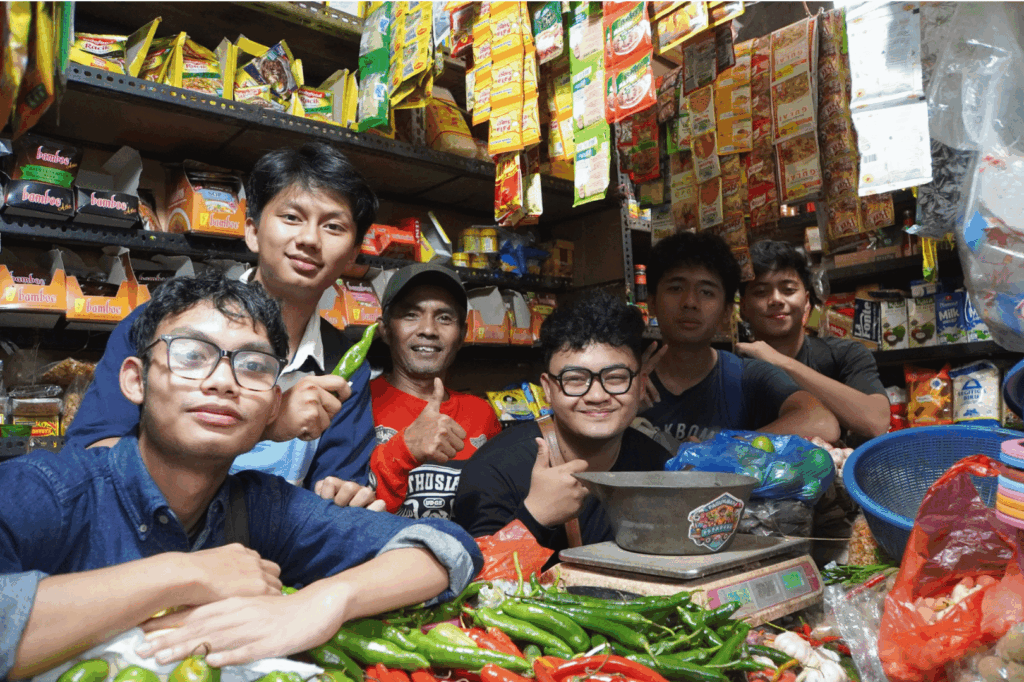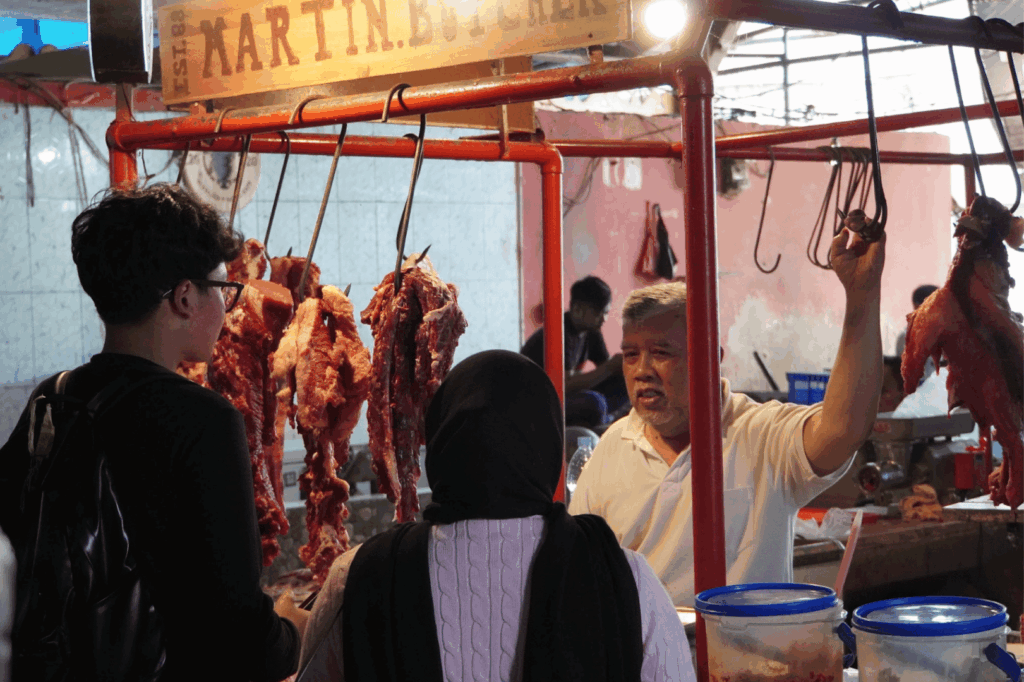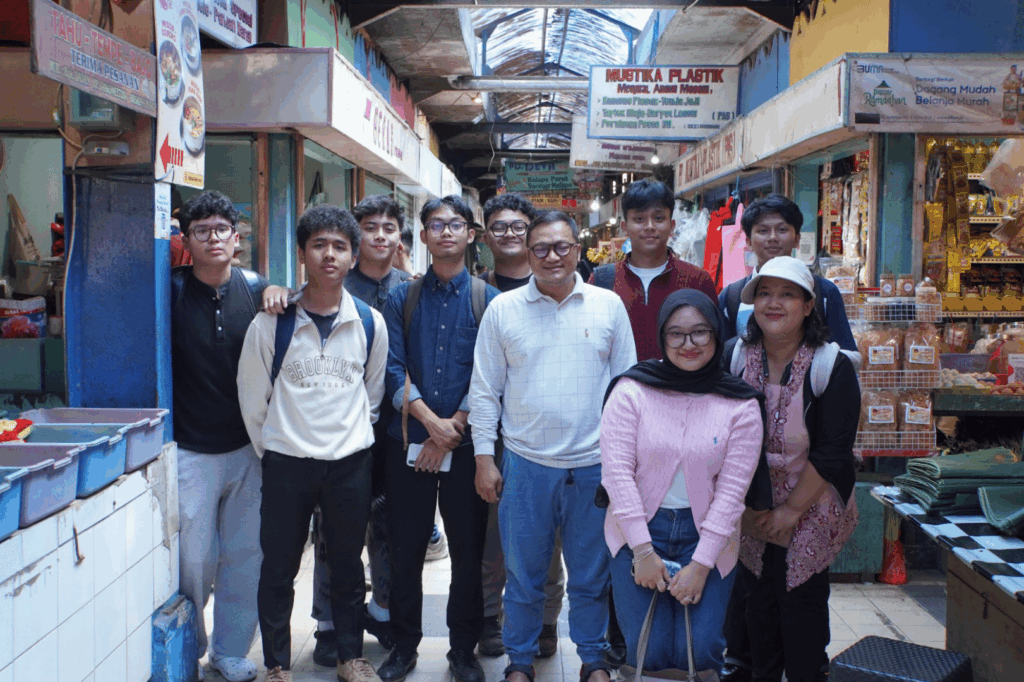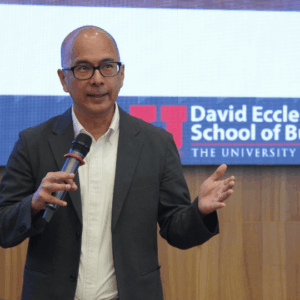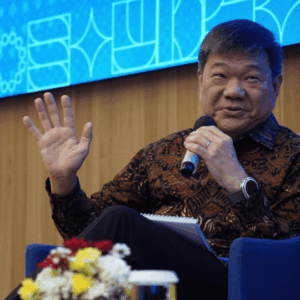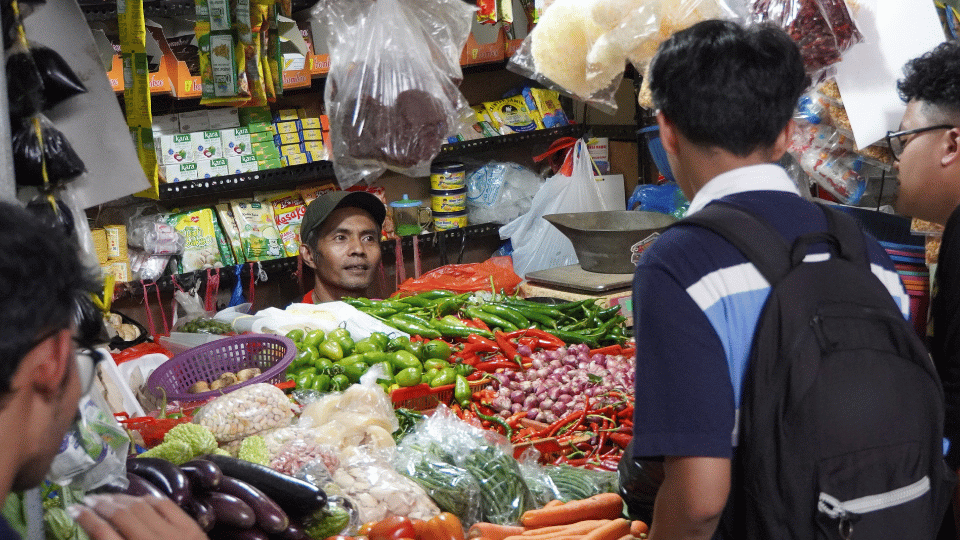
Volatile prices, fierce competition, and limited technology are key challenges for traditional market traders. This finding emerged during the SBM ITB Societal Impact activity conducted by SBM ITB students from the 28th batch of the school, which included visits to several traditional markets on Saturday (April 25).
This activity is part of SBM ITB’s efforts to positively impact external parties, especially traditional markets, which are essential to the community’s economy.
Kosambi Market was one of the traditional markets visited and analyzed by the students. Located on Jalan Ahmad Yani, this market has been operating since 1915 during the Dutch colonial era. Like most markets, shops at Kosambi Market sell necessities to meet the needs of the surrounding community. Its strategic location also offers economic potential for the traders.
According to traders, rice and egg prices are relatively stable. However, the price of cooking oil tends to increase significantly. The increase in the purchase price from Rp19,000 to Rp5,000 per liter has forced traders to reduce their cooking oil purchases. This situation has limited the supply of cooking oil in the market.
Traders often face the challenge of price competition, which can force them to sell cooking oil at prices lower than their competitors. As a result, their profits can be minimal, sometimes less than Rp 1,000 per liter. This situation illustrates how unstable prices and competitive pressures can disrupt supply and threaten the sustainability of traders’ businesses.
In addition to Kosambi Market, students from the 28th batch of SBM ITB also visited Pasar Atas Cimahi, which has several meat and fish shops. Traders in this market face similar challenges. Meat traders said prices tend to be volatile due to fluctuations in raw materials, distribution costs, and demand. This makes it difficult for them to maintain consistent prices.
Meanwhile, fish traders face challenges in inventory and storage. Each type of fish has a different shelf life. Unpredictable weather conditions also require fishermen to exert more effort to catch fish. Furthermore, suboptimal use of technology also hinders traders from increasing sales.
Through this experience, the 28th batch of SBM ITB students isis expected not only to identify problems and provide solutions, but also to understand the needs and feelings of the vendors.
“They don’t just observe situations from an external viewpoint; they cultivate empathy. By identifying and exploring problems, they gain a deeper understanding of what others are feeling and what they need. As a result, they can offer appropriate solutions,” explained Ira Fachira, Ph.D., Head of the Societal Impact Locus – Public Market.