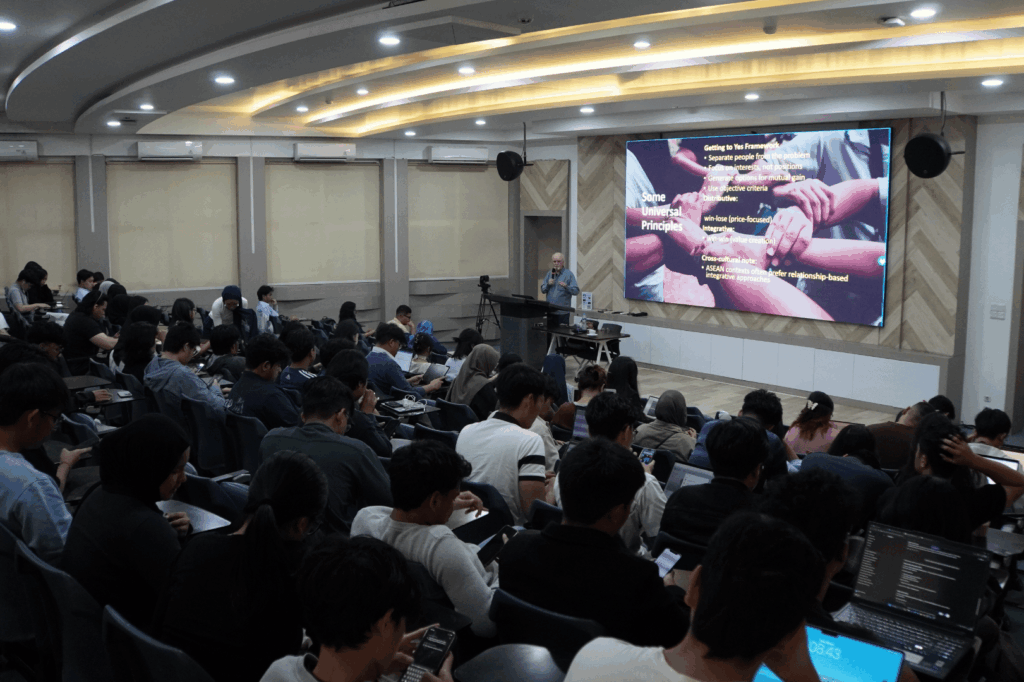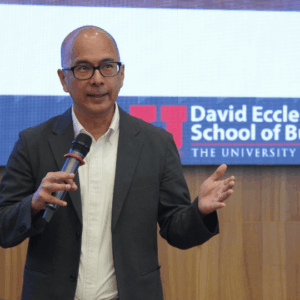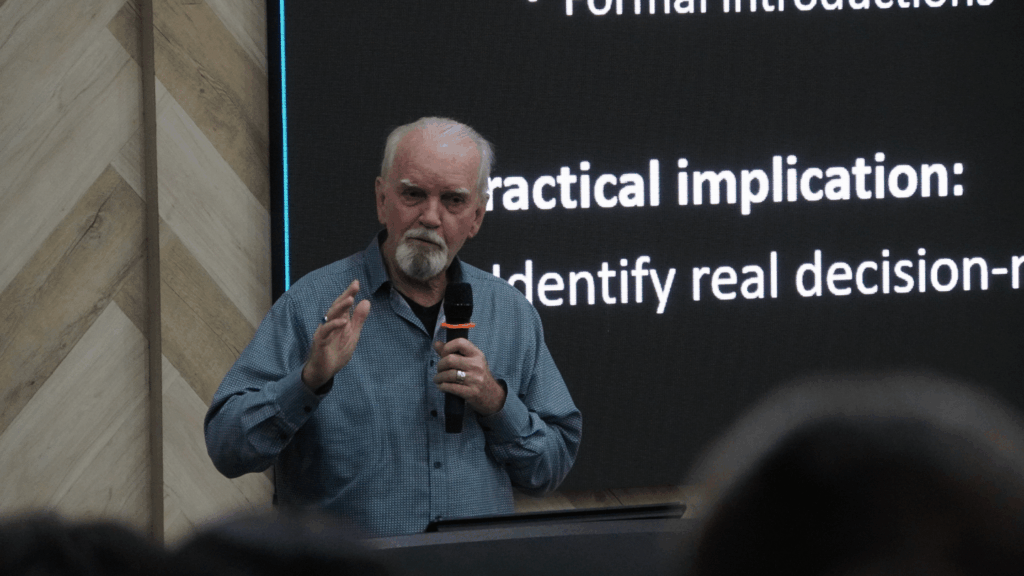
Numerous international business failures occur not because of ineffective strategies but because of cultural misunderstandings. This key point was emphasized by Dr. Maxwell Briggs, CEO of Asia Pacific Enterprise Development and Development Manager of Blue Quest Water Systems, during a guest lecture for Integrated Business Asia 2 at the School of Business and Management, Institut Teknologi Bandung (SBM ITB) (April 29).
With over 30 years of experience, from investing in the Bandung textile industry in 1988 to building a modern slaughterhouse in East Java, Briggs provided a clear perspective on cross-cultural negotiations between Australia and Indonesia.
Although the trade value between the two neighboring countries is substantial, Briggs noted that it remains far below its true potential. He highlighted that while political relations can fluctuate, ordinary people generally maintain good relationships. However, Australian businesspeople often fail in the Indonesian market because they are impatient or lack an understanding of local business customs.
“It’s important to communicate with individuals at all levels, not just those at the top,” Briggs emphasized.
Briggs explains the differences between low-context and high-context cultures. Australia is classified as a low-context society, which means it tends to be straightforward, prioritizes quick results, and relies heavily on written contracts.
In contrast, Indonesia is considered a high-context culture that emphasizes relationships. In Indonesian culture, maintaining face, meaning protecting one’s social standing and respect, is vital for preserving harmony.
“Negotiating in Indonesia is a double-edged sword. They are very polite, but you don’t know their true intentions,” Briggs added.
He advises students to use a five-step method to overcome these differences: do your research, build informal relationships first, adapt your communication style to the local culture, take a slower approach to achieving a win-win outcome, and ensure neither party loses face when closing the deal. He also suggests that forming a joint venture or partnership is a much better way to grow a business than simply importing and exporting.
The course also explores the gray areas of cross-cultural ethics. Briggs warned that things considered common cultural etiquette in Indonesia, such as giving gifts or using middlemen (calos), are legally considered acts of corruption in Australia.
He shared his personal experience with a $3 million slaughterhouse project in East Java. Local officials offered him exclusive rights if he agreed to secretly inflate equipment prices so they could profit.
Briggs refused. He insisted they pay the normal price, telling them, “Whatever you do, I don’t want to know.”
He recounted that a year later, half of those present at the meeting were arrested by authorities for corruption.
Briggs concluded his lecture by advising students to use the UN Sustainable Development Goals (SDGs) as a moral compass. Success in global business, he noted, requires cultural understanding, patience, and the ability to balance international ethical rules with building relationships at the local level.