The School of Business and Management, Institut Teknologi Bandung (SBM ITB), once again demonstrated its strategic contribution to strengthening Indonesia’s Islamic economic and financial ecosystem through active participation in a Focus Group Discussion (FGD) organized by Bank Indonesia. The forum was part of developing a conceptual paper on the business model for bottled drinking water (AMDK) in Islamic boarding schools (pesantren), aiming to promote community-based enterprises that are structured, data-driven, and aligned with national policy directions.
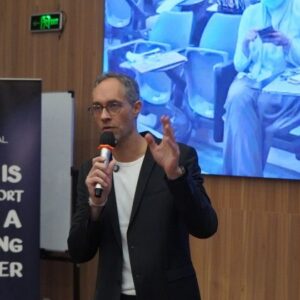
Held at Hotel Alila Solo, the forum brought together key stakeholders, including regulators, academics, and practitioners from pesantren institutions. Representing SBM ITB, Dr. Taufik Faturohman participated as a reviewer, providing critical insights into the conceptual framework developed by Bank Indonesia’s team. His role was essential in ensuring that the study was not only conceptually sound but also grounded in robust empirical evidence and policy relevance.
“The development of pesantren enterprises must be built upon a strong foundation of data and implementation experience, so that the resulting recommendations are truly relevant and can be effectively implemented in practice,” said Taufik Faturohman.
During the discussion, Taufik emphasized that the study’s key strength lies in the availability of implementation data from various pilot projects and program replications. However, he highlighted the importance of using this data as the primary basis for analysis, rather than merely as supporting illustrations. Additionally, he noted that it is crucial to clearly differentiate between data sources, whether they come from field observations, surveys, or analytical simulations, to maintain the credibility and interpretability of the findings.
He further underlined the importance of strengthening an evidence-based policy approach in developing the paper. In this context, academics play a vital role in ensuring that policy recommendations are grounded in rigorous analysis and are scientifically accountable. In addition, he stressed the need to incorporate a risk perspective, recognizing that the development of AMDK businesses in pesantren is subject to operational, product quality, and market risks.
Taufik also encouraged the formulation of more operational and actionable policy recommendations. He emphasized the importance of structuring these recommendations at various levels, from national strategic policies to regional implementation and operational execution at the pesantren level. This approach would ensure that the policy paper moves beyond conceptual discussions and serves as a practical guideline for stakeholders.
SBM ITB’s involvement in this forum reflects its broader commitment to advancing Islamic economics and finance in Indonesia. The institution has consistently contributed to strategic initiatives that integrate academic rigor with policy needs and real-world practices. Through its participation in this FGD, SBM ITB reaffirms its role as a strategic partner in research-based policymaking, particularly in strengthening the economic capacity of pesantren as key community-based economic actors.
The forum also served as a collaborative platform that brought together academic, policy, and practical perspectives, resulting in a more comprehensive and impact-oriented study. With strengthened synergy between Bank Indonesia and SBM ITB, the development of sustainable business models for pesantren is expected to contribute significantly to inclusive and resilient economic growth in Indonesia.