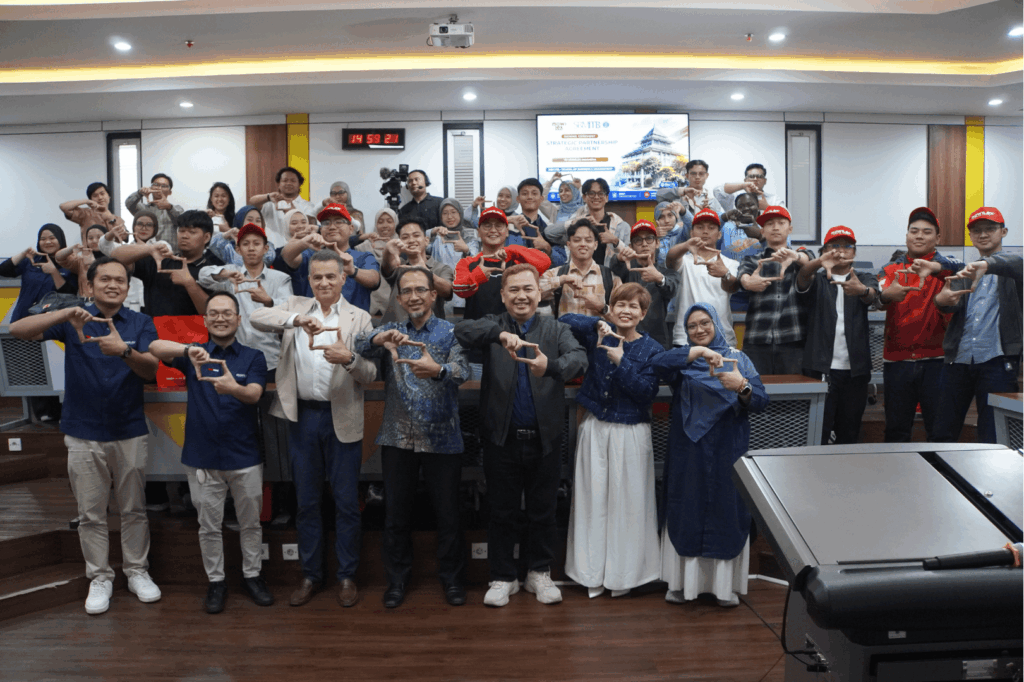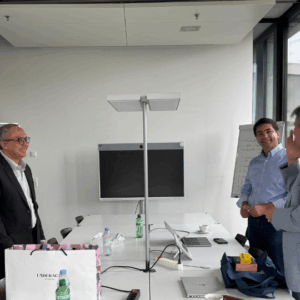
PT Mowilex Indonesia and the School of Business and Management, Institut Teknologi Bandung (SBM ITB), have established a strategic partnership to develop future talent. The collaboration was marked by the signing of a Memorandum of Agreement (MoA) during the Industry Experience Day event at SBM ITB (June 9).
This partnership establishes a formal framework for cooperation to support Mowilex’s one-year Management Trainee (MT) program, now entering its fourth intake. The Mowilex MT program typically attracts 10,000 to 15,000 applicants from across Indonesia. The rotation program is designed to break down barriers between departments.
“We’re not looking for perfect candidates; we’re looking for individuals who are ready, credible, and willing to be mentored,” said Mowilex Indonesia CEO Niko Safavi at the signing ceremony.
This agreement aims to provide SBM ITB students with a direct path to internships and careers at Mowilex. The collaboration also ensures the development of a generation of leaders aligned with the company’s recruitment principles, including a commitment to never charge recruitment fees at any stage and a reminder for candidates to be wary of fraudulent recruitment practices using Mowilex’s name.
This collaboration underscores SBM ITB’s commitment to providing students with relevant industry exposure, as well as Mowilex’s mission to maintain its status as one of the “Best Managed Companies” in Indonesia through institutional development and sustainable investment in human resources.
“A strong institution is far more important than a strong personality,” said Safavi.
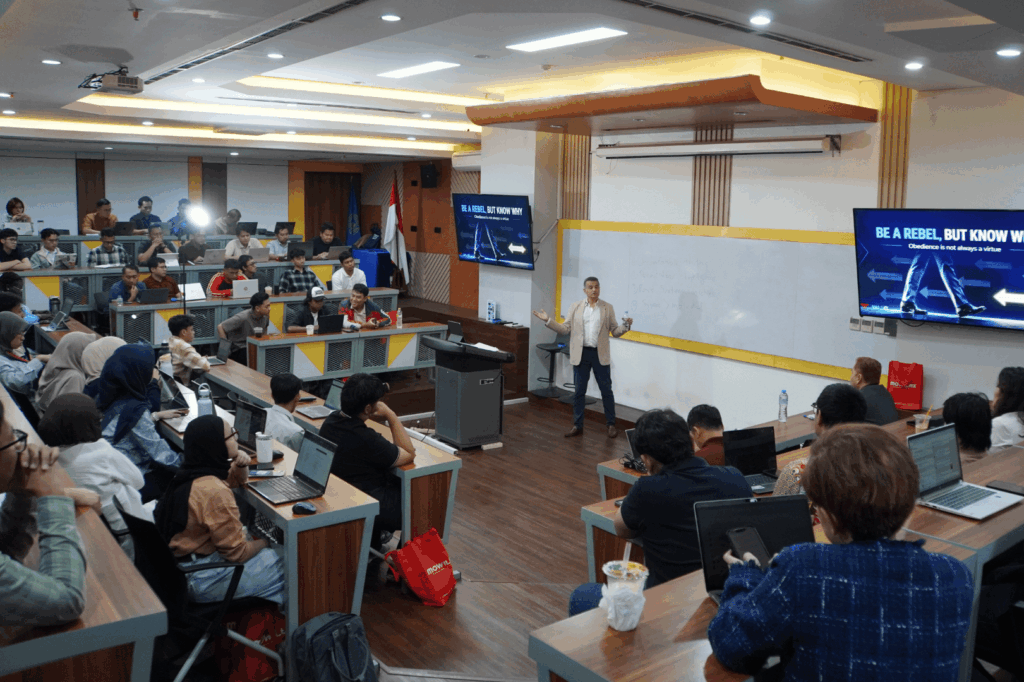
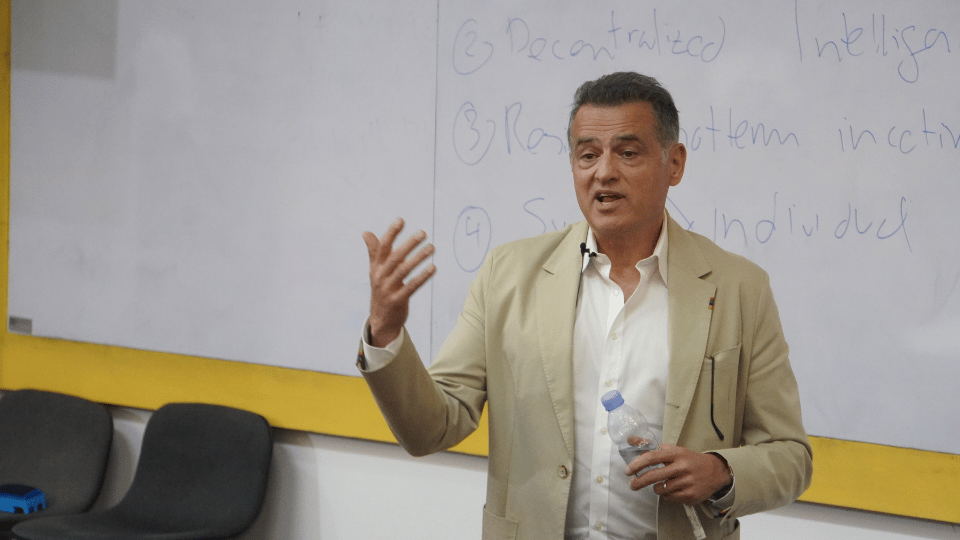
Before the collaboration was signed, two Mowilex executives gave guest lectures to SBM ITB students. Safavi delivered a lecture titled “Building a Developed-Economy Company Inside an Emerging Market,” while Mowilex Indonesia’s Head of Human Resources, Emenda Brahmana, gave a lecture on corporate careers.
In his lecture, Safavi highlighted the dangers of a vertical, top-down organizational structure, which can suppress bad news and undermine the quality of decision-making. He cited the 1997 Korean Air crash in Guam and other Korean aviation incidents as rooted in rigid cockpit hierarchies; the mass famine in the Soviet Union and China caused by local officials falsifying agricultural data to avoid punishment; and the Volkswagen “Dieselgate” scandal. According to Safavi, Toyota’s “Andon Cord” system is an example of an organization that allows production line workers to stop production when they discover quality problems.
“Mature organizations don’t punish the discovery of problems,” he said. “They punish the concealment.”
At Mowilex, Safavi explained, a similar philosophy is implemented through a performance rating system that protects high-performing employees while honestly addressing low performance. He also deliberately avoids setting KPIs for his direct reports because their work is too complex to reduce to a few metrics.
Safavi also noted that five of his seven direct reports are women. He said this is not the result of quotas, but rather a consequence of efforts to eliminate the “glass ceiling.”
Safavi concluded his lecture by linking the institution’s leadership and maturity to Mowilex’s sustainability commitments, including its status as the only carbon-neutral paint producer in Indonesia and one of the few companies in the world to formally commit to eliminating lead from its products well ahead of the regulatory deadline. According to him, this commitment is a testament to the institution’s maturity, not just marketing material.
Meanwhile, during his session, Brahmana introduced the concept of the “30-Second CV Test,” which assumes recruiters need less than a minute to assess a job applicant’s suitability for the role, evidence of impact, relevant keywords, and clarity.
“Your resume has only one task: to make the recruiter want to continue the conversation,” he told the students.
He encouraged students to go beyond activity-based descriptions, such as “member of the marketing division,” to showcase measurable, impact-based results. Brahmana also introduced the PIDS framework (Problem, Initiative, Delivery, Success) to make CV stories more credible and less generic.
The session concluded with a live interview simulation. Students take turns playing the role of interviewer and candidate, while Brahmana provides input on story structure, body language, and how to answer difficult or unexpected questions.