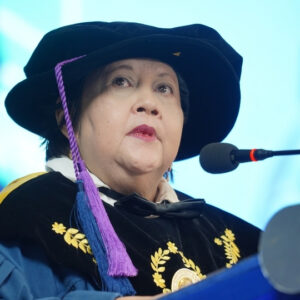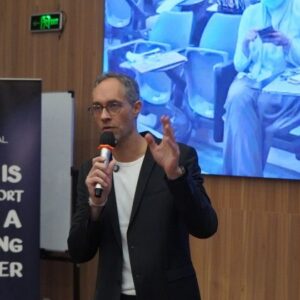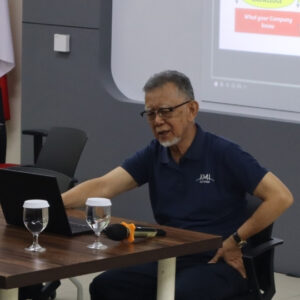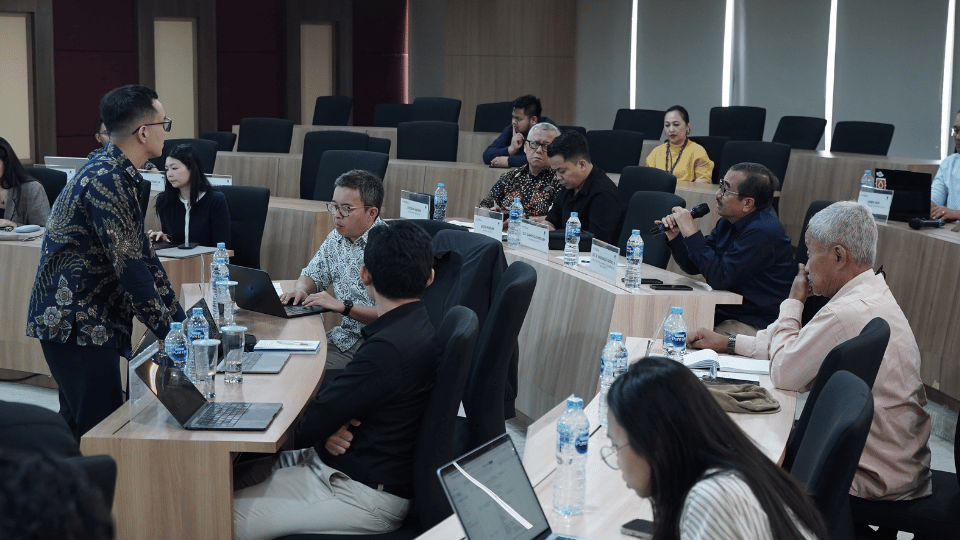
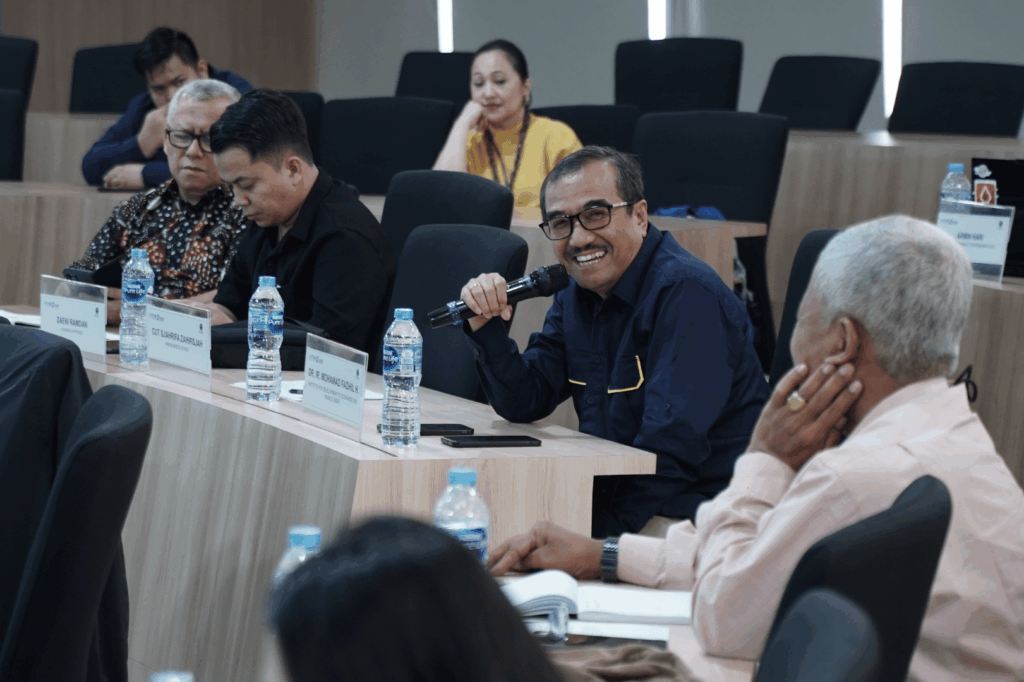
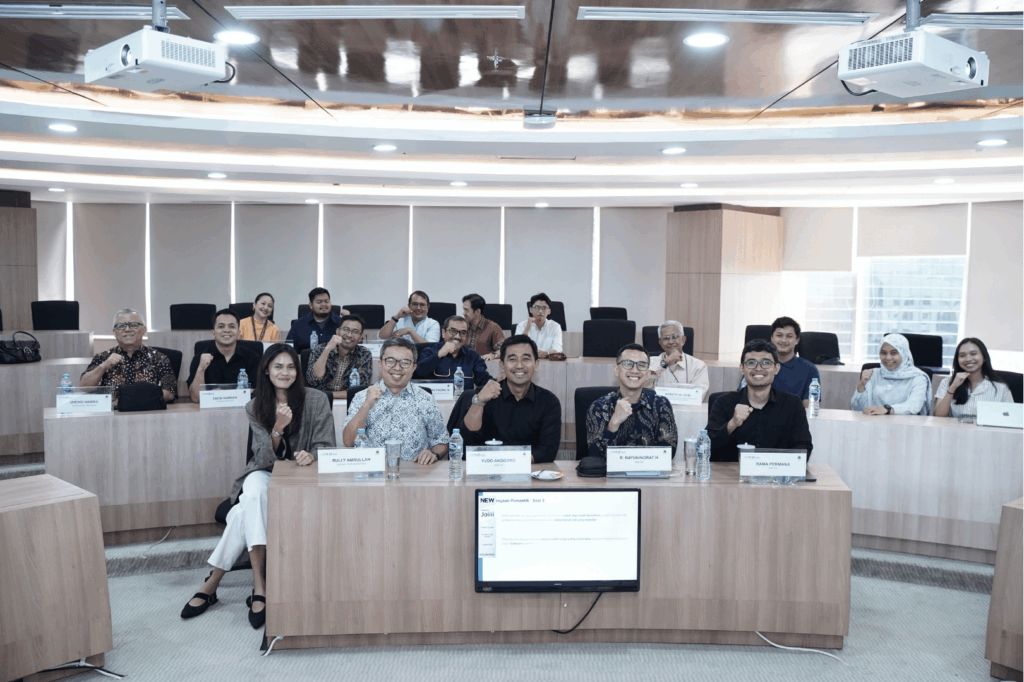
On Thursday, June 11, 2026, Yayasan Amanah Daya Nusantara (AYANA) and SBM ITB convened a Focus Group Discussion (FGD) titled “Identifying Strategic Opportunities in Indonesia’s Agricultural Ecosystem” at SBM ITB Jakarta Campus, GrahaIrama, Kuningan. The session was facilitated by a team from the Center for Policy and Public Management (CPPM) at SBM ITB: Yudo Anggoro, Rama Permana, and Bayuningrat Hardjakaprabon. On AYANA’s side, programme coordination was led by Rully Amrullah(Program Director), with Rizal Algamar (Executive Director), and Novi Meyanto (Operations Director). More than 24 leaders from farmer organizations, industry associations, research institutions, and development partners spent three hours examining systemic barriers and cross-sector collaboration opportunities that have, until now, remained fragmented.
WHY THIS MATTERS
Indonesia’s agricultural sector faces compounding pressure: increasingly erratic climate patterns, unstable commodity prices, limited access to fertilizer and technology, and tightening international export regulations such as the EU Deforestation Regulation (EUDR). Moreover, BMKG’s forecast shows that more than 56% of Indonesian territory will experience below-normal dry season conditions in 2026, with a strengthening El Niño potentially shifting planting seasons significantly.
Yet amid this urgency, policy and field-level interventions continue to operate in isolation. This FGD was an attempt to reverse that logic — and its findings were subsequently synthesized on a collaborative MIRO digital platform, producing a structured, participant-owned evidence base.
KEY FINDINGS AND INSIGHTS
The discussion, guided by the CPPM SBM ITB team, produced a series of sharp cross-commodity insights, later validated through a five-source triangulation process (Terms of Reference, two independent meeting records, and two MIRO synthesis boards):
The training-mentoring gap is the single most consistent finding. Across all five data sources, cocoa, rubber, and rice farmers reported receiving training without sustained follow-up mentoring (pendampingan). Knowledge arrives — climate literacy, seed selection, grafting — but field practice does not change. Climate field schools have, in several regions, been discontinued entirely after policy shifts.
Certification costs without certification benefits. Palm oil farmers who pursue ISPO certification frequently abandon it in year two, after absorbing real compliance costs without any corresponding market premium or income benefit. With ISPO becoming mandatory in 2029, this incentive mismatch threatens to undermine the entire certification system before it takes effect.
Indonesia’s rubber sector is in structural freefall. National production has declined 27% — from over 3 million tons in 2017 to 2.2 million tons in 2025 — driven by Pestalotiopsis leaf disease and erratic El Niño cycles that, in the worst-hit areas, have destroyed up to 60% of harvests. Unlike palm oil, rubber has no dedicated government fund (no equivalent of BPDP) to support replanting or income stabilization — a structural vacuum that participants explicitly flagged for urgent action.
Farmer regeneration is a quiet but accelerating crisis. Young people are being actively discouraged from entering farming — even by their own farming parents. FAO’s representative closed the session with a sobering projection: within 15 years, Indonesia could face a structural farmer shortage requiring labor importation. No participant offered a rebuttal.
70% of farmer problems lie outside agriculture itself. According to Dr. Fadhil Hasan of INDEF, the majority of structural barriers facing Indonesian farmers are resolved by interventions in finance, infrastructure, and technology — not by agricultural programming alone. This reframes the entire policy conversation: agricultural ministries cannot solve this in isolation from financial inclusion, village governance, and digital infrastructure institutions.
FROM DISCUSSION TO EVIDENCE: THE MIRO IMPACT-EFFORT MATRIX
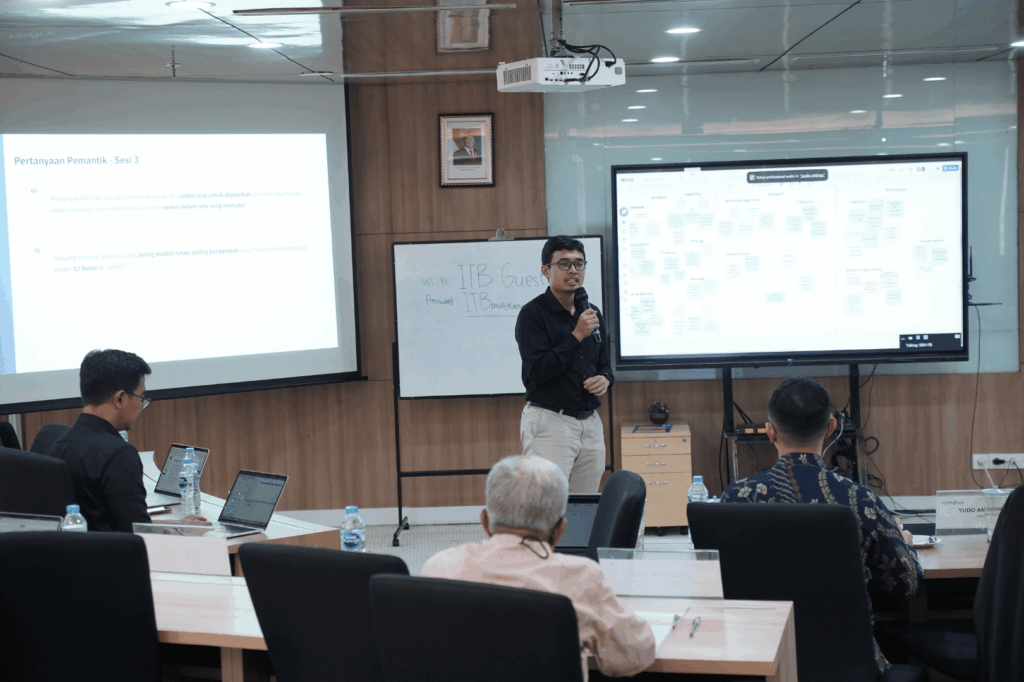
What distinguishes this FGD from a typical stakeholder convening is what happened after the discussion ended. All 24 participants collaboratively synthesized their own findings on a digital MIRO board, producing a participant-generated Impact-Effort Matrix — not a framework imposed by facilitators, but a collective institutional assessment of where Indonesia’s agricultural ecosystem should direct its energy.
Eight “Quick Win” interventions were identified as achievable within 12 months, including inclusive closed-loop partnership models, farmer corporatization, blended finance access, and — appearing for the first time as a formal priority — the shift from training delivery to sustained mentoring.
Three structural “Big Bets” were named as high-impact but politically difficult: land title legalization to support supply chain traceability, farmer regeneration, and village-level governance reform that positions farmers as early adopters rather than passive recipients.
The “Money Pit” quadrant — interventions that consume resources without delivering impact — was left empty. No participant identified a single current program as wasteful. Whether this reflects genuine institutional discipline or the natural reluctance of representatives to criticize their own organizations’ programs is a question the research team will explore through subsequent independent field interviews.
Perhaps most notably, EU Deforestation Regulation (EUDR) compliance was classified as a low-impact “Fill-in” — not the transformational sustainability driver it is often portrayed as in international donor discourse. Practitioners on the ground, across rubber, palm oil, and cocoa, see it as a compliance burden rather than a development opportunity. This divergence between policy narrative and field reality is itself one of the FGD’s most consequential findings.
“Farmers are not passive beneficiaries. They are change agents at the frontline of national food security — if the surrounding ecosystem allows it.” —AYANA, 2026 Agricultural Ecosystem FGD Terms of Reference
STRATEGIC DIRECTION GOING FORWARD
Building on both the discussion and the MIRO synthesis, the FGD produced a set of collectively agreed strategic directions: a shift from one-off training toward village-embedded, sustained mentoring models; an inclusive, closed-loop supply chain approach built on blended finance involving companies, farmers, and financial institutions; pilot replanting and agroforestry projects in West Kalimantan and South Sumatra for the rubber sector, ready for replication; and the urgent need for farmer corporatization and administrative digitization so that smallholders can independently access BPDP funds and subsidized credit (KUR).
WHAT COMES NEXT
AYANA and CPPM SBM ITB are now moving into a second phase of research: direct, semi-structured interviews with frontline smallholder farmers across rice, palm oil, rubber, cocoa, coffee, tobacco, cloves, and horticulture — both in-person and remote — to triangulate institutional-level findings against lived field experience. A peer-reviewed academic paper and a formal policy brief are also in preparation, with findings to be presented to relevant ministries later this year.
The central argument emerging from this body of work is direct: Indonesia’s food security strategy cannot rest on food distribution programs alone. It must rest on farmer prosperity.
ABOUT THE ORGANIZERS
AYANA (Amanah Daya Nusantara) is a foundation focused on community empowerment through value-based, locally relevant approaches. AYANA positions itself as a facilitator of change that connects climate action to livelihood reality. Program coordination is led by Rizal Algamar (Executive Director), Novi Meyanto (Operations Director), and Rully Amrullah (Program Director). www.amanahdaya.org
Center for Policy and Public Management (CPPM) — SBM ITB is the strategic knowledge partner that designed the FGD methodology, facilitated the discussion, and is preparing the resulting insight report and strategic recommendations. The CPPM team involved: Yudo Anggoro, Rama Permana, and Bayuningrat Hardjakaprabon.