The advent of artificial intelligence (AI) doesn’t make knowledge management (KM) irrelevant. On the contrary, AI requires well-managed knowledge to produce valid information.
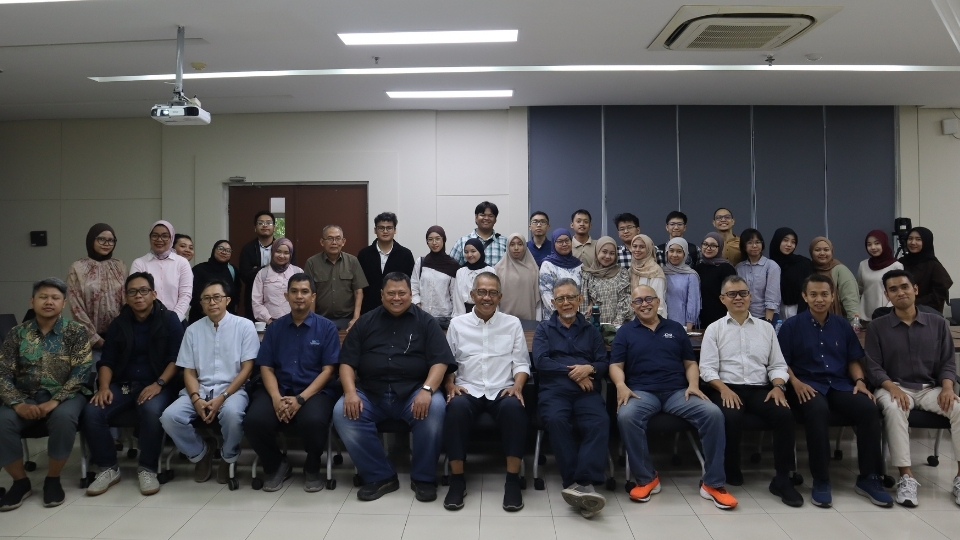
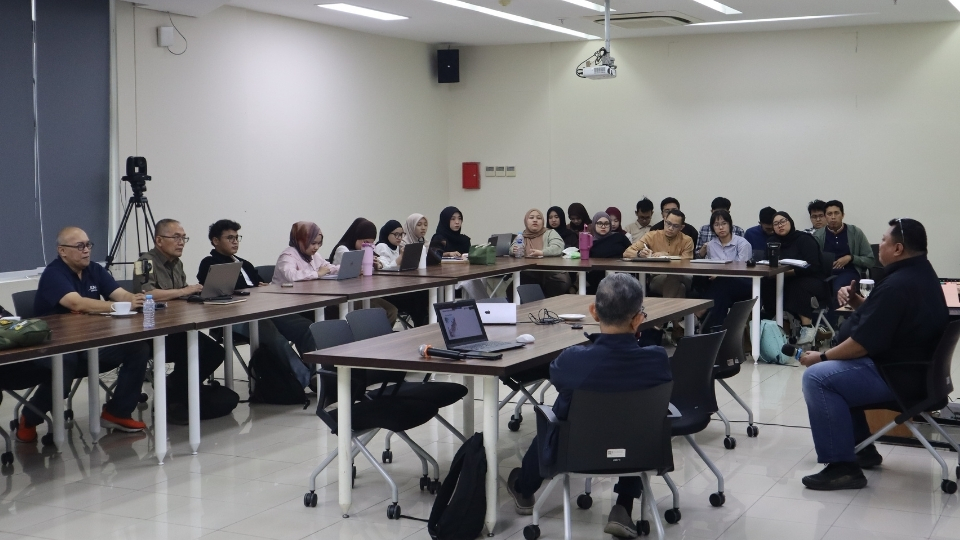
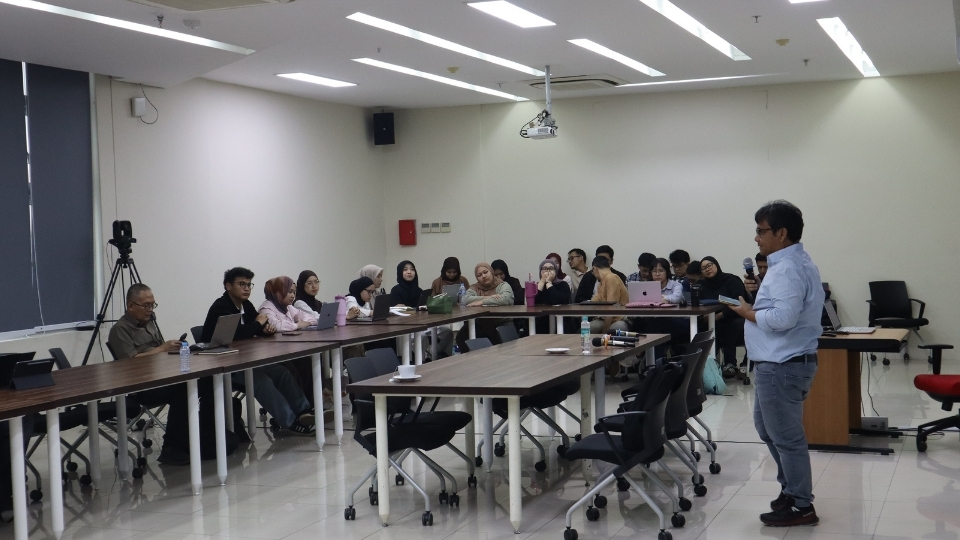
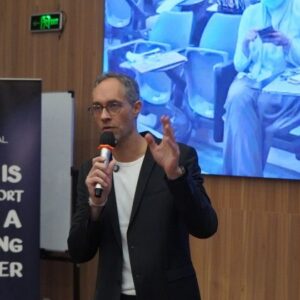
“Does the presence of AI mean that KM is dead? Quite the opposite. AI needs ‘food’ in the form of knowledge,” said Prof. Jann Hidayat at the KMSI Knowledge Cafe #01 held at the School of Business and Management, Institut Teknologi Bandung (SBM ITB) in Bandung (August 26).
According to Jann, the relationship between AI and KM is reciprocal. Without proper knowledge management, AI lacks a valid database from which to generate information.
AI development is also driving a shift in knowledge management from traditional KM to KM 4.0. While KM 3.0 tends to be linear and focused on document storage, KM 4.0 views organizations as systems that connect people, technology, and culture.
“An organization that recruits a lot of smart people isn’t necessarily smart. Often, the individuals are great, but the organization is ‘stupid’ because the knowledge doesn’t flow,” said Jann.
He likened knowledge to blood in the body. If it doesn’t flow throughout all work units, the organization cannot function optimally.
This approach also requires systems thinking. In the discussion, PLN Indonesia Power practitioners cited the failure of linear thinking through “The Cobra Effect” in India and the phenomenon of 3-in-1 jockeys in Jakarta.
In linear thinking, people see a problem only through its symptoms or events. The policy of paying residents to kill cobras, for example, actually encourages people to breed cobras for profit.
The systems thinking approach looks at problems more deeply through the “Iceberg Model,” moving from events, patterns, and trends to organizational structure and underlying mental models.
PLN Indonesia Power is applying this systems approach, among other things, to face the transition to Net Zero Emissions by 2060. The company is no longer simply developing applications, but is starting to model systems that integrate various complex variables. These changes also came as the company faced new competitors, including technology companies like Microsoft, entering the power generation sector to meet data center needs.
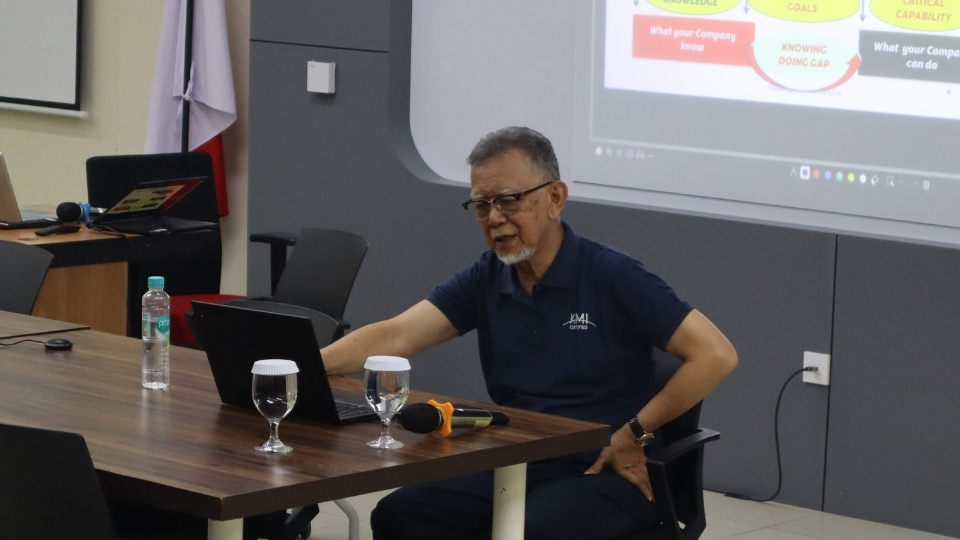
Jann also introduced the “Starting from the End” method, popularized by B.J. Habibie at PTDI. This approach begins with determining the goals to be achieved, then mapping the capabilities and knowledge gaps that need to be filled.
“We don’t start from what we have, but from what we want to achieve. From there, we map the capabilities and knowledge gaps that need to be filled,” he said.
Another issue that emerged was accountability for using AI in decision-making, particularly in the manufacturing industry. AI is considered a black box, requiring curation from subject matter experts (SMEs). Therefore, using AI does not eliminate human responsibility for the decisions made.
KMSI Knowledge Kafé #01, initiated by the Knowledge Management Society Indonesia (KMSI), discussed the ten principles of KM 4.0, including viewing the organization holistically and fostering continuous learning. This approach aims to reduce inter-functional silos and allow knowledge to flow across the organization.