In developing business, especially every new product has its own story behind it, and OZA Tea is no exception. It is a premium tea brand that offers a different way to enjoy tea, with 60 artisan tea variants in its lineup.
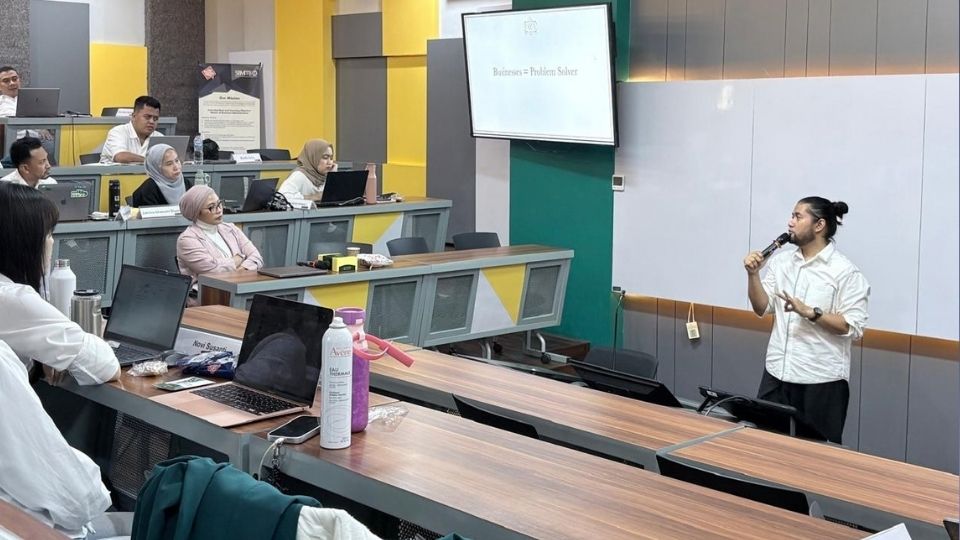
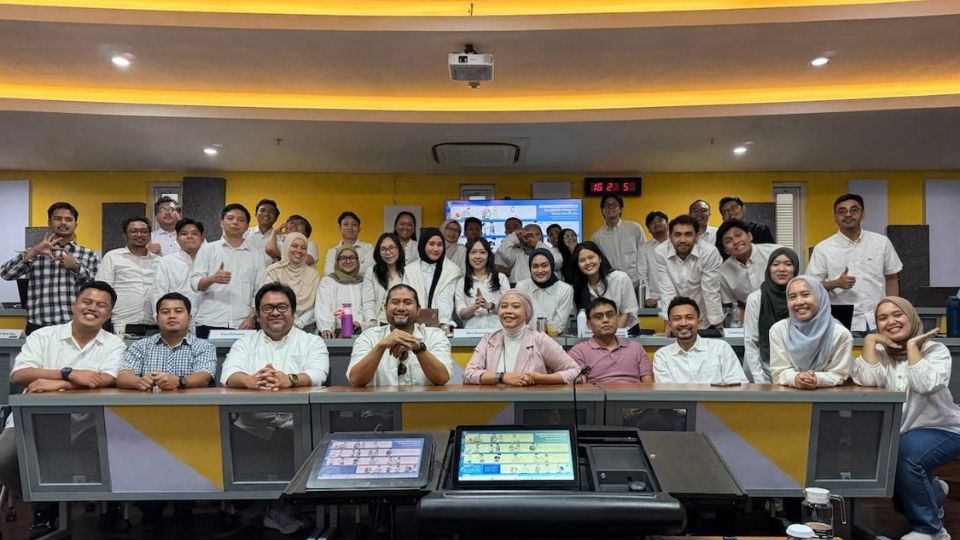
OZA Tea’s journey began in 2010. It was shared by its founder and Tea Specialist, Oza Sudewo, during a guest lecture titled “New Product Development” in the Marketing Mix and Innovation class of the Business Leadership Executive (BLE) MBA program at SBM ITB. The session was held at the ITB MBA Campus in Gelapnyawang, Bandung, on Saturday, October 3, 2026.
“I start with a question: why does business exist? For me, business exists as a problem solver. When there’s a problem, there’s also an opportunity, and that’s where a business idea comes from,” said Oza on Saturday (10/3/2026).
For Oza, a business opportunity appears when a problem can be mapped out by the people running the business. So what problem did he saw that led to OZA Tea?
His interest in premium tea started with a question he asked as a child. During a family trip to Puncak, Bogor, surrounded by endless tea plantations, little Oza, who was full of curiosity, asked his father about “gulma teh” (tea weed).
“When I was little, we went on a family trip to Puncak, Bogor. There were tea plantations everywhere, and I asked my father, ‘What is gulma teh?’ because I kept seeing signs selling it. My father said it’s a plant that grows on the tea trees. Then I asked again, ‘So where’s the tea?’ I only got the answer to that question years later.”
As he grew older, Oza learned that in some cases the best-quality tea from those plantations is exported at a fairly high price, while the rest is sold for domestic consumption.
“In many sectors, tea included, we’ve probably all heard a story like this. The best raw materials get exported, and only what’s left is used for the local market,” he said.
Oza went on to explain the hypothesis he had before starting the business. He saw an irony in it, the finest tea leaves were being shipped abroad, even though, in his view, Indonesia is a nation of tea drinkers with a history and culture closely tied to tea.
“Indonesia is very close to tea. In the morning, you have nasi uduk with a warm cup of plain tea. At lunch, you go to a warteg or a food court and order sweet tea. When you felt sick at school, the school clinic gave you tea. Even someone who just had an accident gets offered tea to calm down,” he said.
From these observations, the decision to develop premium artisan tea through OZA Tea came together. He also noticed that Indonesians traveling overseas often brought home artisan tea with premium quality as souvenirs for their relatives.
“After I saw that, I assumed there was a market for artisan tea with premium quality. There’s a willingness to pay from people here for that type of tea, and that’s where OZA Tea comes in,” said Oza.
Oza shared that from the very beginning he saw how important marketing principles were to making OZA Tea work. He used methods such as Segmentation, Targeting, Positioning (STP) and the 4P marketing mix to get the best results out of the journey.
He went through plenty of ups and downs, but slowly OZA Tea grew into a major name in the artisan tea niche. He also talked about how OZA Tea was essentially reborn in 2018 after a difficult period.
That year, the coffee shop business was booming in Indonesia, and it still is today. Oza saw an opportunity in that trend and managed to get OZA Tea in as a supplier to a long list of coffee shops, which turned out to be a big success.
“When the coffee shop business started to trend, I saw an opportunity for OZA Tea to come in as a supplier. We offered them good quality tea, and this marketing plan worked,” said Oza.
But he hasn’t forgotten his commitment and his roots, which is bringing premium tea to everyday customers. For its B2C model, OZA Tea currently uses marketplaces as its channel to reach the public.
On one marketplace, OZA Tea has done very well, selling thousands of pieces per variant. Its two flagship variants are Tropical Blue and Mango Mint, each of which has sold more than 4,000 pieces on that one marketplace alone.
Besides B2B and B2C, OZA Tea has also done well in the business-to-government (B2G) model, with collaborations with stakeholders like Bank Indonesia and BCA.
Together with Bank Indonesia, Oza has organized the West Java Tea Festival, which has been running for several years now. His collaboration with BCA produced a unique tea blend designed to deliver “BCA in a Cup of Tea.”
OZA Tea has also collected quite a few achievements. The Violet Amethyst blend won a Gold Medal, and Jasmine Orchard took home a Bronze Medal at international tea awards.
Oza Sudewo is also active as a judge and Indonesia’s representative in global competitions like the Tea Masters Cup, and he holds an international certification in tea blending. Based in Bandung, a city surrounded by tea plantations, OZA Tea consistently uses 100% selected tea leaves from local Indonesian farmers and turns them into world-standard specialty tea.
Even though the business is now very successful and in its mature phase, Oza said he still aims for growth. Beyond the business side, he emphasized his commitment to keep developing and presenting the best of Indonesian tea.
“I still want OZA Tea to grow bigger as a business, and also for my personal humble mission, I’ve committed to bring the best tea from Indonesia to the world,” said Oza.
Finally, Oza left the students with some advice. Business should be run honestly and with integrity, he said, and people should keep learning from their mistakes and never get arrogant about their achievements.
“In running a business, we have to be honest and honorable people, so we can maintain good relationships with all parties. Also, we have to be humble and learn from mistakes, because mistakes can teach us a lot of things and help our business grow,” Oza concluded.
Contributions to the SDGs:
Catalyzes domestic value-chain addition and artisanal entrepreneurship through an SBM ITB BLE MBA guest lecture, demonstrating how marketing mix frameworks, local agricultural sourcing from Indonesian tea farmers, and multi-sector partnerships (B2B, B2C, B2G) elevate indigenous commodities into globally award-winning premium products.
#SDG8 #SDG9 #SDG11 #SDG17