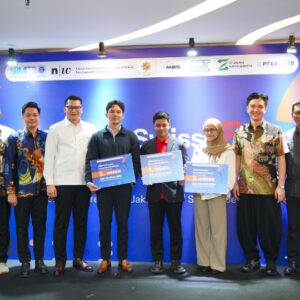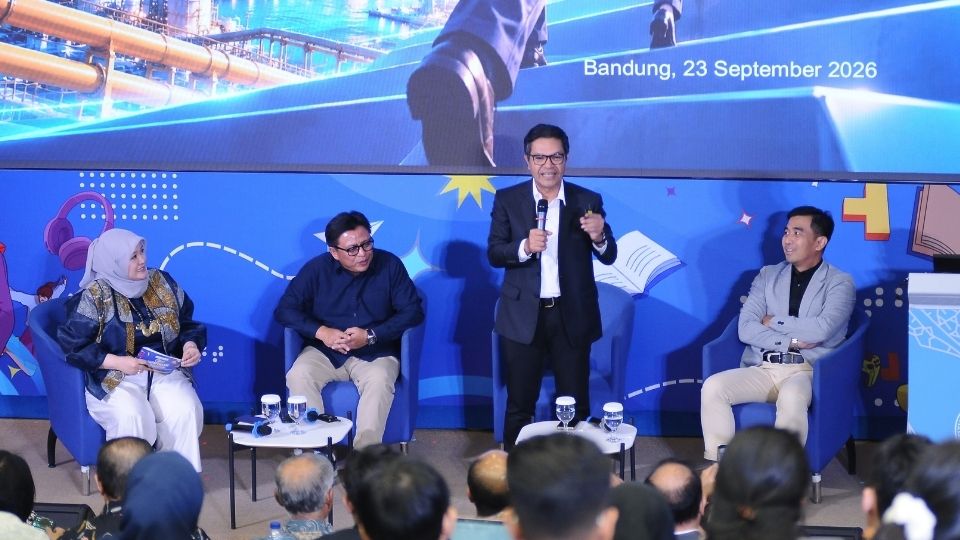
Companies need to build systems that develop leaders and prepare successors, rather than relying solely on current leaders. This issue emerged during the “Corporate & Industry Leadership” panel at the 7th HCM Talks Series 2026 at the Freeport Building of SBM ITB on Wednesday (September 23, 2026).
This year’s HCM Talks featured the theme “Leadership Development Across Fields and Levels Toward Indonesia Emas 2045.” This even was successfully organized by SBM ITB, the ITB Alumni Association, and PRIMA Indonesia through PT Rintis Sejahtera.
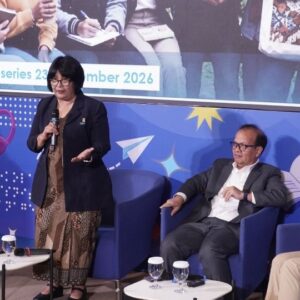
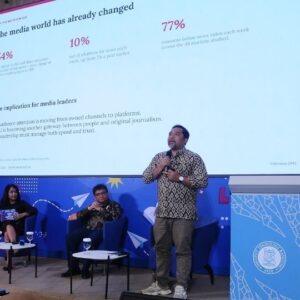
The panel featured Ichwan F. Agus, President Director of PT Gapura Angkasa; Indra Pehulisa Sembiring, President Director of PT Pertamina Gas; and Yudo Anggoro, SBM ITB lecturer and Director of the Center for Policy and Public Management.
According to Ichwan, professionals move from mastering a job to leading people and organizations. This shift requires continuous learning, adaptability, and growing leadership capacity.
“Stay curious. Never stop learning,” he said.
According to Ichwan, young professionals need to be bold in seizing opportunities, adapting to change, maintaining high standards, and using their career journey to create value for others. He also cautioned that artificial intelligence (AI) should not replace the thinking process. AI can speed up work, but leaders must still ask questions and understand problems deeply.
“AI widens the gap it was supposed to close,” he said.
Meanwhile, Indra emphasized the need to shift from individual development to building a leadership ecosystem. This system is needed so that organizations can sustainably produce leaders. According to him, risk arises when an organization has a critical position without a ready successor.
“Leadership risk = critical position without a ready successor,” he said.
Therefore, leadership development must be connected to the leadership pipeline and succession planning. The process includes talent identification, assignments, mentoring and coaching, evaluation, and assessing readiness to assume the next position.
At Pertamina Gas, talent development is geared toward meeting the company’s increasingly digital, integrated, and energy transition-oriented needs. Future leaders will not only possess technical expertise but also require digital and AI capabilities, human leadership, business acumen, judgment, and a sustainability perspective.
Yudo complements the industry perspective by emphasising the role of organisational systems in consistently developing leaders.
“Leaders create leaders,” he said.
According to Yudo, leadership is not solely determined by individual character or charisma. Organizations must create an environment that helps leaders grow.
World-class leadership, he explained, encompasses four dimensions: performance, integrity, renewal, and public value. Leaders must deliver performance, make decisions under pressure, develop others, prepare successors, and create benefits for employees, customers, and society.
To build such a system, companies need to connect business needs with transparent talent selection, stretch assignments with real authority, coaching and mentoring, learning through corporate universities, and readiness and succession evaluations.
Yudo also highlighted the challenges of leadership in the era of AI and sustainability. Leaders must verify evidence and maintain human accountability when using AI. They also need to lead workforce reskilling and upskilling and consider asset life, emissions, and future costs in decision-making.