
-
Eligibility: International graduates from AACSB accredited business school with the required entry requirements
Duration: Full-Time – between three and four years fixed term
Application deadline: 16 July 2026
Interview date: 20 – 21 Juli 2026 for shortlisted candidates
Start date: August 2027
For further details contact: Prof. Wawan Dhewanto, Ph. D (Institut Teknologi Bandung) and Dr Jessica Robins (Coventry University)Introduction
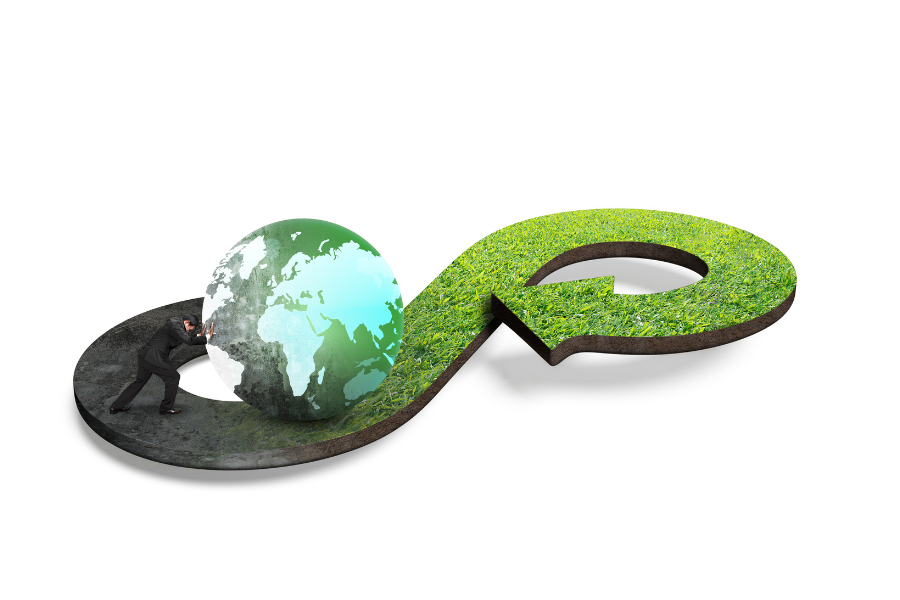
The business landscape sits at a crossroads. Decades of economic growth have been built on a ‘take–make–waste’ model that is increasingly difficult to defend — economically or environmentally. Firms across sectors are under growing pressure — from regulators, investors, and consumers alike — to find better alternatives.This study examines how Sustainable Business Model Innovation (SBMI) can support that transition in practice. Specifically, it looks at how firms are redesigning the way they create, deliver, and capture value — moving away from linear production systems and toward circular economy ecosystems built around product longevity, refurbishment, reuse, and closed-loop resource flows.
A key part of this picture is the ecosystem itself. No single firm can close the loop alone. This research explores how manufacturers, retailers, reverse logistics providers, recyclers, and digital platforms are beginning to coordinate around shared circular goals — and what it takes to make that coordination work at scale. Digital technologies, including IoT and AI-driven data platforms, are increasingly central to this, enabling product tracking, secondary market development, and smarter reverse logistics.
The study aims to produce an integrated analytical framework that captures how business model innovation and ecosystem dynamics interact — and what that means for environmental performance, resource efficiency, and long-term competitiveness. Findings will speak to both the academic literature on sustainable innovation and to the practical strategies available to firms and policymakers working to advance circular transitions without sacrificing economic viability.
Project details
The PhD student will conduct theoretical and empirical research on sustainable business model innovation within circular economy ecosystems. Possible research directions include:- Moving from linear, product-based models to circular systems requires firms to fundamentally rethink their business models — prioritising repairability, durability, refurbishment, and end-of-life recovery rather than planned obsolescence.
- Emerging approaches such as Product-Service Systems (PSS, sometimes referred to as Product-as-a-Service in industry contexts), remanufacturing, and closed-loop supply chains are reshaping how value is created and captured — but their commercial viability remains unevenly proven across different market contexts.
- The successful implementation of circular strategies depends on building genuine circular ecosystems, where manufacturers, retailers, reverse logistics providers, recyclers, and consumers are aligned around shared incentives rather than simply connected in a supply chain.
- Digital technologies — IoT, AI, and data platforms — are becoming essential infrastructure for circular models, enabling real-time product tracking, predictive maintenance, and the development of functioning secondary markets.
- Significant barriers remain, including the cost of building reverse logistics capability, regulatory variation across markets, and the economic feasibility of circular investment at scale — particularly for smaller firms.
Suggested areas for research focus:
- Food security presents a compelling context for circular economy business model innovation. Globally, significant volumes of food are lost or wasted at every stage of the supply chain — from production and processing through to retail and consumption. Circular business models in this space include valorisation of food by-products, closed-loop nutrient recovery, and redistribution platforms that extend the useful life of surplus produce. This research direction would examine how firms are redesigning value chains to reduce waste, strengthen supply chain resilience, and contribute to more secure and sustainable food systems.
- Health is an emerging frontier for circular economy thinking, where business model innovation has the potential to reduce waste, improve resource efficiency, and extend access to care. Single-use medical products, pharmaceutical waste, and the energy intensity of healthcare infrastructure represent significant circularity challenges. At the same time, opportunities exist for remanufacturing medical devices, developing circular procurement models within health systems, and applying PSS approaches to medical equipment. This research direction would explore how circular business models can be adapted to the specific regulatory, safety, and ethical demands of the health sector.
- Energy systems are undergoing a profound structural shift, and circular economy business models are increasingly central to that transition. From the reuse and repurposing of batteries from electric vehicles to the design of energy-as-a-service models and the recovery of materials from decommissioned renewable infrastructure, circularity offers both environmental and commercial value. This research direction would investigate how firms operating in energy generation, storage, and distribution are innovating their business models to capture value from circular flows — and what ecosystem conditions are needed to enable those models to scale.
Funding
Tuition fees and bursary from LPDP, PDDI or potentially ITB/CU (separate application).Benefits
The successful candidate will receive comprehensive research training including technical, personal, and professional skills. All researchers at SBM ITB & Coventry University (from PhD to Professor) are part of the Doctoral and Researcher College, which provides support with high-quality training and career development activities.Entry requirements
- A minimum of a 2:1 first degree in a relevant discipline/subject area with a minimum 60 overall module average.
PLUS
- The potential to engage in innovative research and to complete the PhD within 3-4 years.
- A minimum of English language proficiency (IELTS academic overall minimum score of 6.5 with a minimum of 6.0 in each component).
Additional Requirements
Applicants should hold a strong master’s degree in business administration, innovation management, sustainability studies, industrial engineering, economics, or related discipline. Relevant background may include:- Circular economy and sustainability transitions
- Business model innovation and strategy
- Industrial ecology or sustainable supply chains
- Quantitative and qualitative research methods experience
- Data analysis and modelling experience.
The ideal candidate will be highly motivated, analytically oriented, and interested in sustainable innovation, circular economy systems, and the transformation of industrial ecosystems toward more resource-efficient and resilient models.
For more information on the application requirements for ITB, click here and for Coventry University, click here.
Please contact for informal enquiries: Prof. Wawan Dhewanto, Ph. D (ITB) or Dr Jessica Robins (Coventry University)