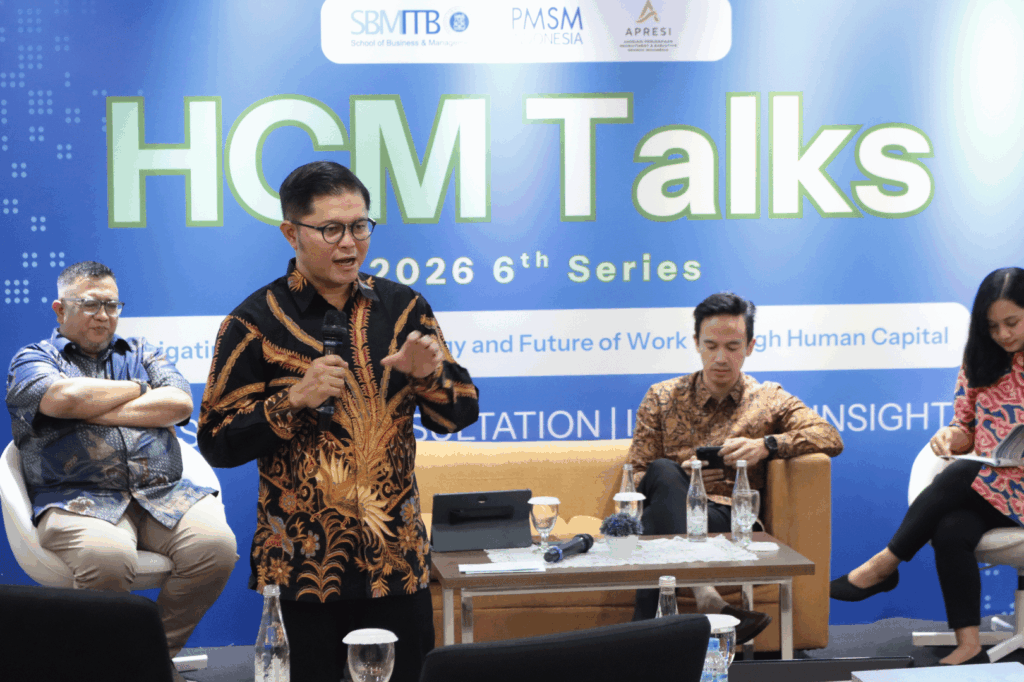
Achmad Ghazali, Associate Professor in the People & Knowledge Expertise Group at the School of Business and Management, Institut Teknologi Bandung (SBM ITB), explained that the use of technology in the Human Resources function should not stop at process digitization and operational efficiency alone. He believes organizations need to ensure that technology truly improves decision-making quality and the employee experience, and supports sustainable talent development.
He highlighted that many organizations are still at the stage of administrative digitization and cost efficiency. At the same time, the use of technology for intelligent management and data-driven decision-making is still suboptimal. Furthermore, the use of technology presents new challenges, including algorithmic bias, data security, and privacy issues.
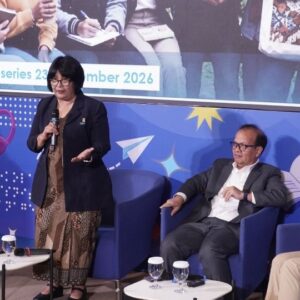
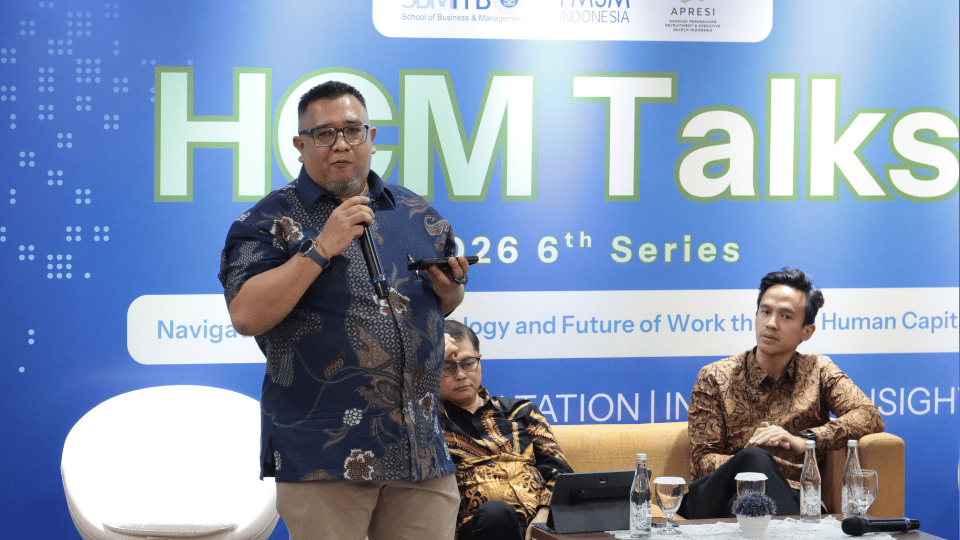
“Lead with data, decide with courage, and never outsource responsibility,” Ghazali said while speaking at Panel Session 3 of the 6th HCM Talks Series, titled “Human Capital Technology: Leveraging HR Tech for Organizational Transformation,” organized by SBM ITB in collaboration with PMSM Indonesia and APRESI at the SBM ITB Jakarta Campus (June 9).
According to him, technology can help organizations work faster and more accurately, but the responsibility for managing people remains with HR professionals. Therefore, companies need to establish strong governance and ethical principles in every technology implementation.
Assistant Professor of the People & Knowledge Expertise Group at SBM ITB, Fajar Hendarman, emphasized the importance of human resource readiness in facing the rapidly accelerating digital transformation. He emphasized that the success of technology adoption is determined not only by the sophistication of the systems used but also by the individual’s readiness to continuously learn and adapt.
According to him, a digital mindset is a crucial foundation for building digital capabilities, utilizing AI, and innovation in the workplace. Furthermore, organizations also need to begin developing new skills relevant to trends in sustainability, the green economy, and the development of Industry 5.0, which increasingly places humans at the center of transformation.
“AI can help increase productivity, but adaptability and a willingness to continuously learn remain key,” explained Fajar.
Meanwhile, Suryo Sasono, Executive Vice President of Human Capital Strategy & Talent Management at PT Bank Rakyat Indonesia (Persero) Tbk and Head of the Learning & Development Department at PMSM Indonesia, encouraged participants to view HR Technology from a more practical perspective. He believes that technology should be used to solve real problems, not simply follow emerging digital trends.
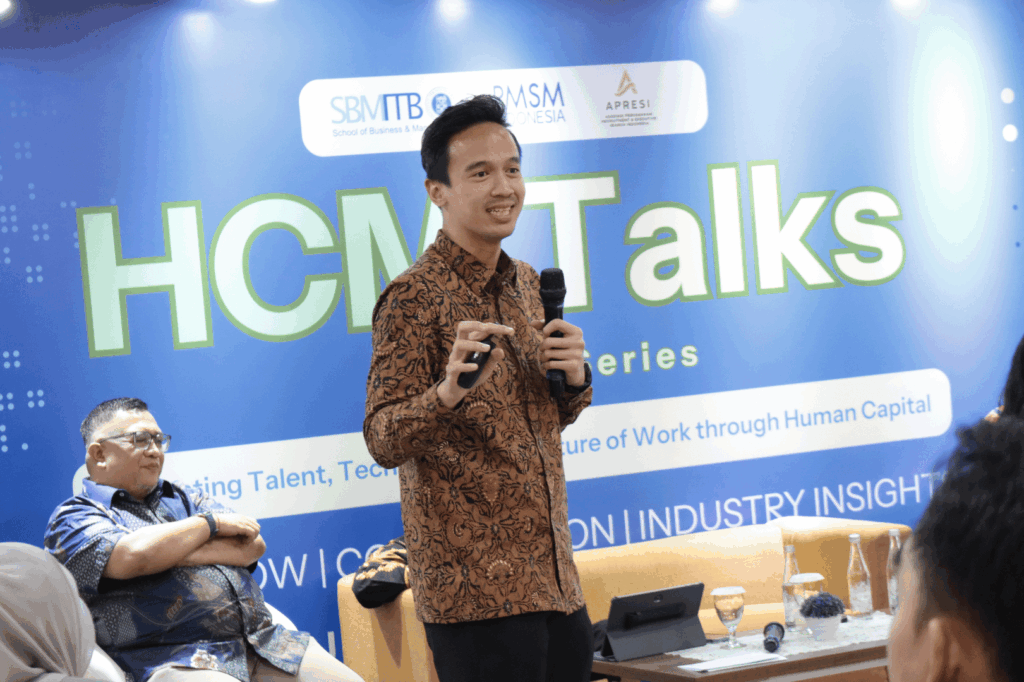
He shared his experience managing organizational growth at Gojek, which initially relied on spreadsheets for HR data management. As the company grew, the need for data integration drove the use of a more integrated HR system. However, he also pointed out that not all HR challenges need to be solved with technology.
Suryo cited his experience at Prudential Syariah, where the organization sought to understand employee aspirations and concerns. Instead of using social listening platforms or new technologies, the company relied on a simpler approach through regular meetings between HR Business Partners and employees.
“Sometimes we rush to adopt technology. But what we need to do first is understand the problems we want to solve,” he said.
He explained that every organization has different needs. Therefore, decisions about adopting technology must always be based on the context and business objectives.
This panel session demonstrated that Human Capital transformation is not only about adopting the latest technology, but also about using technology appropriately to support human development, improve decision-making quality, and create sustainable value for the organization. Through collaboration among technology, data, and a human-centered approach, organizations can drive more effective transformations in the ever-changing world of work.
Contributions to the SDGs:
Promotes ethical, problem-driven HR technology adoption and human-centered Industry 5.0 principles by fostering multi-stakeholder dialogue on digital workforce capabilities, data governance, and continuous learning for sustainable organizational growth.
#SDG8 #SDG9 #SDG4 #SDG17