Democracy’s success cannot be measured solely by population size or the exercise of political rights. The state must also be able to equalize access to education, health care, infrastructure, and welfare.
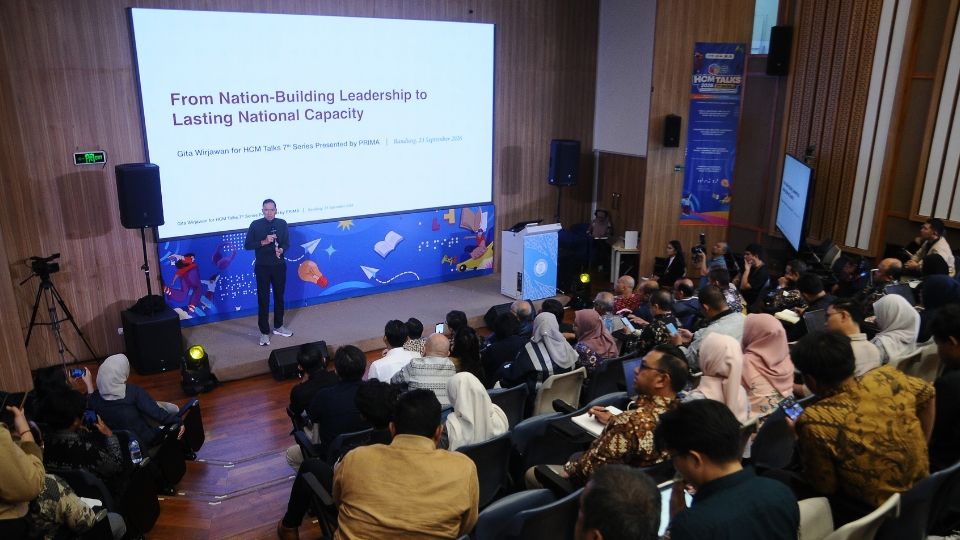
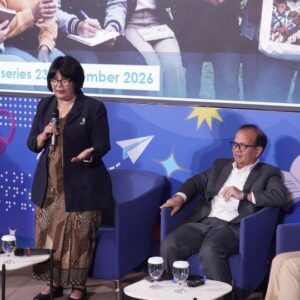
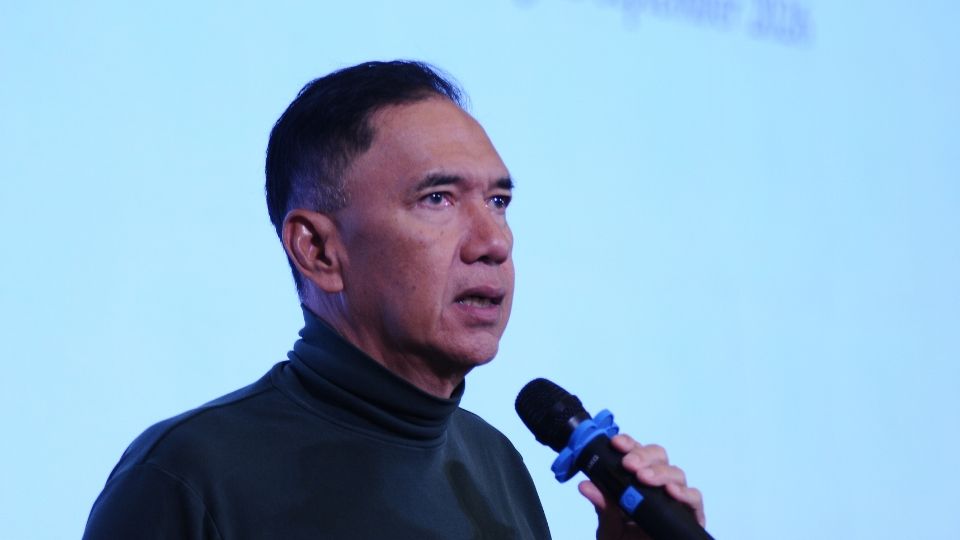
This message was conveyed by Ancora Group Chairman and former Minister of Trade, Gita Wirjawan, at the 7th HCM Talks Series 2026 at the Freeport SBM ITB Building on Wednesday (September 23).
In the “Public Leadership and Policy” session, Gita stated that Indonesia needs strong national capacity to achieve its 2045 vision. This capacity must be built through education, equitable distribution of public goods, governance, competition, and opportunities for people in various regions.
He cited Southeast Asia’s per capita income growth, which, according to his presentation, increased by about 2.7 times, while China’s growth reached about 10 times. One key difference is investment in education.
Since the Deng Xiaoping era in 1978, China has aggressively sent young talent to various educational institutions worldwide. In the past five decades, more than nine million Chinese talents are said to have gained educational experience abroad.
According to Gita’s data, approximately 8,500 Indonesian students are studying in the United States. In contrast, the number of Chinese and Indian students exceeds 350,000.
In the UK, the number of Indonesian students is around 4,000, while Chinese and Indian students each reach more than 200,000.
“China and India are civilizations with thousands of years of history, yet they continue to demonstrate a strong eagerness to learn from others and draw insights from around the world,” said Gita.
According to her, international education not only produces degrees but also builds human capacity that can contribute to institutions, technology, and industry.
Beyond education, Gita emphasized empathy in leadership. Using Satya Nadella’s leadership at Microsoft as an example, she explained that leaders need to understand the people within the organization, not just pursue business metrics.
“Never underestimate the power of empathy,” she said.
Empathy, Gita continued, must also be applied in relationships with suppliers, customers, colleagues, and all stakeholders.
“We must also be able to show empathy for the nation and state,” she said.
Gita highlighted the disparities in access to public goods across Indonesia. She pointed out that the differences in the quality of services and infrastructure between locations such as Merauke, Tarakan, Muara Enim, Rote, and Sabang compared to Jakarta and Bandung indicate that achieving equity remains a significant challenge.
She also assessed that national capacity requires a competitive business climate. Based on the data she presented, Indonesia issues only around 0.3 business permits per thousand adults. The Southeast Asian average is around one permit, while China has around ten. According to Gita, this condition is influenced by the availability of capital and “bureaucratic deadweight,” or bureaucratic burdens that hinder economic activity.
Economic growth should also not be concentrated solely in major cities. Secondary cities and rural areas need to grow so that national capacity and development benefits are more evenly distributed.
In closing, Gita highlighted the development of AI from generative to agentic. Agentic AI not only responds to commands but can also execute processes, monitor progress, and take actions more autonomously. This change will increase computing and energy requirements.
According to Gita, Indonesia cannot pursue technology alone. It must develop education, infrastructure, governance, and human resources to face these changes. Leadership towards 2045, she believes, is not just about who leads, but what capacities are passed on to the next generation.