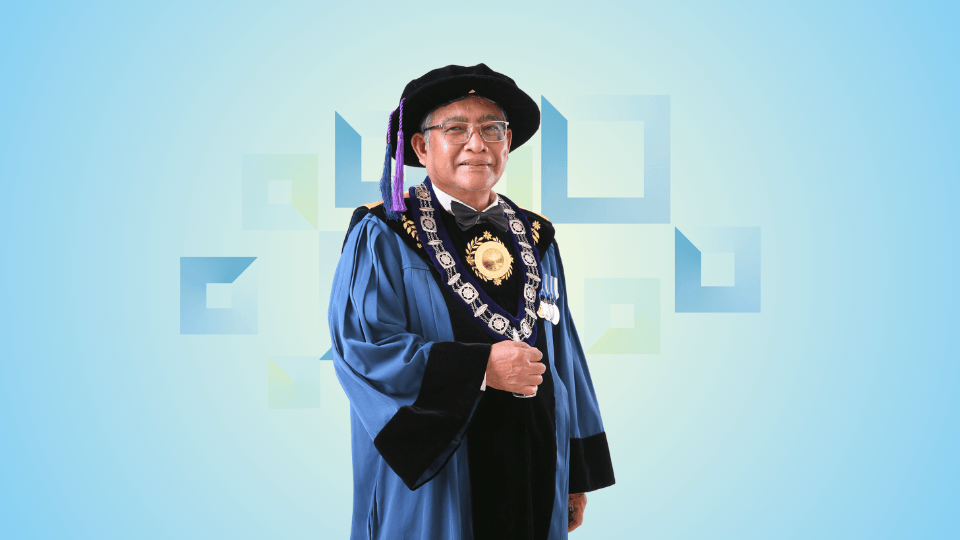
Prof. Sudarso Kaderi Wiryono, Professor at SBM ITB, is retiring after more than four decades of service in education. He is the founder and pioneer of SBM ITB, contributing to the design of the school’s vision, academic foundation, and development direction since its inception.
Sudarso served as the Dean of SBM ITB from 2010 to 2020. As he enters retirement, Sudarso sees this phase as a transition rather than just an end to teaching.
“Retirement is not simply a cessation of teaching routines or academic activities, but also a shift in identity from a role that has been held for years,” he said.
According to Sudarso, retirement brings a variety of feelings. There is relief when structural responsibilities are released. But there is also silence when the academic rhythm that has been part of daily life comes to a halt.
Sudarso began his journey as an educator in 1979. He saw education shifting between an ideally designed curriculum and the diverse realities of the classroom. Students came with varying social backgrounds, abilities, and readiness to learn. Therefore, he viewed lecturers not only as transmitters of knowledge but also as mentors who helped students discover the relevance and meaning of their learning.
He also noted changes in student learning patterns from generation to generation. Students, he said, were becoming more active and willing to engage in the learning process.
“Students are not just receiving, but are starting to dare to question, not just listening, but also demanding involvement,” he said.
This change, Sudarso continued, shifted his perspective on educator authority. He no longer positioned lecturers as centers of knowledge but rather as facilitators who guide students’ thinking.
“Educators derive their authority not from knowledge, but from their ability to facilitate thinking, nurture curiosity, and establish a secure, productive environment for dialogue,” he stated.
This reflection was strengthened during his time teaching at SBM ITB, especially during its early days. With a diverse student body, he believes that fairness in education does not always mean equal treatment, but rather support tailored to each student’s individual needs.
In his academic practice, he also faces system limitations and administrative demands. However, he interprets these as part of the educators’ learning process. Classes that do not always run effectively and methods that do not always work, he believes, create an opportunity for reflection, humility, learning, and adaptation.
Sudarso believes that the meaning of education often emerges in simple ways: when students dare to ask questions or when alumni share the impact of the values and ways of thinking they acquired during their studies.
“That’s where I understood that the influence of education often works silently, and is only felt long after the formal process is over,” he said.
As he approaches retirement, Sudarso acknowledges a sense of loss, from the classroom to the dynamics of meeting the younger generation. However, he emphasizes that dedication doesn’t stop.
“Dedication doesn’t end with retirement. It just changes form,” he said.
To the next generation, Sudarso advised that education should not be narrowed down to academic brilliance. He highlighted the significance of nurturing hollistic individuals: those who think critically, uphold their values, and demonstrate integrity.For him, the academic world rests on dialogue, process, and the humility to continuously learn.
SBM ITB expressed its appreciation for Prof. Sudarso Kaderi Wiryono’s sincerity, patience, and integrity. His exemplary legacy will continue to be meaningful for future generations.