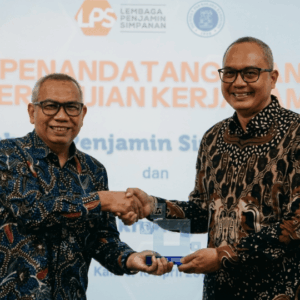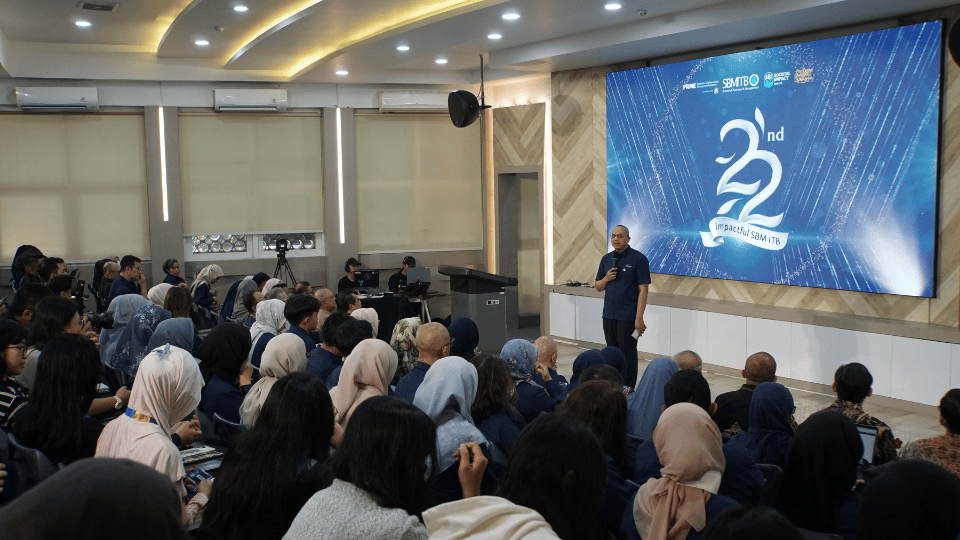
SBM ITB held a Societal Impact and Avirama Nawasena Award (AAN) celebration, as well as its 22nd Anniversary, at the SBM ITB Campus in Bandung on Wednesday (February 11th). This event served as a momentum to strengthen the role of business education in promoting a sustainable economy through innovation, multidisciplinary collaboration, and real contributions to society.
The Avirama Nawasena Award is a prestigious annual award from SBM ITB given to individuals, corporations, MSMEs, and NGOs that innovate in implementing Environmental, Social, and Governance (ESG) principles. This event aims to promote sustainability and corporate responsibility in advancing a sustainable Indonesian economy.
The Dean of SBM ITB, Aurik Gustomo, emphasized SBM ITB’s strategic direction as a business school grounded in leadership, entrepreneurship, and innovation. Since its founding in 2003 and its designation as the youngest faculty at ITB, SBM ITB has continued to grow and is committed to becoming a sustainable institution, in line with the meaning of “Avirama Nawasena.”
“Currently, SBM ITB’s research demonstrates significant achievements with internationally reputable publications, and in the next five years, we aim to be even more impactful,” said Aurik Gustomo, Dean of SBM ITB.
He also highlighted various multidisciplinary collaborations, including with the ITB School of Architecture, Planning, and Policy Development (SAPPK), the bachelor’s- and master’s-level integration program with the School of Pharmacy through the MBA Healthcare concentration, and the exploration of a collaboration with Airbus to develop an aviation business program. SBM ITB also aims to develop 10 societal impact programs that integrate community service and research, in line with its focus on SDG 8 (Decent Work and Economic Growth).
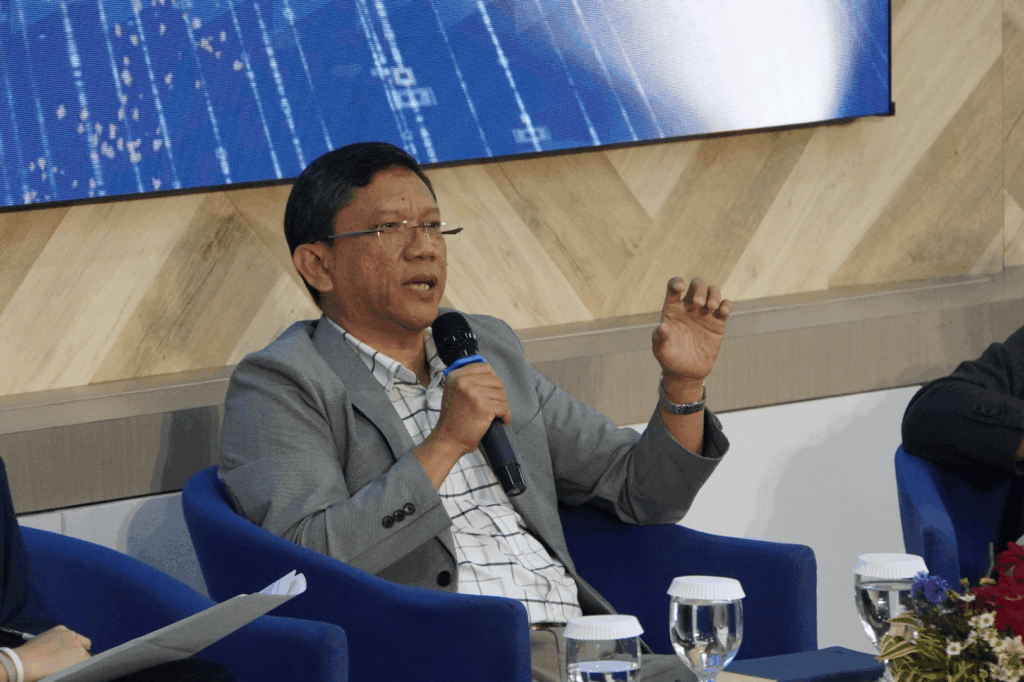
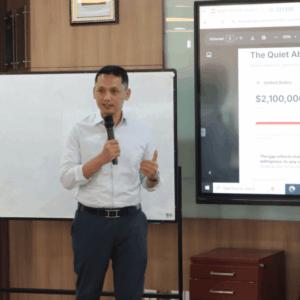
Meanwhile, in a Knowledge Management Forum Discussion session entitled “Transforming Impactful Business Education to Accelerate Sustainable Economic Growth,” Prof. Dr. Miming Miharja from SAPPK ITB emphasized the importance of maximizing positive externalities and minimizing negative externalities from business activities, especially in the context of the environmental and spatial planning crisis.
“Our fundamental problem lies in implementation and consistency, especially at the institutional level. Planning is often driven by power, leading to the neglect of sustainability. We need to consistently improve practical matters so that the positive impact on the public can be maximized,” said Prof. Miming.
Dedy Sushandoyo from SBM ITB highlighted the importance of the triple bottom line approach (people, planet, profit) and strengthening SBM ITB’s identity as a center for entrepreneurial business and ecosystem-based thought leadership. He argued that research and education must be directed towards creating a real impact for industry, students, and society.
From a practical perspective, Rendy Aditya Wachid, Founder/CEO of RAW Lab, demonstrated that business can be a solution to environmental problems while remaining profitable. Through innovative building materials from waste, his company has served dozens of clients and received numerous awards.
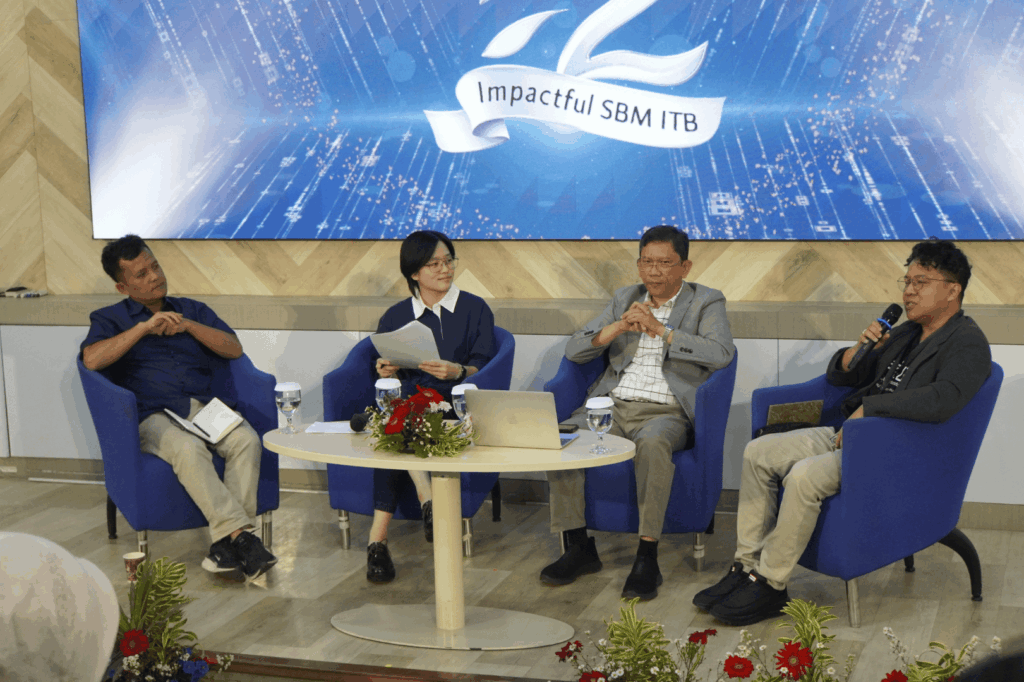
“Business is fundamentally a way to solve human problems profitably. Amidst various environmental issues, there is always hope if we consistently build a fairer and more sustainable system,” said Rendy Aditya Wachid.
The discussion also touched on the importance of business ethics and social cost-benefit analysis in decision-making. Heru Prasetyo, a member of the SBM ITB School Board, emphasized that business education must be rooted in integrity and collaboration.

“Knowledge management should not stop internally. This movement requires collaboration and broader networks so that its impact is felt by society,” said Heru Prasetyo, a member of the SBM ITB School Board and Chairman of the Indonesian Business Links Patronage Board.
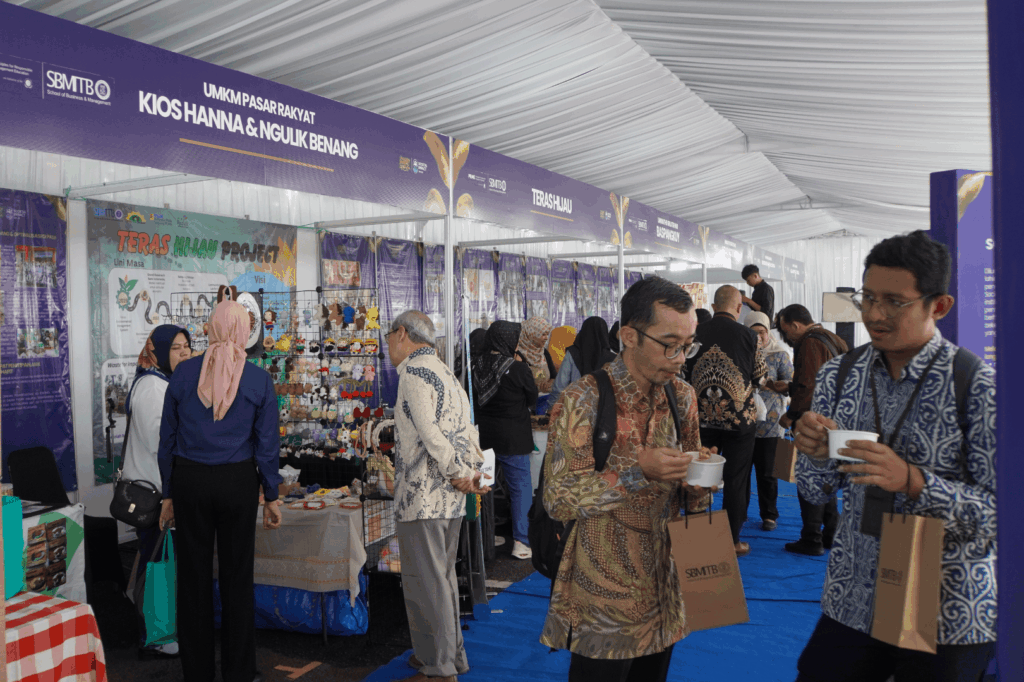
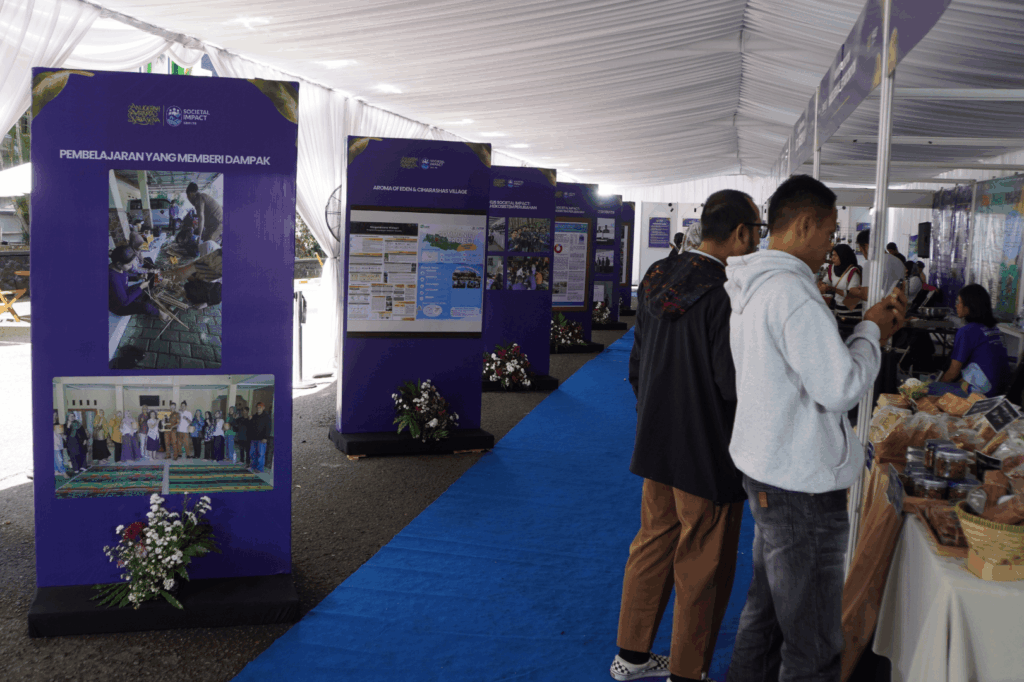
In addition to the discussion forum, the Anniversary also featured a Societal Impact Exhibition Session showcasing MSMEs and startups fostered by SBM ITB. One such event was Aseta, a startup providing cloud-based asset management software that received support through The Greater Hub SBM ITB. This incubation program supports students and young entrepreneurs through mentoring, workshops, co-working facilities, and access to funding.
The Putra Tunggal Palm Sugar MSME also participated in the exhibition. The owner, Yandi, stated that the marketing training from SBM ITB helped increase sales of his products.
Through this series of activities, SBM ITB affirms its role as a business education institution that is not only academically oriented but also committed to creating sustainable social, economic, and environmental impact.