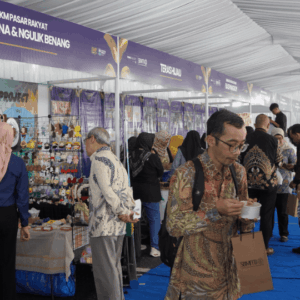
The Indonesian government’s plan to establish around 80,000 Koperasi Desa Merah Putih (Red and White Village Cooperatives -KDMPs) is one of the most ambitious initiatives to strengthen the rural economy. Designed to expand economic opportunities at the village level, the program is expected to play a crucial role in driving inclusive growth across various regions.
Ana Noveria, Assistant Professor of Behavioral Economics at SBM ITB, emphasized that this initiative carries both significant risks and potential. The total investment involved is in the hundreds of trillions of rupiah, making this program both a national priority and a gamble.
“This initiative carries high risks but also has significant rewards. If it fails, the losses could be substantial. However, if successful, this program could significantly boost Indonesia’s rural economy,” Ana stated in Bandung on February 5.
According to Ana, thorough preparation at the local level will be crucial to the program’s success. Each cooperative is expected to be managed by a small leadership team, often structured similarly to a CEO, CFO, and COO. However, in the village context, selecting and preparing qualified human resources remains a major challenge.
Besides human resources, there are four other key challenges: a real-time digital platform for transparent inventory monitoring and management; a market-strengtheningmarket-strengthening mechanism to connect cooperatives with reliable buyers; targeted research and development initiatives to increase productivity; and integration with member companies of the Indonesian Chamber of Commerce and Industry as market drivers.
“These four elements work as an ecosystem. Strong governance, financial literacy, business understanding, and managerial capacity are necessary for cooperatives to function as sustainable economic institutions, not simply administrative entities,” she explained.
In addition to internal management, external economic integration will also determine whether cooperatives can operate productively. Ana emphasized that access to markets and supply chains will be crucial to long-term sustainability.
Rather than relying solely on government support, village cooperatives must be able to secure competitive suppliers and reach a wider market. Building a strong business foundation and integration within the existing economic ecosystem will be key to sustainability.
How quickly can Koperasi Desa Merah Putih move from government funding to financial independence? According to Ana, this transition involves more than just gaining access to the market. Cooperatives need to establish sustainable, long-term relationships with dependable suppliers and dedicated consumers. This process entails building trust, ensuring consistent quality, and creating genuine value for both buyers and sellers.
Ana emphasized that member participation and trust are central to the success of cooperatives. As membership-based institutions, cooperatives depend on active involvement and a sense of shared ownership from the community.
“The community will participate if they clearly understand the benefits and see that the incentives offered are real and consistent. Trust and awareness must be built through ongoing education and transparent communication,” she explained.
Ana emphasized the importance of partnerships between cooperatives and the private sector. Through “triple helix” collaboration involving the government, academia, and the business world, cooperatives can be integrated into the broader value chain. Private companies, for example, can support cooperatives through corporate social responsibility (CSR) programs or by making cooperatives suppliers within their business ecosystems. Member companies of the Indonesian Chamber of Commerce and Industry (Kadin), for example, can act as “champions” for cooperatives, providing technical assistance, quality standards, and direct integration into the national supply chain.
“This is not just corporate social responsibility, but rather the formation of mutually beneficial business relationships,” Ana said.
Such partnerships can take various forms, including large companies adopting certain cooperatives as suppliers. Beyond partnerships, digitalization also offers opportunities to accelerate cooperative development. With the widespread use of digital payment systems and e-commerce platforms in Indonesia, cooperatives can leverage readily available technology to improve financial transparency, expand market access, and enhance operational efficiency.
“Digital tools can help cooperatives leapfrog. The technology is readily available. The main challenge is strengthening financial and digital literacy so that it can be utilized effectively,” he said.
As the program progresses, Ana emphasized the importance of careful planning and cross-sector collaboration to maximize its potential impact. Pilot projects, ongoing monitoring, and learning from successful cooperative models, both domestically and internationally, can help ensure that this initiative develops sustainably and delivers tangible benefits to rural communities.
She also emphasized the crucial role of academic institutions, not only in training and research, but also in providing independent and objective evaluation of the program’s progress. She believes that the long-term success of village cooperatives will depend heavily on collective participation and shared commitment. A constructive and solution-oriented narrative, she added, can build optimism and encourage communities to play an active role in strengthening local economic institutions.