Pricing strategies in the healthcare and pharmaceutical industries follow a different logic than those in the retail industry in general. Determining the price of a drug or vaccine is not as simple as calculating production costs plus a profit margin. Complex variables come into play, ranging from market structure and consumer purchasing power to the company’s strategic position within the global healthcare ecosystem.
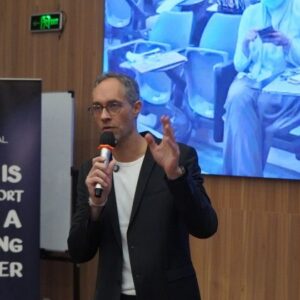
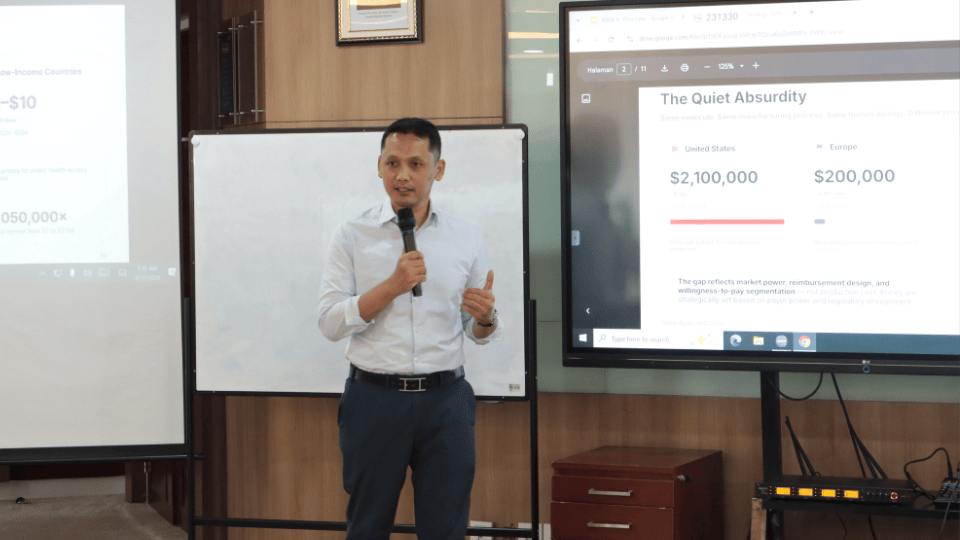
“Pricing isn’t just about numbers or production costs. It’s about how a company positions itself and provides real added value to customers,” said pharmaceutical industry practitioner and expert Soleh Ayubi, Ph.D., during a guest lecture in Marketing Management for MBA students at the School of Business and Management, Institut Teknologi Bandung (SBM ITB), Jakarta Campus, on Monday (April 20). Soleh’s lecture was titled “The Price of Life — Strategy, Power, and the Parallel Economies.”
Soleh highlighted the significant differences in drug prices between countries, particularly between developed and developing nations. These differences are influenced by various factors, including national healthcare systems, purchasing mechanisms, and the role of institutions in regulating access to and the distribution of healthcare services.
According to Soleh, the pharmaceutical industry generally operates across several market segments, ranging from innovative products to generic products to public health schemes. Each has a different approach. Innovative products tend to use a value-based pricing approach. Generic products are highly competitive. Meanwhile, public health schemes are heavily influenced by government intervention and large-scale purchasing.
The pharmaceutical industry is also heavily influenced by global procurement agencies such as UNICEF. These agencies, for example, can consolidate demand from various countries through long-term contracts, thereby significantly reducing vaccine prices as production scales and demand security increase.
Meanwhile, in the Indonesian context, the role of BPJS Kesehatan (Healthcare and Social Security Agency) through the National Health Insurance (JKN) program is crucial. This system provides demand security while also helping control drug prices through financing mechanisms and certain limits, thus maintaining supply sustainability.
Soleh noted that the complexity of research and development (R&D) in the pharmaceutical industry is extremely high. The process of developing a single drug can take years and is costly. However, the use of technologies such as artificial intelligence (AI) has the potential to accelerate the innovation process and improve operational efficiency in the future.
Through this guest lecture, SBM ITB MBA students not only gain theoretical understanding but also practical insights into how to balance business profitability and social responsibility to ensure access to healthcare services for the wider community.