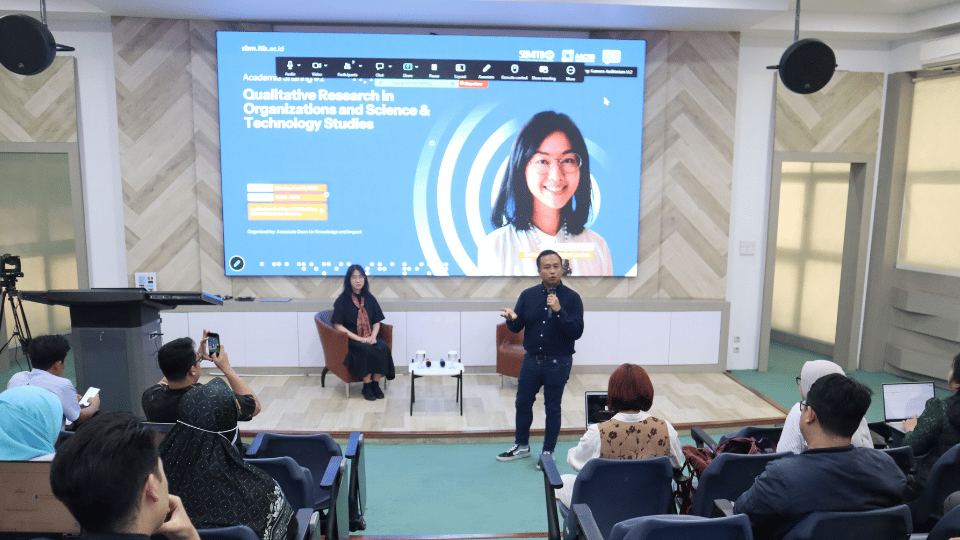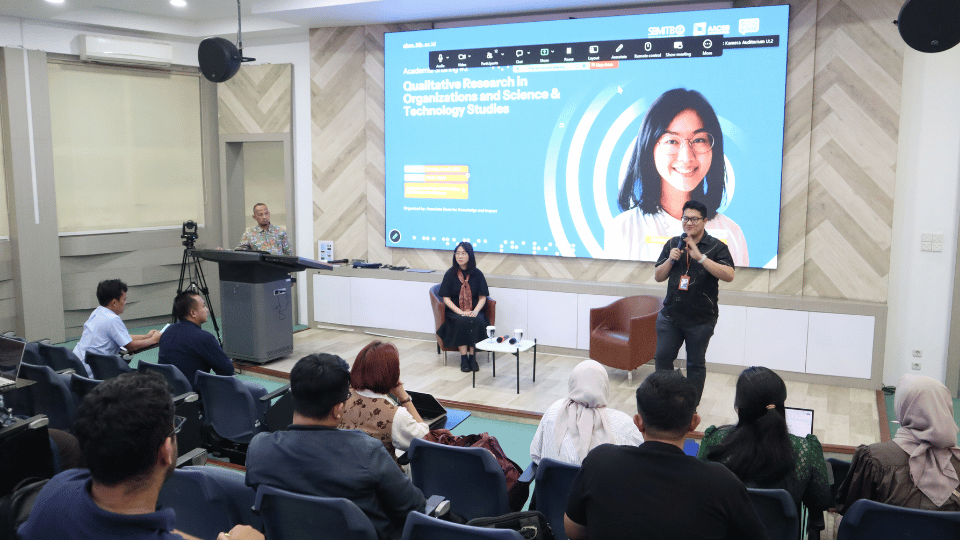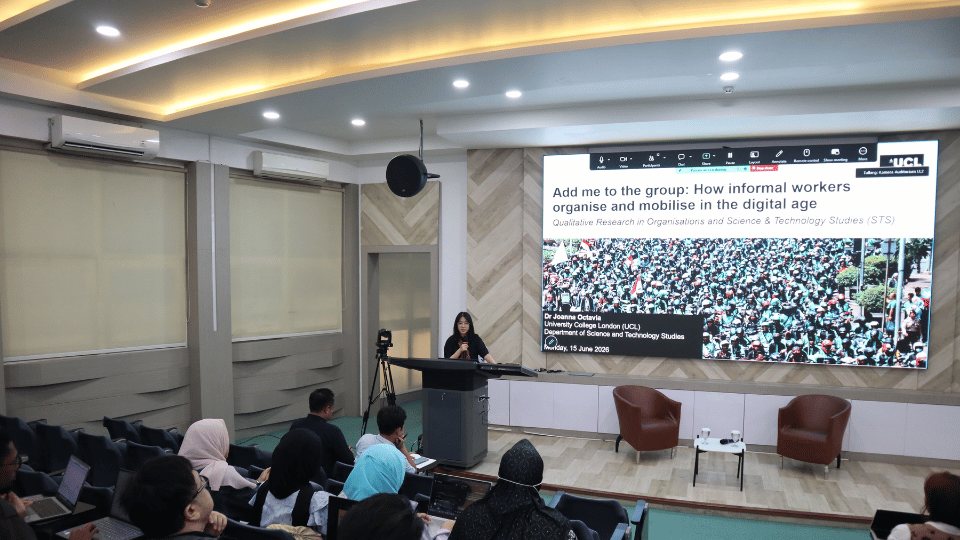
How do online motorcycle taxi drivers in Indonesia use social media to organize and mobilize collective action? To answer this research question, Joanna Octavia, a lecturer in Science and Technology Studies at University College London (UCL), used an iterative constructivist grounded theory approach, combined with three data collection methods: semi-structured interviews, online observations in Facebook and WhatsApp groups, and document analysis.
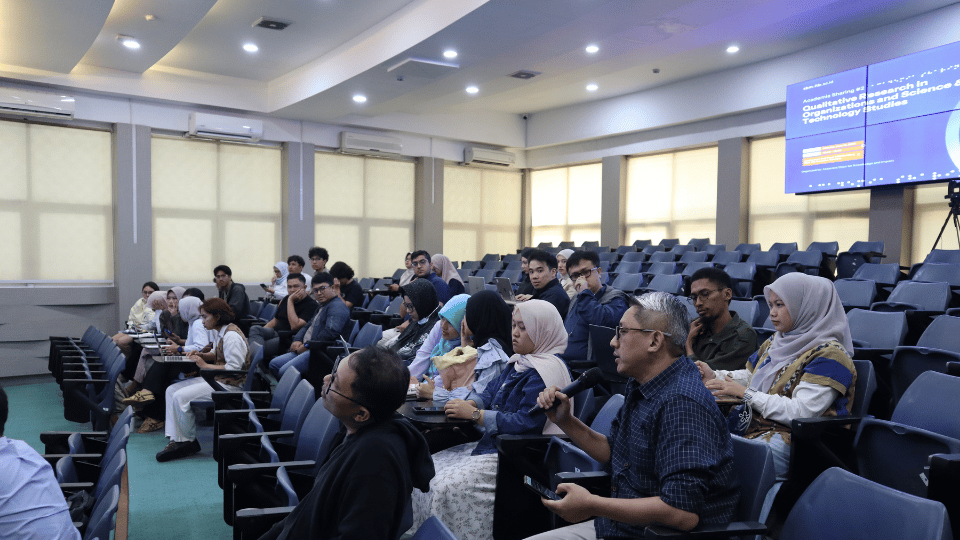
Octavia emphasized that the choice of research method should be aligned with the study’s objectives rather than merely adhering to academic conventions, which often suggest that qualitative research must be followed by a quantitative phase. She made this observation during a seminar titled “Qualitative Research in Organizations and Science & Technology Studies,” hosted by the School of Business and Management, Institut Teknologi Bandung (SBM ITB ) on June 15th.
“(So in research) it’s not about the sample size, but how in-depth and rich the information obtained from the participants is,” Octavia told the seminar participants.
Octavia shared the real challenges faced during her doctoral research. From building participant trust and navigating the dynamics of often-conflicting driver organizations to conducting remote interviews due to the COVID-19 pandemic, which actually made participants more open to sharing their stories.
So, How can you establish the credibility of qualitative research without relying on statistical standards? Octavia provides two key principles: triangulation of data sources and reflexivity. Triangulation involves using multiple data sources to enrich the findings, while reflexivity refers to the deliberate practice of reflecting on the researcher’s own position and potential biases regarding the subjects being studied.